ISO has now published ISO 9001:2026, the latest version of the quality management systems standard. Jason Westland explains...
This guide explains the changes from ISO 9001:2015, their practical implications, and how organisations should prepare for the transition.
What the changes mean in practice
These are the areas where I would expect a quality manager to spend time. If your current system already handles one well, the change may need little more than confirmation and a small update.
Quality culture and ethical behavior
Do not start by writing a new 'quality culture procedure'. Start with leadership behavior, decisions, communication, and what people actually see reinforced in day-to-day work.
Risks and opportunities
If opportunities exist only as a token column in a risk register, this is the area to tighten. Important opportunities should be visible, acted on, and reviewed rather than simply recorded.
Management of change
Most organizations can strengthen the change process they already have. The main question is whether communication, effectiveness checking, and review of the result are built into the change rather than added afterwards.
Interested parties
A stakeholder list on its own is not very useful. Be clear about which external or internal requirements matter to the QMS and how you notice when those requirements change.
Climate change
If you implemented the 2024 amendment properly, do not repeat the exercise for appearance's sake. Check that the assessment is still current and move on.
Disruption and contingency communication
This does not automatically mean you need a large business-continuity program. Check that relevant risks, contingency actions, and customer communication fit together when provision is disrupted.
Clause 10 restructuring
This is mostly a housekeeping issue for a mature QMS. Update stale clause references where they could confuse people, but keep improvement and corrective-action processes that already work.
What has not changed
Much of the 2015 system carries forward. That matters because good processes can stay in place instead of being rebuilt just to look different.
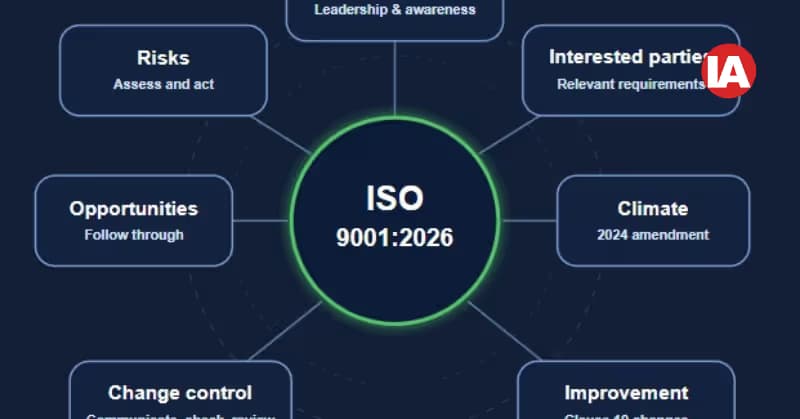
The infographic gives you the quickest view of the main changes from 2015 to 2026. It highlights the seven areas most likely to need attention in an existing QMS.
https://8dflow.com/guides/iso-9001-2026#changes