The most successful automation projects are those that begin with a clear understanding of the challenge, says Narendra Marathe.
When I visit manufacturing facilities across India, regardless of the industry, I often hear the same concerns from production and plant teams. They are expected to produce more, maintain quality, reduce downtime, and handle a growing variety of products, all while meeting tight delivery schedules. These are real challenges that impact day-to-day operations, and this is one of the key reasons why robotics is gaining momentum across Indian manufacturing. A few years ago, most discussions around automation were focused on whether companies should invest in robotics. Today, the conversation has changed. Manufacturers have already seen the benefits of automation. What they want to understand now is how robotics can help them solve specific production challenges, whether it is labour availability, quality consistency, higher throughput, or handling products that are difficult to manage manually.
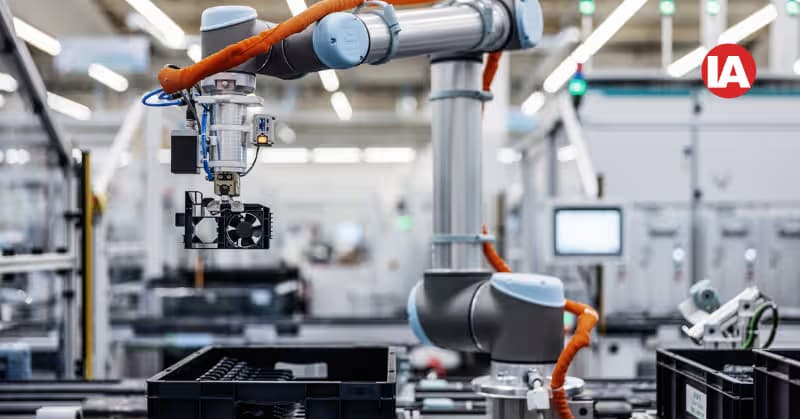
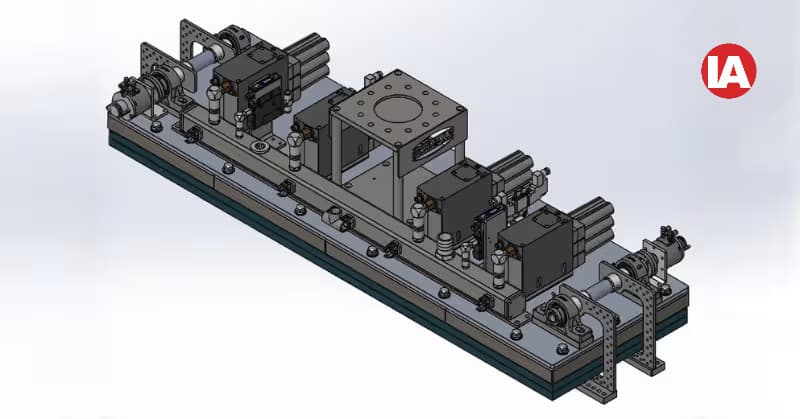
SPZ customised gripper
As we move towards 2027, I believe robotics will become a standard part of operations across many industries, including automotive, electronics, logistics, packaging, warehousing, and battery manufacturing. However, simply installing a robot does not guarantee success. The real challenge is creating a solution that fits the application and delivers measurable improvements on the shop floor.
One of the most common challenges I see is product handling. Manufacturers are dealing with products that vary in size, shape, weight, packaging format, and surface characteristics. Production lines often need to handle multiple product variants while maintaining speed and accuracy. Even a small handling issue can lead to downtime, product damage, quality concerns, or reduced productivity.
This is why I always say that customers are not investing in robots or grippers; they are investing in better productivity, reliability, and process efficiency. To achieve those objectives, every part of the automation system must work together seamlessly.
A recent project perfectly demonstrates this approach. One of our customers was operating a high-volume palletizing line and facing challenges in handling carton boxes with different dimensions and weights. The process required high cycle rates, accurate placement, and reliable gripping despite variations in carton size and load distribution. Conventional gripping methods were struggling to provide the consistency needed for stable operation.
Instead of recommending a standard solution, our team started by studying the application in detail. We evaluated carton dimensions, center-of-gravity variations, surface characteristics, payload requirements, robot dynamics, and cycle-time targets. Only after understanding the complete process did we begin designing the solution.
Based on our findings, we developed a fully customized SPZ gripping solution engineered specifically for the customer's application. The suction cup arrangement, vacuum flow characteristics, gripping area, and gripper structure were optimized to accommodate multiple carton formats while ensuring secure handling throughout the process. At the same time, we carefully managed the overall gripper weight to maintain robot speed and performance without compromising reliability.
The result was a more stable and repeatable handling process. The customer achieved improved placement accuracy, reduced downtime, and higher overall productivity. For me, this project highlights an important lesson: the biggest gains in automation often come from solving the actual process challenge rather than focusing solely on the equipment itself.
Looking ahead, I believe manufacturers will increasingly demand automation systems that are flexible enough to adapt to changing products and production requirements. The factories of the future will require solutions that deliver both efficiency and adaptability. This will make application-specific engineering even more important.
At Schmalz, our role goes beyond supplying gripping technology. We work closely with customers to understand their production challenges and develop solutions that support their operational goals. Whether the application involves cartons, sheet metal, batteries, electronics, consumer goods, or warehouse logistics, the objective remains the same: improving productivity, reliability, and process performance.
In my experience, the most successful automation projects are those that begin with a clear understanding of the challenge. When the right handling solution is designed around the application, manufacturers can improve throughput, reduce rejects, minimize maintenance, and achieve greater value from their automation investment.
As robotics adoption continues to grow in India, companies that focus on solving real production challenges rather than simply adopting technology will see the greatest benefits. Robotics has enormous potential, but its true value is realized when it helps manufacturers build more efficient, reliable, and future-ready operations.
“Every automation challenge is an opportunity for robotics"
Narendra Marathe is Industry Segment Manager – Robotics, at Schmalz India. An experienced Segment Manager with a demonstrated history of working in the industrial automation industry, Narendra is skilled in Manufacturing, Continuous Improvement, Engineering, Business Development, and Automation. A strong product management professional with a Bachelor's degree focused in Mechanical Engineering from University of Pune.
Schmalz India Private Limited, Pune. T: 020-69115500. Email: marketing@schmalz.co.in
Author