The Digital Evolution of Pneumatic Conveying Systems
The digital evolution of pneumatic conveying systems has transformed traditional bulk material handling into a data-driven, intelligent operation central to smart manufacturing. With IoT, automation, and predictive analytics, these systems now deliver real-time monitoring, energy efficiency, and sustainability, reshaping industries from cement to pharmaceuticals.
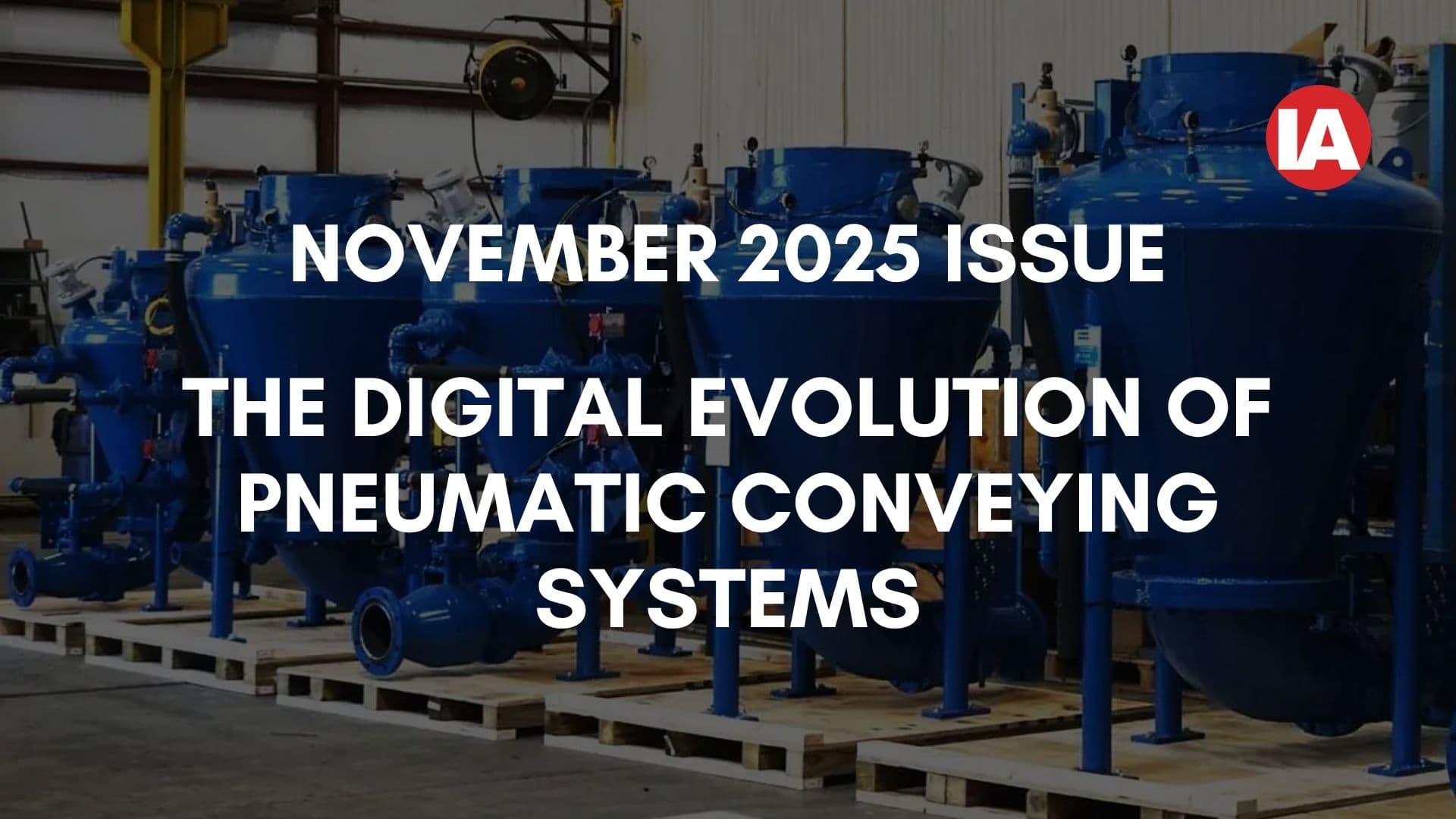
What was once an unseen process hidden behind factory walls is now a data-rich, efficiency-driven operation central to smart manufacturing.
For over a century, pneumatic conveying systems have been the workhorses of bulk material handling across industries – quietly moving powders, granules, and pellets through pipelines using air or gas as the transport medium. They have long been prized for their clean operation, flexibility, and reliability, particularly in industries like cement, chemicals, food, and pharmaceuticals.
However, what began as a relatively simple mechanical process of transporting materials using air pressure has today evolved into an intelligent, digitally integrated operation – capable of monitoring, self-adjusting, and optimising performance in real time. The transformation of pneumatic conveying systems in the digital era reflects broader industrial trends toward automation, data analytics, and energy efficiency.

approach. Image source: Indpro Engineering Systems
The traditional pneumatic conveying landscape
Historically, pneumatic conveying systems were classified into two main types: dilute phase and dense phase conveying.
- Dilute phase conveying uses high-velocity air to suspend and carry particles, suitable for light materials like flour or sugar.
- Dense phase conveying, on the other hand, moves heavier or abrasive materials like cement, alumina, or fly ash at lower velocities and higher pressures, reducing pipeline wear and energy consumption.
In both systems, fans, blowers, compressors, and airlocks formed the backbone of the process. Operators adjusted parameters manually, guided by experience rather than precision data. The key challenges were often pipeline blockages, product degradation, air leaks, and inconsistent flow rates.
Maintenance was typically reactive – problems were identified after performance drops or system failures. Energy use was high, with compressors running at fixed loads regardless of material flow needs.
Despite their limitations, these traditional systems remained industry standards for decades, mainly because of their simplicity and adaptability. But as industries began to demand greater throughput, traceability, and energy efficiency, the need for smarter systems became clear.
The digital revolution in pneumatic conveying
The arrival of Industry 4.0 technologies – encompassing sensors, automation, and data analytics – has profoundly reshaped pneumatic conveying. Today’s systems are not merely mechanical installations; they are cyber-physical systems that integrate seamlessly with plant-wide control architectures.
1. Smart sensors and IoT integration
Modern pneumatic conveying systems are fitted with IoT-enabled sensors that monitor key process parameters such as:
- Pressure differentials along the pipeline
- Air velocity and flow rate
- Material concentration
- Temperature and humidity, and
- Valve positions and motor performance.
These sensors provide a constant stream of real-time data to centralised control systems. Operators no longer rely on manual checks; instead, they can visualise performance through digital dashboards and receive alerts before a potential failure occurs.
For instance, FLSmidth and Coperion have integrated smart monitoring modules in their conveying solutions. These modules can detect pipeline blockages or air leaks early, prompting predictive maintenance before costly downtime.

15% reduction in energy consumption. Image source: Schenck
Indian innovation in focus
India has quietly built a strong base of expertise in pneumatic conveying, with several homegrown companies now aligning with global digitalisation trends.
Macawber Engineering Systems India Pvt Ltd, headquartered in Pune, is one of the most established names in dense-phase conveying. The company designs customised systems for industries ranging from power and steel to food and chemicals, and is known for its advanced dome valve technology and long-distance, energy-efficient dense-phase conveyors.
What makes Macawber’s approach noteworthy today is its emphasis on automation and real-time monitoring. In its plastics and cement industry projects, for example, the company integrates sensors and automated controls that continuously track system pressure, material flow, and valve performance. The result is higher efficiency, reduced wear, and minimal downtime — a marked improvement over the manual adjustments of earlier systems. Their dense-phase systems are also designed to minimise compressed air usage, cutting both energy consumption and emissions.
Another leading Indian innovator, Indpro Engineering Systems Pvt Ltd, also based in Pune, takes an end-to-end systems integration approach. Indpro designs and builds turnkey bulk-solids handling setups that include pneumatic conveying, storage silos, weighing, feeding, and bagging systems – all controlled through a unified automation framework.
In food and polymer industries, where hygiene and material integrity are critical, Indpro’s solutions combine vacuum and pressure conveying with digital control systems that ensure consistent feed rates and minimise contamination. By incorporating smart automation and SCADA-based interfaces, Indpro enables plant operators to monitor conveying parameters remotely and optimise operations dynamically.
These examples demonstrate how Indian companies are bridging traditional mechanical engineering strengths with digital innovation – reflecting the same data-driven transformation now visible in global markets.
2. Predictive maintenance and data analytics
One of the most valuable outcomes of digital transformation in pneumatic conveying is predictive maintenance. By applying data analytics and machine learning algorithms to operational data, plants can identify patterns that signal impending issues – like pressure drops indicating filter wear or blower inefficiency.
Companies like Schenck Process have adopted data-driven approaches through their LOGiQ and Plasma platforms, which track conveying performance and recommend maintenance actions. Such systems can estimate component life cycles, reducing unplanned stoppages and extending equipment longevity.
3. Automation and adaptive control
In traditional setups, operators manually adjusted valves or air pressures to balance the system. Modern systems feature adaptive control algorithms that automatically optimise airflow and material feed based on load conditions.
For example, pneumatic conveying systems integrated with PLCs (Programmable Logic Controllers) or DCS (Distributed Control Systems) can adjust blower speeds and valve timings dynamically to maintain consistent flow and reduce energy waste.
Clyde Process, part of Schenck Process, offers systems that use adaptive control logic to maintain constant mass flow rates under variable conditions, ensuring optimal conveying while preventing material degradation.

monitors pressure and flow data. Image source: FLSmidth
4. Energy efficiency through digital optimisation
Compressed air systems are major energy consumers in pneumatic conveying – often representing 70-80% of total operating costs. Digital optimisation tools now allow plants to fine-tune air supply and reduce wastage.
Technologies such as variable frequency drives (VFDs), AI-based pressure management, and digital twins help identify inefficiencies and recommend optimal operating conditions.
For instance, Atlas Copco’s SMARTLINK platform provides real-time insights into compressor performance and energy usage, enabling operators to reduce power consumption by up to 20%. When integrated into pneumatic conveying systems, such solutions can dramatically lower operating costs and carbon footprint.
Real-world examples of digital pneumatic conveying
1. Coperion’s ZXD twin rotary valve with smart monitoring
Coperion has developed intelligent rotary valves that communicate with supervisory systems via IoT protocols. The sensors embedded in the valves track speed, temperature, and pressure variations. By analysing this data, the system can detect deviations that may indicate rotor wear or seal leakage – allowing maintenance to be scheduled precisely when needed.
2. Schenck Process’s smart weighing and conveying solutions
Schenck Process integrates weighing, feeding, and pneumatic conveying into a unified digital ecosystem. In one real-world case, a food manufacturer using Schenck’s intelligent conveying setup achieved a 15% reduction in energy consumption and 30% improvement in throughput consistency through real-time airflow optimisation.

to three times the vacuum flow. Image source: PIAB
3. FLSmidth’s ECS/ProcessExpert Platform
In the cement industry, where dense-phase conveying of abrasive materials like fly ash or clinker dust is common, FLSmidth’s ECS/ProcessExpert™ automation suite continuously monitors pressure and flow data, predicting potential blockages and adjusting air supply to prevent them.
4. Piab’s COAX technology and vacuum automation
Sweden’s Piab employs COAX® multi-stage vacuum ejector technology that delivers higher performance with less energy. Integrated with the piSMART® monitoring platform, these systems enable real-time operational insights and remote diagnostics – ideal for packaging and pharmaceutical sectors.
Digital twins and simulation: The next leap
Another groundbreaking innovation is the use of digital twins – virtual replicas of physical pneumatic conveying systems. These models simulate real-world performance based on sensor data, enabling engineers to test configurations, predict failures, and optimise throughput without interrupting production.
For example, Jenike & Johanson and Spiroflow employ simulation software that models airflow dynamics and particle behavior. Combined with AI analytics, these tools can determine the best pipe diameters, bends, and feed rates to ensure uniform flow and minimal wear.
Sustainability and the path to net zero
Digitalisation is not just about efficiency – it’s also a key enabler of sustainability. Pneumatic conveying systems optimised through data analytics can reduce air consumption, lower emissions, and minimise product waste.
Manufacturers are increasingly using renewable-powered compressors, heat recovery systems, and AI-driven energy management to align with net-zero goals. For instance, in food processing plants, digital airflow control has helped reduce CO₂ emissions by up to 25%, while ensuring consistent hygiene standards.
Indian innovators like Macawber and Indpro are also responding to this imperative by developing low-energy dense-phase systems and modular retrofittable designs that help older plants cut energy use without massive overhauls – proving that sustainability and profitability can coexist.

The road ahead
As the Industrial Internet of Things (IIoT) continues to mature, pneumatic conveying systems are poised to become self-learning, energy-optimised, and autonomous. Future systems will likely integrate:
AI-driven control loops for real-time optimisation
Augmented reality (AR) for maintenance guidance
Cloud-based fleet management for global operations, and
Blockchain-enabled traceability for sensitive material transport.
Ultimately, the journey of pneumatic conveying – from simple airflow systems to intelligent digital ecosystems – mirrors the evolution of modern industry itself.
What was once an unseen process hidden behind factory walls is now a data-rich, efficiency-driven operation central to smart manufacturing. By embracing digital transformation, pneumatic conveying systems have not just improved productivity – they have become pivotal in driving sustainable, connected, and intelligent industry forward.
(This cover story has been researched and powered by Industrial Automation Magazine Intelligence)