Tackling Industrial Emissions: Technologies, Challenges, and the Path to Net-Zero
Industrial emissions from cement/steel (678M tCO₂e, 70% India's industrial GHG) resist control due to inherent chemical processes despite ESPs/bag filters/CEMS—experts advocate CCUS, electrification (20-40% cuts), FTIR monitoring, green H₂, and India's Panchamrit/Net Zero 2070 via ETS.
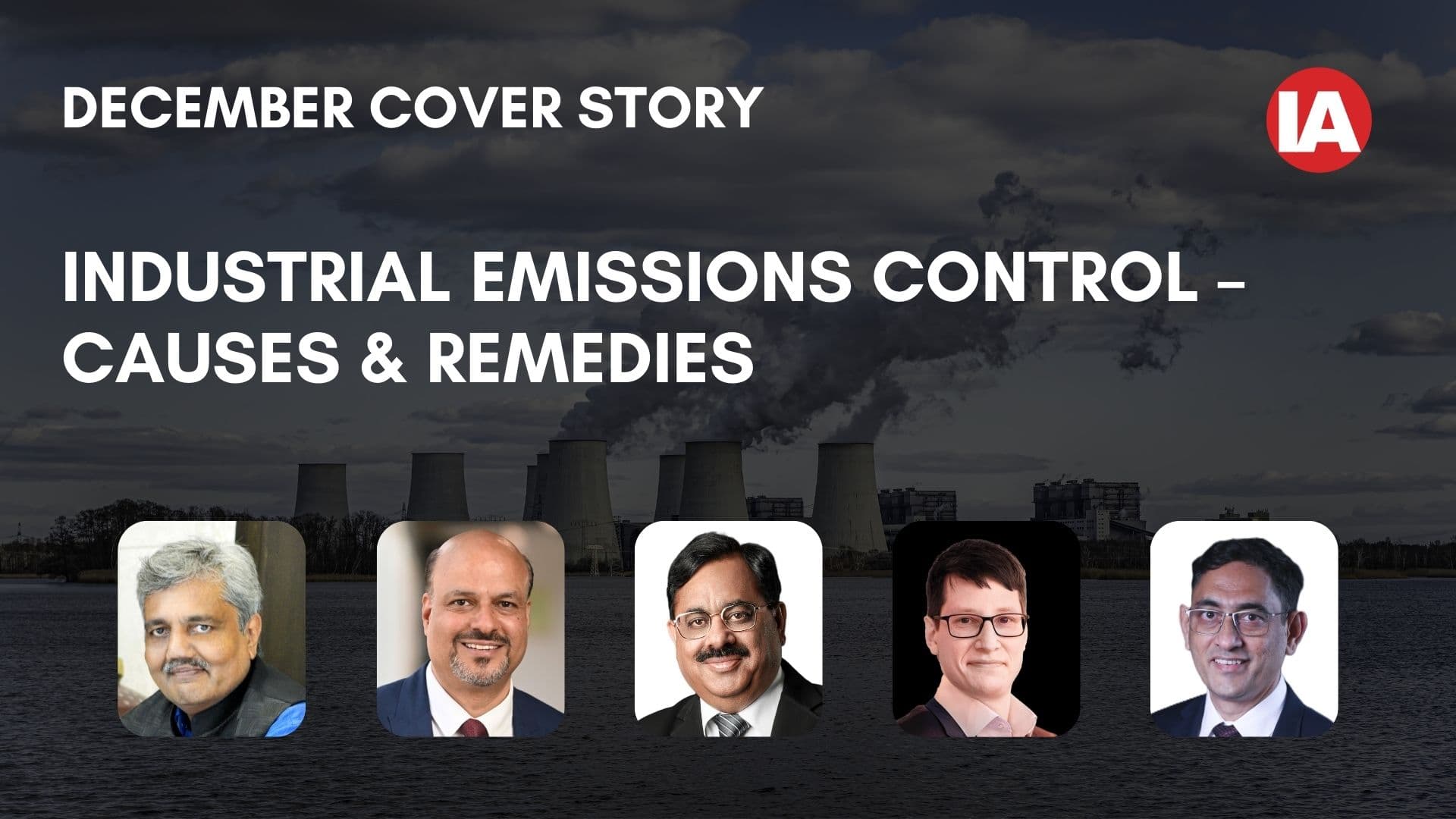
How industries are trying to control and minimise emissions with a blend of conventional equipment and digital technologies.
Increased environmental awareness and increasingly stringent legislation is leading to more and more industries adopting pollution control measures. Industrial emissions are gases and particles released into the atmosphere as a result of manufacturing and processing activities in various industrial sectors. These emissions can include carbon dioxide (CO2), methane (CH4), nitrogen oxides (NOx), volatile organic compounds (VOCs), fine particulate matter (PM2.5) and other pollutants that significantly impact air quality and the global climate.
There are various devices and technologies available to control and minimise industrial emissions, such as filters, electrostatic precipitators, desulphurisation and denitrification systems, but in the absence of effective implementation and lack of stringent monitoring, the problem not only remains but is leading to severe consequences. So what exactly are the main sources of industrial emissions that remain difficult to control, despite existing environmental regulations and technologies?

Why Some Industrial Emissions Remain Hard to Control
"Industrial emissions often stem from processes that are fundamental to material transformation, making them inherently challenging to mitigate. Cement production, for instance, releases carbon dioxide during calcination – a chemical reaction that cannot be avoided without fundamentally changing the process. Similarly, steel manufacturing involves reduction reactions that emit CO₂ regardless of energy efficiency improvements. These emissions are not just about fuel use; they are embedded in the chemistry of production," says Sriram Paramanand, Director – Partnering, Rockwell Automation India. "Another persistent challenge is high-temperature heat. Industries such as glass, refining, and chemicals require extreme heat levels that are currently most economically delivered by fossil fuels. Electrification or alternative fuels for these processes face technical limitations and cost barriers, especially at scale."

Johannes Schmitt, Product Manager for Continuous Emissions Monitoring systems, ABB Measurement & Analytics, believes that growing demands in environmental monitoring mean that ever-lower concentrations of an increasing range of pollutants must be measured from combustion processes. As a rule, industrial plants are heavily monitored, having to comply with the most rigorous standards. Nevertheless, cement kilns, steel mills, petrochemical refineries, and waste incinerators remain the main sources of industrial emissions that are challenging to control.
"Industrial emissions in these sectors are difficult to manage because they demand extremely high temperatures for chemical processes, generate pollutants from both fuel combustion and the reactions themselves, and frequently rely on fossil fuels not only as an energy source but also as a feedstock. Furthermore, these industries involve substantial capital investment and have long equipment lifespans, something that makes them resistant to significant technological changes," he explains.
India's Challenge with Process Emissions and GHG Footprint

"Many industrial emissions in India are difficult to control because they arise from core chemical and thermal processes that cannot be easily changed. Hard-to-abate sectors such as cement, steel, fertilisers, refineries, and petrochemicals generate large amounts of process emissions-related CO₂ that efficiency upgrades alone cannot eliminate. For instance, calcination in cement production and reduction reactions in steelmaking are inherent carbon-emitting steps. Together, these sectors emitted about 678 million tonnes of CO₂-equivalent in 2019, accounting for nearly 70% of India's industrial GHG emissions. Even with improvements, the cement industry still releases around 0.62 tonnes of CO₂ per tonne of cement, highlighting the difficulty of reducing process emissions," says Dr Alok Sharma, Director (R&D) and Board Member, IndianOil Corporation Ltd.
"India's heavy reliance on coal for industrial heat and power (about 70%), along with the financial and technical constraints faced by many MSMEs, further slows the adoption of advanced emission-control and low-carbon technologies," he points out.
How Environmental Regulations and Net-Zero Commitments Are Reshaping Industry Priorities

It is not the case that there is nothing done to control industrial emissions. Governments globally are employing a mix of binding targets, economic incentives and penalties, and international cooperation initiatives to curb industrial emissions. These efforts aim for a complete transformation of the industrial and energy sectors to reach net-zero emissions by mid-century. How exactly have tightening environmental regulations and global net-zero commitments influenced industry priorities around emission reduction?
According to Arvind Kakru, Vice President, Greater India, Schneider Electric, across sectors, industries are recognising that sustainability and profitability go hand in hand. The focus is now on building efficient, digital, and low-carbon operations that can adapt to evolving policies while strengthening long-term resilience. This transition is also being driven by customers and investors who increasingly value transparency and environmental responsibility.
"Companies are now investing in technologies that not only help them meet emission standards but also enhance efficiency, competitiveness, and long-term value creation. We are helping our partners accelerate this journey by combining energy management, automation, and digital solutions to make sustainability measurable and actionable. The result is a more efficient and future-ready industrial ecosystem that not only meets regulatory expectations but also contributes meaningfully to global net-zero goals," he elaborates.
India's Panchamrit Vision and Emission Control Framework

"Tightening environmental regulations and India's commitment to achieve Net Zero by 2070, announced at COP26 in Glasgow, have significantly reshaped industrial priorities. Under the 'Panchamrit' vision, India aims to achieve 500 GW of non-fossil energy capacity, fulfill 50% of energy needs through renewables, reduce carbon emissions by one billion tonnes, and lower carbon intensity by 45% by 2030. These commitments, supported by CPCB and SPCB emission norms, are driving industries to adopt cleaner technologies, efficient monitoring systems, and stricter compliance to maintain competitiveness in a low-carbon economy," says Dr Bijal Sanghvi, Managing Director, Axis Solutions Limited.
"However, the transition is not without challenges. Legacy infrastructure, dependence on fossil fuels, and limited access to green financing continue to hinder progress," he states.
Sriram Paramanand is of the opinion that stricter regulations and net-zero pledges have shifted sustainability from a compliance exercise to a core business strategy. Companies now view emission reduction as integral to competitiveness and risk management rather than optional:
- Regulatory frameworks such as carbon pricing and mandatory disclosures have accelerated investment in cleaner technologies and energy efficiency.
- Global net-zero commitments have driven industries to set science-based targets, embedding sustainability into long-term planning and capital allocation.
- Customers and investors increasingly demand transparency, linking ESG performance to brand reputation and access to capital.
"This convergence of regulatory pressure and stakeholder expectations is reshaping priorities: emission reduction is no longer a siloed initiative but a systemic transformation. Organisations that integrate sustainability with productivity and digitalisation will lead to creating resilient, future-ready operations," he asserts.
Emerging Technologies for Industrial Decarbonisation
There is no one size that fits all when it comes to reining in the growing menace of industrial emissions. Different types of emissions need different methods of control. Which emerging technologies hold the greatest promise for reducing industrial emissions – such as carbon capture, process electrification, or advanced monitoring systems?
Advanced Monitoring Systems and CCU Technologies
"In terms of monitoring systems, technologies such as Fourier Transform Infrared Spectroscopy (FTIR) and laser-based technologies will become ever more important for reducing industrial emissions. Stricter emission limits may render other – older – technologies less viable due to their measurement range limitations. FTIR-based systems, such as ABB's ACF5000 continuous emissions monitoring system, can measure multiple components simultaneously. It also measures the lowest in the industry concentrations of gases from combustion processes, supporting industrial companies with meeting the most stringent requirements in environmental monitoring," says Johannes Schmitt.
"For process emissions where CO₂ arises from chemical reactions, e.g., in cement, steel, chemicals, carbon capture utilisation and storage (CCUS) is often seen as one of the only viable deep-decarbonisation routes," he adds.
Carbon Capture and Process Electrification for Hard-to-Abate Sectors
Dr Alok Sharma believes that several emerging technologies are reshaping the pathway to deep industrial decarbonisation, especially in hard-to-abate sectors. Advanced carbon capture solutions remain among the most impactful, as they directly target process-intrinsic CO₂ emissions that cannot be reduced through efficiency alone. Process electrification is another promising frontier, where conventional fossil fuels-based heat and steam systems are replaced with electric boilers, heat pumps, plasma technologies, or hydrogen-based high-temperature heating.
"As renewable electricity becomes more accessible in India, electrification can significantly cut industrial carbon intensity. Equally important are advanced monitoring and digitalisation tools. Real-time leak detection systems, methane and VOC sensors, AI-driven process optimisation, and predictive maintenance platforms help industries identify inefficiencies, reduce fugitive emissions, and operate closer to optimal conditions," he maintains.
"Among the most promising technologies driving industrial decarbonisation, process electrification remains one of the most powerful levers. By shifting operations such as heating, compression, and mechanical drives from fossil fuels to electricity, especially when powered by renewables; we can unlock major efficiency and emission reduction opportunities. In energy-intensive sectors like chemicals, up to 30-70% of total energy use can be electrified, offering a strong foundation for sustainable transformation," says Arvind Kakru.
He cites the example of Schneider Electric's Smart Factory in Hyderabad, which leverages the company's EcoStruxure™ platform to integrate automation, real-time energy monitoring, and predictive analytics across all operations. The facility has achieved nearly 15% energy efficiency savings and significant CO₂ reduction by using connected technologies that optimise lighting, HVAC, and production processes.
Digital Solutions for Emission Monitoring and Energy Optimization
Today, conventional technologies have received a digital boost. Just how effective are digital solutions like IoT-based monitoring, AI analytics, or digital twins in identifying emission hotspots and optimising energy use?
"Digital tools such as PEMS – IoT-based monitoring, AI analytics, and digital twins are proving highly effective in identifying emission hotspots and optimising industrial energy use. These systems enable continuous, real-time tracking of parameters like fuel consumption, process efficiency, and air quality, allowing for instant corrective actions and predictive maintenance," says Dr Bijal Sanghvi.
According to him, aligned with India's evolving Emission Trading Scheme (ETS) and Carbon Monetisation initiatives, such digital ecosystems help industries generate verifiable and traceable emission data, which can be translated into measurable carbon assets. This promotes not only transparency and accountability but also allows organisations to participate in carbon credit mechanisms, turning sustainability into a value-generating activity.
Continuous Emission Monitoring Systems (CEMS) and AI-Driven Analytics
Sriram Paramanand concurs with these observations. "IoT-based CEMS (Continuous Emission Monitoring System) continues to help industries to closely monitor various emission parameters for exceedances. This provides key insights to the process team to manage their processes well within the control limits and ensure the emission parameters are kept in control. There is a massive scale of this initiative implemented in India by the central regulator. Digital tools are proving indispensable in the quest for emission reduction. IoT sensors provide granular visibility into energy consumption and process performance, enabling companies to pinpoint inefficiencies. AI-driven analytics go further by predicting anomalies, optimising setpoints, and automating corrective actions in real time," he explains.
"In ABB's Measurement & Analytics division, we typically use these technologies in the context of maintenance, troubleshooting, and remote support rather than for direct emission hotspot identification. Remote access and condition monitoring allow service technicians to diagnose and prepare for repairs before visiting the site, reducing downtime and improving efficiency," says Johannes Schmitt. "AI assisted tools, such as dynamic QR codes provide users with troubleshooting guidance and support, streamlining maintenance processes," he adds.
The Role of Renewable Energy Integration and Electrification
One of the most polluting industries segments is power generation and that is also one of the most promising in terms of decarbonisation. What role do renewable energy integration and electrification of processes play in emission reduction for hard-to-abate industries?
"Renewable energy and process electrification are becoming vital tools for cutting industrial emissions, especially in sectors where fossil fuels heat is hard to replace. With India now having 200+ GW of renewable capacity and aiming for 500 GW by 2030 industries can increasingly shift from coal and gas to clean electricity, reducing a major share of their Scope 2 emissions," says Dr Alok Sharma.
According to him, electrifying core processes through electric boilers, induction heaters, plasma systems, and heat pumps can further cut process heat emissions by 20-40% in refineries, petrochemicals, and other energy-intensive industries. "For IOCL, this transition aligns directly with its long-term decarbonisation goals. Integrating renewables into refinery operations, and gradually electrifying selected thermal systems, can bring immediate and measurable emission reductions. These efforts can be strengthened through IOCL's upcoming green hydrogen and renewable energy initiatives," he explains.
Integrating Renewables with Digital Energy Management
Arvind Kakru is of the view that by integrating renewables directly into industrial power systems, companies can stabilise their energy costs, improve reliability, and significantly reduce their carbon footprint. This integration also enables industries to use on-site generation, microgrids, and smart energy storage, ensuring a cleaner and more dependable energy supply.
"Electrifying processes; whether in heating, mobility, or production, creates opportunities to harness digital control and precision. When paired with renewable power, this leads to measurable reductions in emissions without compromising output or quality. At Schneider Electric, we support this transformation through solutions that bring together digital energy management, automation, and renewable integration under one intelligent platform," he elaborates.
Green Hydrogen as a Clean Feedstock Alternative
"Renewable energy integration and process electrification are central to decarbonising hard-to-abate industries such as steel, cement, refining, and chemicals. By replacing fossil fuels-based energy with renewables, industries can significantly cut Scope 1 emissions (direct emissions from operations) and Scope 2 emissions (indirect emissions from purchased electricity), enhancing both sustainability and energy security," says Dr Bijal Sanghvi.
According to him, a key enabler in this transition is Green Hydrogen (GH₂); produced through renewable-powered electrolysis; which serves as a clean substitute for coal, natural gas, or other carbon-intensive feedstocks. "In steelmaking, for instance, GH₂ can replace coke in direct reduction processes, while in refineries and fertilizers, it offers a zero-carbon pathway for hydrogen-dependent operations. Its integration into industrial processes not only reduces carbon intensity but also supports deep decarbonisation goals under India's Net Zero 2070 mission," he says.
Operational and Economic Barriers to Adopting Cleaner Technologies
To sum up this discussion, the final question was, what are the biggest operational or economic barriers preventing industries from adopting cleaner technologies?
High Capital Costs and Technology Readiness Challenges
"The barriers are multifaceted," says Sriram Paramanand, and lists these as: High Capital Costs, Technology Readiness, Data and Integration Challenges and Policy Uncertainty, the latter elaborated as inconsistent regulations across regions create complexity and risk for long-term planning. "Overcoming these hurdles demands a collaborative approach, supportive policy frameworks, and innovative financing models. The shift to cleaner technologies is not just an environmental imperative, it is a strategic necessity for building resilient, future-ready industries," he states.
Johannes Schmitt believes it is high costs, technical limitations, and regulatory uncertainties that are the most common operational and economic barriers preventing industries from adopting cleaner technologies, particularly when retrofitting existing plants. "Achieving lower emission limits often requires significant investment in flue gas treatment and measurement technologies, which may not be feasible for existing plants due to space and other limitations. As emission limits become stricter, existing technologies may reach their performance limits, necessitating the adoption of new solutions. At the same time, evolving regulations, especially in emerging areas such as carbon capture, present further challenges," he asserts.
Building Business Cases for Industrial Modernisation
"While industrial modernisation often involves significant upfront investment, it also unlocks long-term efficiency, resilience, and sustainability gains. With the right digital and automation foundation, industries can accelerate transformation and realise faster returns. We help customers build strong business cases, enable flexible financing, and deliver measurable outcomes that make modernisation both practical and profitable," says Arvind Kakru.
"Our integrated solutions simplify system complexity; whether upgrading processes, integrating renewables, or deploying carbon capture; ensuring projects move seamlessly from pilot to scale. Combined with continued R&D and supportive policies, this approach drives innovation and speeds the transition to sustainable, future-ready operations," he adds.
Balancing Energy Affordability with Clean Power Transition
Dr Bijal Sanghvi is of the opinion that the adoption of cleaner technologies across industries faces multiple operational and economic barriers, primarily centered around energy affordability, infrastructure readiness, and grid stability. One of the key challenges is peak load management, as renewable energy sources are intermittent. Without stable supply, industries hesitate to rely fully on clean power. This underscores the need for microgrids, Battery Energy Storage Systems (BESS), and large-scale pump storage projects to ensure uninterrupted energy during fluctuating demand cycles.
"However, the broader shift to clean power must balance energy affordability and socio-economic impacts. Reducing fossil fuels dependence could affect employment in coal mining, railway freight, and associated industries. Hence, a just and inclusive transition, supported by policy incentives, financial viability, and workforce reskilling, is essential to drive large-scale adoption of cleaner technologies without compromising economic stability," he concludes.
Note: The responses of various experts featured in this story are their personal views and not necessarily of the companies or organisations they represent. The full interviews are hosted online at https://www.iedcommunications.com/interviews)