Automation, AI, and the Next Trillionaire: Why Factory Floors Hold the Key to the Future of Wealth
Billionaire Mark Cuban predicts the world’s first trillionaire will be an AI expert—but the true battleground may be the factory floor. As AI redefines industrial automation, it's becoming the command center of smart factories—powering predictive maintenance, real-time optimization, and autonomous decision-making. The future of wealth lies where data meets machines, and those who master this transformation will lead the next economic revolution.
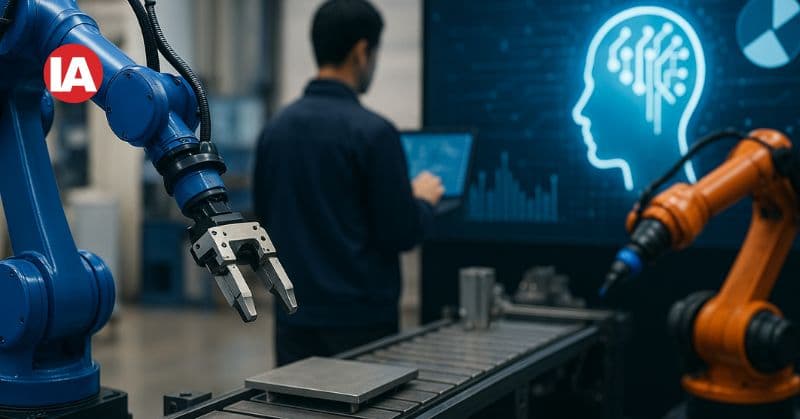
As AI Becomes the Brain of Industry, Smart Factories Emerge as the Launchpads for the World’s First Trillionaire
Mark Cuban, a billionaire entrepreneur, recently made a bold prediction: the first trillionaire in history will be an artificial intelligence expert. Although software and big tech may be the focus of this statement, industrial automation is where its most revolutionary effects are being felt.
AI is evolving from an auxiliary layer to the command center of automation. Artificial intelligence is transforming reactive processes into proactive systems, enabling autonomous decision-making, and driving predictive maintenance throughout the manufacturing environment. AI is enabling previously unthinkable efficiencies, whether it be in the real-time optimization of assembly line designs, energy load management, or dynamically modifying production schedules in response to market demand.
In this regard, Cuban's forecast clearly favors those who will rethink the way large-scale industry functions. Cloud manufacturing, industrial IoT, robotics, and AI are combining to create intelligent factories that are highly adaptable and productive with little human intervention. Trillion-dollar opportunities are being generated in these ecosystems, which are intelligent, responsive, and heavily data-driven. This prediction is not just aspirational; it is a strategic imperative for nations like India, where programs like Make in India and the National AI Mission are gaining momentum. By investing in AI-led automation now, industrial companies are putting themselves in a position to control the economic value chains of the future in addition to boosting productivity.
Industrial leaders should take note of Cuban's remarks: the next revolution will be operationalized rather than shown on television. Who will take AI from the shop floor to the top is the real question, not whether it will change industrial wealth.