The Safety Scare at Air India: A Call to Action for Automation in Critical Infrastructure
The recent disclosure of 51 critical safety infractions at Air India by the DGCA exposes deep-rooted vulnerabilities in aviation operations, underscoring the urgent need for automation in critical infrastructure. Reliance on outdated manual processes and fragmented data systems has contributed to compliance failures that could have been mitigated by intelligent automation technologies such as AI-driven crew scheduling, predictive fatigue analytics, blockchain-verified training, and real-time compliance monitoring.
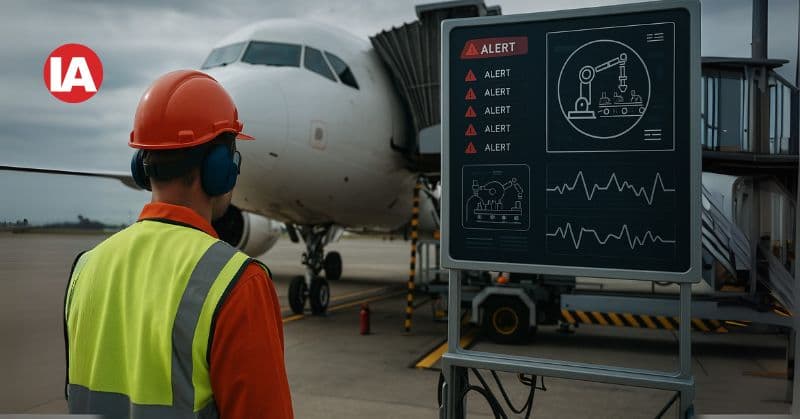
Safety on Autopilot: How AI and Automation Can Transform Risk Management in High-Stakes Industries
The Directorate General of Civil Aviation (DGCA) has identified 51 safety infractions at Air India, including unapproved simulators, antiquated crew training procedures, faulty rostering systems, and postponed emergency readiness checks. This shocking disclosure has rocked the aviation industry. According to aviation safety standards, seven of these infractions were categorized as "Level I," the most serious, and were to be fixed right away by July 30, 2025. However, turbulence is not just a problem in flying. This incident is a clear indication of systemic vulnerability in high-risk, high-compliance industries, according to the industrial automation community. In addition to human mistakes, the results highlight important areas where automation could—and ought to—have stepped in.
Similar to industrial systems, flight operations require verifiable training records, tiered compliance, and real-time decision-making. However, Air India's shortcomings show a strong reliance on analogue scheduling, disjointed data systems, and manual monitoring. Such mistakes could have disastrous consequences in sectors like aviation, energy, oil and gas, or heavy industry where safety is of the utmost importance. Automation is about accountability, repeatability, and foresight, not just speed. Many of these mistakes might have been avoided with the help of predictive fatigue analytics, blockchain-backed credentials for simulator validation, AI-enabled crew scheduling, and automated compliance dashboards. When combined with cloud-based AI systems, even in-flight sensor data and maintenance records may guarantee that irregularities are detected and addressed immediately rather than during an audit.
The lesson learned? Businesses that rely on antiquated management systems run the risk of avoidable malfunctions. The cost of not automating crucial processes is made clear by the Air India audit, when even a small error might have potentially fatal repercussions. This tragedy should serve as a cross-sectoral call to action as automation redefines safety norms across industries. Safety needs to be rethought by industrial leaders as a dynamic system driven by intelligent automation rather than a checklist.
In an Industry 5.0 environment, oversight needs to be built in and not discovered after the fact.