Collaborative robot market worth $3.38 billion by 2030 – MarketsandMarkets
The global collaborative robot (cobot) market is set for rapid growth, reaching USD 3.38 billion by 2030. Offering low-cost, flexible automation, cobots work safely alongside humans, enhancing productivity without increasing labor costs. With rising demand across electronics, automotive, and logistics, cobots are becoming essential for modern, agile manufacturing.
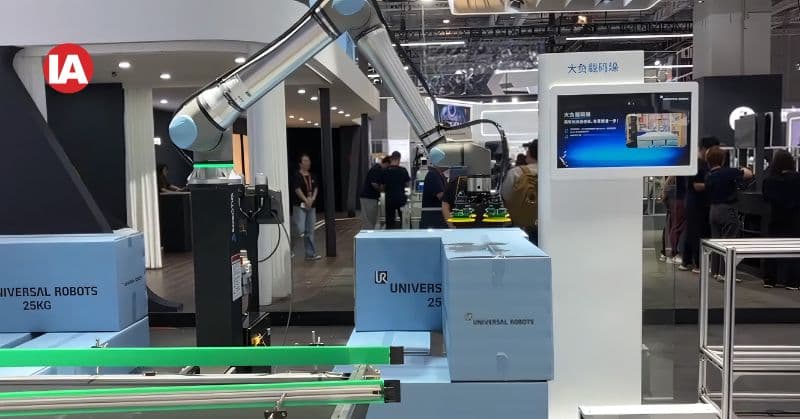
Their ability to operate with human operators enhances overall productivity without the added labour cost.
June 2025 – The global collaborative robot market is projected to grow from USD 1.42 billion in 2025 to USD 3.38 billion by 2030, at a CAGR of 18.9% according to a new report by MarketsandMarkets™. Collaborative robots (cobots) deliver a better ROI than classical industrial robot systems because of their low upfront and installation costs, quicker setup, and lower cost of entry and implementation. Cobots do not require safety cages, lowering infrastructure costs. They are easily reprogrammed and redeployed across various tasks, making the operation more flexible. Their ability to operate with human operators enhances overall productivity without the added labour cost. This cost-effectiveness makes cobots appealing to small and medium-sized businesses looking for effective automation solutions.
The electronics industry in the collaborative robot space is a hot market since there is a high need for precision, flexibility, and speed in assembly and inspection processes. Cobots are especially useful for handling fragile components, doing tedious tasks, or working in tight spaces. With the rising need for consumer electronics, manufacturers will want cobots to drive efficiency and reduce errors. The ability for cobots to be reprogrammed quickly in response to changes allows them to facilitate customary product updates. It lowers the overall period for production, making them effective in a quickly changing industry.
Collaborative robots with more than 25 kg payload capacity are witnessing increasing demand in heavy-duty industrial operations. Automotive, metal fabrication, and logistics industries increasingly use high-payload cobots for palletizing, machine tending, and assembling large parts. Sensor technology advancements and safety features allow these cobots to move heavier loads while ensuring safe human-robot interaction. As producers pursue automating long, cumbersome processes, there will be a strong demand for high-payload collaborative robots.
The presence of strong manufacturing bases, such as China, Japan, and South Korea, spurs the collaborative robot industry in the Asia Pacific region. There is a rapid movement toward industrial automation across the region, supported by government policies and investment to promote smart factories further. This growth is further accelerated by market responsibilities for cobots, as demand increases from the electronics, automotive, and consumer goods industries, increasing their deployment. Another factor impacting further growth in the collaborative robot market is the increased presence of SMEs and the demand for low-cost and effective automation solutions. Coupled with the region's economic situation and skills level, Asia Pacific is well placed in the collaborative robot market.
Key companies operating in the collaborative robot companies include Universal Robots A/S (Denmark), Fanuc Corporation (Japan), ABB (Switzerland), Techman Robot Inc. (Taiwan), Aubo (Beijing) Robotics Technology Co., Ltd (China), KUKA AG (Germany), Doosan Robotics Inc. (South Korea), Denso Corporation (Japan), Yaskawa Electric Corporation (Japan), and Rethink Robotics (US).