The Magenta Line in Delhi Metro Becomes Completely Driverless, Setting a New Standard for Automation in India
Delhi Metro’s Magenta Line has achieved full Unattended Train Operations, making it completely driverless and signaling a new benchmark for urban transit automation in India, with the Pink Line set to follow and create a 97-km driverless corridor for safer, more reliable, and energy-efficient commutes.
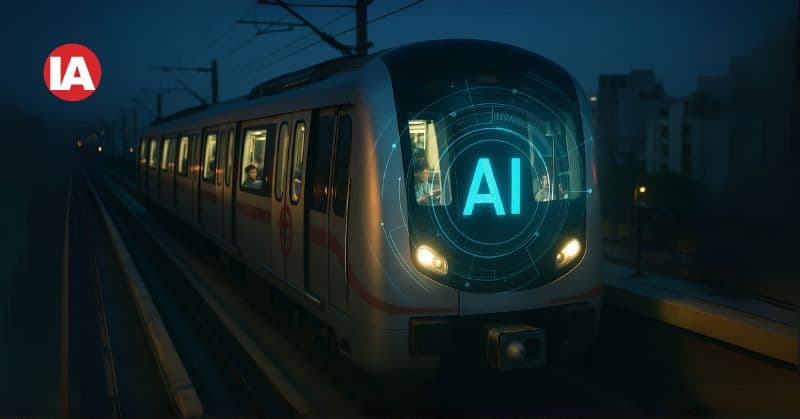
India Joins Global Leaders in Rail Automation, Setting the Stage for Smarter, Greener Mass Transit
Delhi has long been the beating center of India's urban aspirations, but it has now entered a new era. Through Unattended Train Operations (UTO), the Delhi Metro Rail Corporation (DMRC) has formally made its Magenta Line completely driverless, propelling India into the exclusive group of countries adopting extensive rail automation. The Pink Line will soon join, completing a 97-kilometer driverless efficiency corridor—an accomplishment that combines the revolutionary potential of automation with engineering mastery. This milestone has deep symbolic meaning. Trains now operate with a precision and dependability that no human could ever match for the millions of commuters who rely on the Metro every day. Every detail is planned by automated control systems: powerful algorithms synchronize door actions, safety checks, braking, and acceleration in real time. As a result, every circuit and order incorporates safety, and punctuality is programmed rather than aspirational.
However, this is about the roadmap for India's future transportation, not just comfort. While transporting thousands of passengers each minute, rail automation lowers operating costs, decreases human error, and optimizes driving patterns to save energy usage. Driverless metros are more than simply transportation in a city plagued by pollution and traffic; they are automated lifelines. The leap of the Magenta Line serves as a demonstration for the industrial automation community in India of what can be achieved when vision and execution are combined. It shows how sophisticated automation techniques, which were previously believed to be exclusive to developed nations, can be scaled up and adapted for use in India's own urban fabric. One of the biggest public platforms in the world is validating the work of engineers and automation providers in the fields of signaling, IoT integration, and AI-driven monitoring.
The driverless journey of Delhi Metro is a cultural revolution rather than just a technical achievement. It demonstrates that rather than displacing people, automation is strengthening society by establishing faster, safer, and more sustainable processes. The message sent by these trains, which run smoothly without the use of human hands, reaches far beyond Delhi: automation will be the driving force behind India's future.