Automation is viewed as a major growth driver, and Fitch maintains India's credit rating
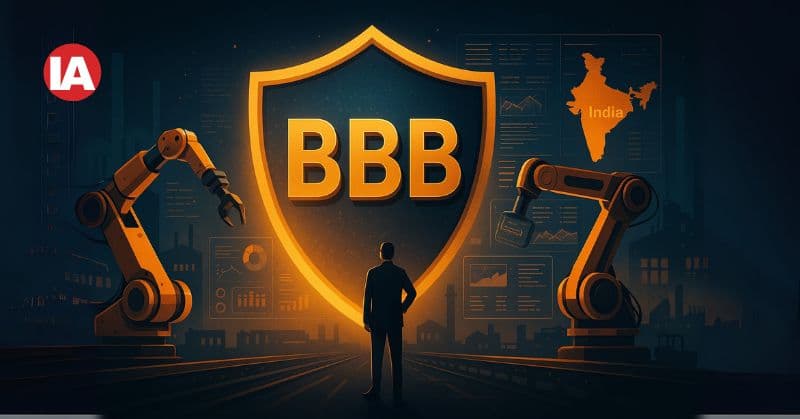
Fitch Ratings has reaffirmed India’s long-term foreign currency issuer default rating at BBB- with a stable outlook, highlighting the nation’s robust economic growth and stable external finances. Behind India’s resilient growth narrative, automation plays a key role, driving efficiency across manufacturing and services sectors, and contributing to sustainable development amid global uncertainties.
India’s Stable Outlook Underscores a Deeper Shift—Automation as the Backbone of Productivity and Resilience
India has once again escaped international scrutiny. Citing strong growth and stable external finances, Fitch Ratings has reaffirmed the nation's long-term foreign currency issuer default rating at BBB- with a stable outlook. Automation, an unsung hero, is driving this resilience behind the headlines of domestic demand and fiscal stability. The ability of India to maintain growth in the face of global upheaval is fundamental to Fitch's evaluation. Ten years ago, supply chain gaps, infrastructural constraints, and labor inefficiencies still hindered India's productivity narrative. Automated methods are subtly changing that story today. Automation is now the unseen force that sustains India's growth momentum, from robotic arms ensuring consistency on auto shops to AI-led analytics guiding export logistics.
Take the manufacturing industry, where the implementation of Industry 4.0 has reduced downtime and increased yield in a variety of industries, including pharmaceuticals and the automotive sector. Predictive maintenance algorithms are being used in factories to prevent machine problems before they happen, and IoT-enabled systems guarantee real-time supply chain and production visibility. This efficiency is important for India's macroeconomic image as well as for company bottom lines because it shows international rating agencies that growth is sustainable rather than just cyclical. Even India's traditionally bulwark, the services industry, is seeing a shift driven by technology. AI, robotic process automation, and intelligent chatbots are being used by banks, insurers, and e-commerce platforms to cut expenses, improve customer service, and boost revenue on a large scale. In a country that must balance development aspirations with inflationary dangers, these efficiency gains fortify India's economic foundation in ways that rating agencies cannot overlook.
However, Fitch's steady forecast serves as a reminder of the fine line India must travel. Risks include declining private investment, geopolitical tensions, and global tariffs. Deeper automated integration into mid- and small-sized businesses must be India's next major step in overcoming these difficulties; this would transform technology adoption from a corporate luxury into a national lifeline. Although the Fitch decision is financial in nature, the industry's takeaway is technological: India's creditworthiness is becoming more and more dependent on its capacity to innovate, automate, and maintain development in a volatile global environment.