Global meet set to begin final negotiations on a treaty to end plastic pollution
As global negotiations intensify in Busan, South Korea, the Centre for Science and Environment (CSE) urges India to take a leadership role in developing a global framework for banning single-use plastics. CSE highlights India's efforts, including its criteria-based approach for identifying and phasing out problematic plastics, as a potential model for international action against plastic pollution.
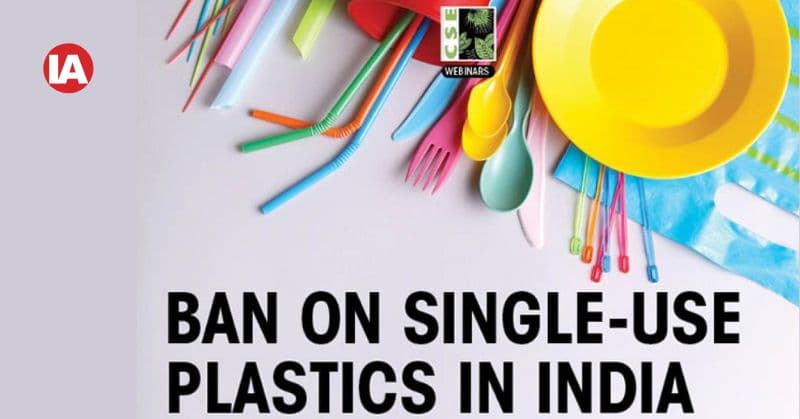
Can India lead the way to develop a global criteria for ban on single-use plastics, asks Centre for Science and Environment (CSE).
New Delhi/Busan (South Korea), November 22, 2024: As the world gets ready to meet in Busan, South Korea next week for the fifth Intergovernmental Negotiating Committee session (INC 5) on ending plastic pollution, India could lead the world towards the development of a global criteria for single-use plastics ban, say researchers from Centre for Science and Environment (CSE) who have closely followed the negotiations through the years.
In March 2022, the world had come together to agree on a ground-breaking United Nations Environment Assembly (UNEA) resolution 5/14 to “End Plastic Pollution”. The resolution mandated the creation of the INC to arrive at a legally binding instrument.
After four rounds of negotiations in Punte Del Este, Paris, Nairobi and Ottawa, this fifth and final round of negotiations in Busan -- between November 25 and December 1, 2024 – is where the member states are expected to try and build consensus on a host of issues related to plastic pollution.
According to the UNEP, problematic, unnecessary and avoidable (single-use) plastics represent 36 per cent of the plastic production in the world. Of this, an estimated 85 per cent is mismanaged – which means they end up in the environment and pollute it. Says Sunita Narain, director general, CSE: “141 countries across the globe have banned or restricted some form of plastic products, indicating a high willingness among member states to take action. However, inconsistencies in regulations across countries or provinces and states have rendered the implementation of these bans more challenging than anticipated.”
India introduced a resolution in UNEA 4, aimed at "ending single-use plastic product pollution." Says Atin Biswas, programme director, Solid Waste Management and Circular Economy, CSE: “The country is positioning itself as a leader in efforts to eliminate single-use plastics at both regional and national levels.”
In 2019, the Government of India had developed a criteria-based framework to identify problematic and unnecessary single-use plastic products. A total of 40 single-use plastic products, including carry bags, small plastic bottles, intravenous (saline) bottles and tea bags were evaluated using this criteria-based method – which was then used to phase out 19 single-use plastic items that were banned from production, stocking, distribution, sale, and use from the Indian market.
Adds Biswas: “The criteria developed by India, guided by its ministry of chemicals and fertilisers, along with support and inputs from other member states advocating for a global criteria-based approach, can serve as a foundation for creating a comprehensive, logical, and science-based global framework for problematic, unnecessary, and avoidable plastic products including single-use plastic products.”
At the INC meetings, a criteria-based approach has been advocated by many countries. “Overall, the idea of developing and embracing global criteria for problematic, unnecessary, or avoidable plastic products under the international legally binding instrument on plastic pollution enjoys support from at least 70 member states,” says Siddharth G Singh, programme manager, Solid Waste Management and Circular Economy, CSE.
_____________________________________________________________________________________________
For a deeper dive into the dynamic world of Industrial Automation and Robotic Process Automation (RPA), explore our comprehensive collection of articles and news covering cutting-edge technologies, robotics, PLC programming, SCADA systems, and the latest advancements in the Industrial Automation realm. Uncover valuable insights and stay abreast of industry trends by delving into the rest of our articles on Industrial Automation and RPA at www.industrialautomationindia.in