Indian Logistics Giant Set to Deploy Indigenous AMRs Across 12 Major Hubs in ₹250 Crore Automation Roll-Out
India’s logistics giant is investing ₹250 crore to deploy indigenous Autonomous Mobile Robots (AMRs) across 12 major hubs, boosting automation in supply chains. Featuring AI-driven navigation, LiDAR sensing, and cloud-connected fleet management, these robust AMRs designed for Indian conditions promise operational efficiency, cost savings, and job creation in digital logistics.
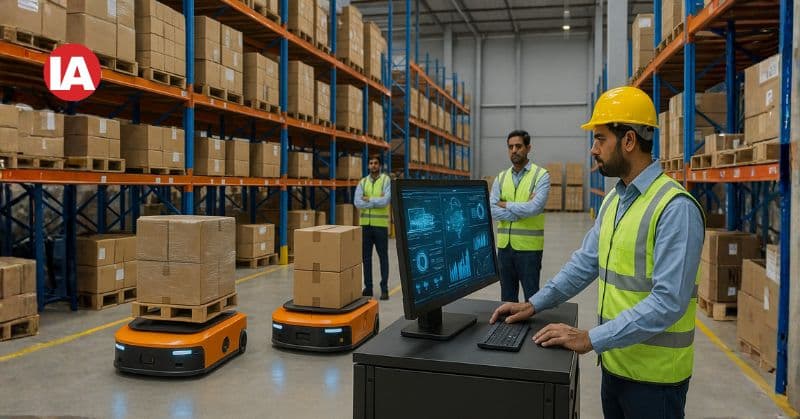
India’s ₹250 Crore AMR Deployment Ushers in a New Phase of Smart Logistics, Showcasing Homegrown Robotics Powering the Nation’s Automation‑Driven Supply Chain Revolution
A new era of intelligent mobility is dawning on India's logistics scene. One of the top logistics companies in the nation has made a historic announcement: it would invest ₹250 crore to install locally made Autonomous Mobile Robots (AMRs) at 12 of its main logistical hubs. In addition to signaling India's increasing capacity to develop and implement domestic robotics solutions on a national level, this is a significant step in the country's drive towards automation-driven supply chains.
The initiative's goal is to revolutionize the flow of goods through sizable fulfillment and distribution centers. With the help of LiDAR sensors, fleet management software, and AI-based navigation systems, these AMRs will move pallets, transport items, and facilitate last-mile connection in warehouses. The robots, which indicate the increasing capabilities of the country's automation ecosystem, were developed in partnership with Indian robotics start-ups and automation integrators. They are designed to endure the country's difficult industrial circumstances, which include high dust, uneven surfaces, and intense running cycles.
Experts in the field believe that this action marks a sea change in India's modernization of logistics. The corporation is connecting its automation plan with the government's "Make in India" and "Digital India" goals by lowering reliance on imports and localizing robotics manufacture. The implementation is anticipated to improve turnaround times at high-volume facilities, reduce manual handling by almost 60%, and reduce operating costs by 35%, providing India's logistics networks a significant competitive advantage in the global market. Additionally, the business intends to use cloud-connected fleet dashboards, AI-driven analytics, and IoT-based control systems to make its hubs intelligent, flexible, and energy-efficient. It is anticipated that this combination of automation, robots, and intelligence would close the gap between technology and employment by generating hundreds of highly skilled jobs in digital logistics, robotics maintenance, and AI operations.
This announcement is a national declaration about how automation may reshape India's industrial foundation, not just a corporate milestone. The emergence of domestic AMRs demonstrates that India can now engineer, scale, and own innovation, negating the need to import it. This deployment places India as a leader in smart mobility and robotics-driven transformation, demonstrating that automation is not the future but rather the present as logistics becomes the lifeblood of Industry 4.0.