Rewiring the Rails: The Future of Indian Railways Is Being Driven by Automation
Indian Railways—the world’s fourth-largest rail network—is undergoing a profound transformation driven by automation, AI, and digitization. From RFID-enabled freight tracking and AI-based commuter services to predictive maintenance and smart stations, the modernization of over 68,000 km of track is not just about efficiency, but about building a safer, smarter, and more sustainable mobility ecosystem for India’s $5 trillion economic vision.
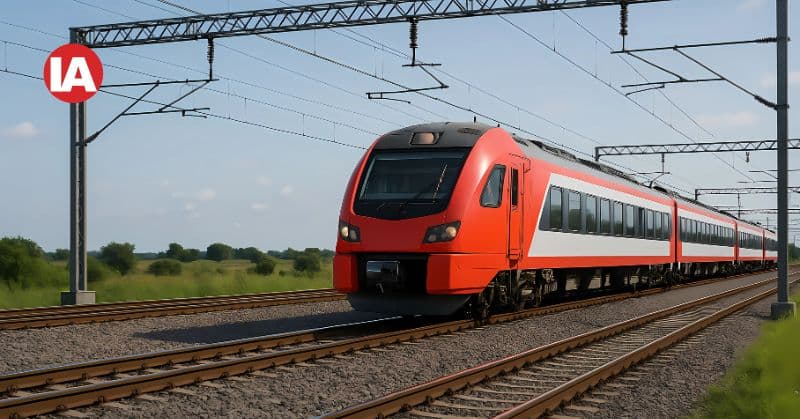
From Smart Stations to Driverless Trains, Automation Is Powering Indian Railways’ Journey Toward a $5 Trillion Digital Economy
The world's fourth-largest railway network, Indian Railways, is changing due to automation, digitization, and data intelligence. To address the issues of scale, efficiency, safety, and sustainability, the system—one of the nation's most important economic lifelines—is becoming more and more dependent on technology. With more than 8,000 stations and more than 68,000 km of track, modernization is not just necessary but also a national obligation.
Currently, Indian Railways' automation is evident in a number of operational areas. RFID-based monitoring and computerized freight management systems are now essential to cargo visibility and speed in freight operations. Despite challenges in coal movement, the Q1 FY25 performance shows a 2% increase in freight volume, partly due to improved routing and logistics systems. AI-based customer support tools, biometric-enabled gates, and digital ticketing platforms are changing commuter experiences while lowering manual labor in the passenger services industry. The integration of automation with public infrastructure is best demonstrated by smart stations that have sophisticated surveillance systems, automated announcements, and real-time information displays. In order to improve operational intelligence, Indian Railways is using sophisticated automation systems behind the scenes. Digital twins and sensor-based diagnostics for locomotives and critical infrastructure are increasingly enabling predictive maintenance. Unmanned aerial vehicles examine overhead power cables, enhancing safety and decreasing downtime, while AI-driven video analytics track driver tiredness. With the advent of Internet of Things (IoT) devices that track axle temperatures, signal integrity, and track health, real-time, data-driven decision-making is becoming more common.
The use of domestic automation technologies has been accelerated by government programs under the Make in India and Digital India projects. An important turning point in safety innovation has been reached with the introduction of Kavach, India's in-house train accident prevention system. Additional projects include zonal digitization programs that integrate energy use, signaling, and maintenance into a single, computerized grid, and Unified Command Centers for dynamic train scheduling. Workforce jobs are also starting to change as a result of automation. Indian Railways is funding extensive upskilling initiatives to equip staff members for positions in cybersecurity, data analytics, and system automation. Automation decreases the need for manual labor, but it also makes workers more nimble and tech-savvy, which can help achieve sustainability objectives in the long run.
Indian Railways has an ambitious yet attainable automation future. With the long-term objective of deploying driverless trains on high-frequency metropolitan routes, autonomous train operations are now being tested on specific corridors. It is anticipated that intelligent freight corridors, bolstered by cloud-based logistics and AI-driven warehouse management, would revolutionize the movement of commodities. Predictive scheduling, AI-powered platform assignments, and real-time dynamic pricing may soon become commonplace practices across all zones. Indian Railways is on course to develop into a smart, responsive, and internationally benchmarked transportation system in spite of scale issues and infrastructural impediments. Automation is now the operational foundation of its future, not an add-on. The railroads' digital transformation is expected to be a defining factor in India's drive to become a $5 trillion economy, demonstrating that change begins on the tracks in the race to modern mobility.