THE GOVT'S NEXT BIG PUSH: WILL THE NATIONAL MANUFACTURING MISSION FINALLY UNLOCK THE MSME AUTOMATION FRONTIER?
The Indian government’s National Manufacturing Mission (NMM) aims to revolutionize the MSME sector by establishing Smart Advanced Manufacturing and Rapid Transformation (SAMARTH) Centres. These centres will provide MSMEs hands-on access to cutting-edge automation technologies, helping overcome barriers like high investment costs and limited practical knowledge, thus driving India’s transition into Industry 4.0.
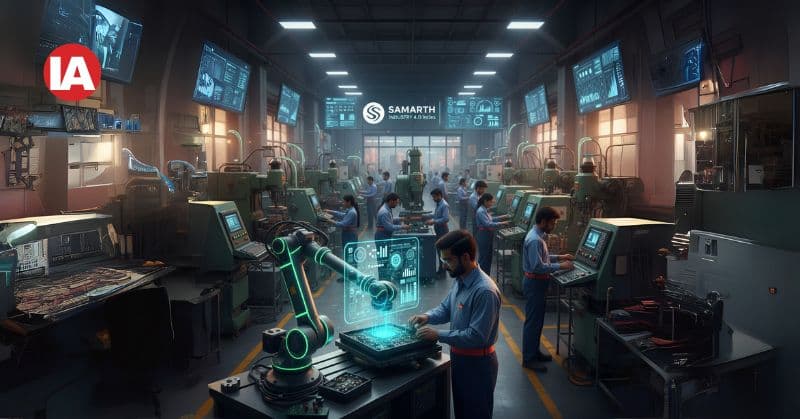
The National Manufacturing Mission Signals a New Dawn for MSME-Led Automation Growth in India
The Indian government's newly announced National Manufacturing Mission (NMM) is poised to be the most impactful policy for the manufacturing sector in years. Recognizing that a handful of large corporations can't drive the entire economy, the NMM is strategically designed to empower the vast MSME sector. The mission's cornerstone is the establishment of Smart Advanced Manufacturing and Rapid Transformation (SAMARTH) Centres. These hubs will not just be research labs; they will be hands-on experience centers where MSMEs can physically interact with cutting-edge technologies like collaborative robots, IIoT sensors, and digital twin software before making a commitment.

What This Means for the Future: This is a crucial turning point. For too long, the barrier to automation for MSMEs was fear of high initial investment and lack of practical knowledge. The NMM and its SAMARTH centres, by bridging this gap, are creating a new, massive market for automation solution providers. This policy, backed by leaders like Finance Minister Nirmala Sitharaman, is a clear signal that the government is serious about pushing Industry 4.0 beyond theory and into practice for every factory floor. The future will be defined by providers who can offer scalable, affordable, and practical solutions tailored to the unique needs of MSMEs.
IA VOICE This mission is an invitation to collaborate. As solution providers, our job is no longer just to sell products; it is to educate, demonstrate, and partner. We need to actively engage with the government and these SAMARTH centers. By offering training, live demos, and proof-of-concept projects, we can build trust and become indispensable partners in the digital transformation of India's manufacturing backbone. The market is about to open up; are we ready to lead it?