SK Hynix Powers AI’s Next Leap with High-Bandwidth Memory
South Korea’s SK Hynix has emerged as the dominant leader in the High-Bandwidth Memory (HBM) market, supplying the ultra-fast chips that are critical for powering next-generation AI systems. As data centers grapple with the "memory wall," SK Hynix's HBM sales have surged to over 40% of its DRAM revenue, positioning it as a key supplier for the future of AI infrastructure.
SK Hynix’s High-Bandwidth Memory Surge Sets New Standard for AI Computing and Automation Innovation
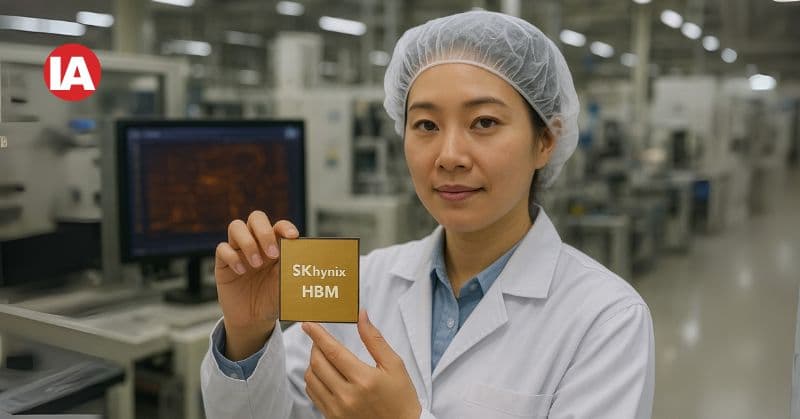
The race to power next-generation AI systems has created a new battleground: memory chips. South Korea’s SK Hynix has taken a commanding lead in High-Bandwidth Memory (HBM), the ultra-fast chips that are critical to training and running large AI models.
Once a niche product, HBM has surged into the spotlight as data centers struggle with the “memory wall” — the bottleneck created by ever-expanding AI models. SK Hynix’s HBM sales now account for over 40% of its DRAM revenue, compared with just 5% two years ago, putting it ahead of rival Samsung.
The company’s roadmap includes HBM4 chips, built with advanced hybrid bonding techniques alongside Taiwan’s TSMC, promising even greater speeds and efficiency. Analysts believe this innovation could secure SK Hynix’s position as the backbone supplier for AI infrastructure worldwide.
For manufacturers, the implications are clear: faster AI processing means reduced costs, accelerated innovation, and new opportunities in sectors ranging from healthcare to autonomous vehicles.
At Industrial Automation Magazine, we see the HBM revolution as more than a chip story. It represents the foundation for the future of intelligent, automated industries — a future our readers must stay ahead of.