India’s Lights-Out Factory Pushes AI, Robotics and Digital Twins Into Manufacturing
TCS launches a Pune lights-out factory combining AI, robotics and digital twins for autonomous manufacturing.
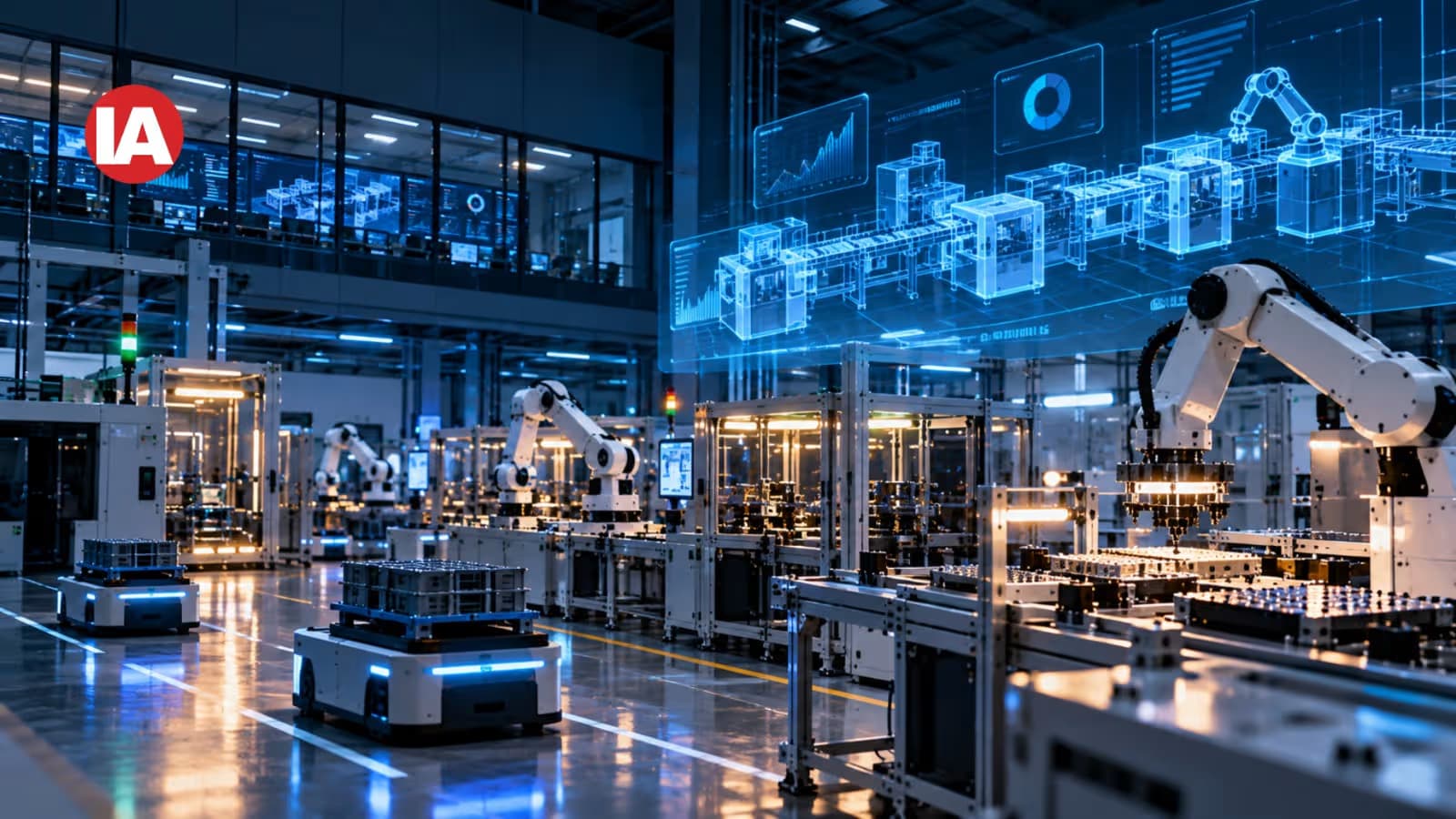
New Pune facility demonstrates how AI, robotics and digital factory technologies can work together to enable increasingly autonomous manufacturing.
Pune, September 9, 2026: Tata Consultancy Services (TCS) has launched the TCS Industrial Autonomy & Engineering Lab – Lights-Out Factory at its Sahyadri Park campus in Pune, creating a controlled environment to demonstrate AI-first and increasingly autonomous manufacturing operations.
The facility brings together industrial AI, robotics, digital twins, factory control systems and real-time operational intelligence in a live manufacturing environment. At its centre is a fully robotic battery-pack assembly line, designed to demonstrate the principles of lights-out manufacturing, where production can operate with minimal human intervention.
The Pune lab combines several technologies relevant to the next generation of industrial automation, including:
Industrial AI and autonomous production
Robotics and Vision AI
Digital twins and simulation
Factory control systems
Predictive maintenance
Automated quality inspection
Real-time process optimisation
Sensor-to-cloud industrial intelligence
Human-machine collaboration
Rather than automating individual machines in isolation, the facility demonstrates how these technologies can be integrated across engineering, manufacturing and factory operations. Digital twins and simulation environments can be used to test production scenarios before changes are introduced into a physical manufacturing environment.
The development is particularly relevant to Indian manufacturers looking to move from conventional Industry 4.0 deployments toward AI-enabled and autonomous production systems. TCS says the lab provides manufacturers with a controlled environment to prototype, validate and scale AI-based production systems while reducing deployment risks.
The facility also highlights the growing role of Physical AI in industrial automation. By combining machine perception, robotics, sensors, AI and factory data, physical systems can increasingly respond to changing production conditions rather than relying entirely on fixed sequences.
For India's manufacturing sector, the shift could have applications across automotive, battery manufacturing, electronics and other highly automated production environments, particularly where quality, flexibility and real-time optimisation are critical.
The Pune facility is part of TCS's broader Industrial Autonomy & Engineering initiative. Earlier in 2026, the company launched an Industrial Autonomy & Engineering Lab powered by NVIDIA in Bengaluru focused on Physical AI applications for industrial and mobility use cases.
The development signals a broader transition in industrial automation: from connected factories that provide data to increasingly autonomous factories that can use that data to monitor, optimise and control production processes.
Source: Tata Consultancy Services (TCS) / The New Indian Express