Tesla's AI5 Chip Tape-Out Signals a New Era in Automation Hardware
Tesla has confirmed the tape-out of its AI5 chip and the start of AI6 development, marking a major leap in automation hardware. Designed for vehicles, humanoid robots, and factories, the AI5 offers 40x the performance of its predecessor, enabling enhanced edge intelligence and real-time adaptability for robotics and smart manufacturing ecosystems without relying on cloud processing.
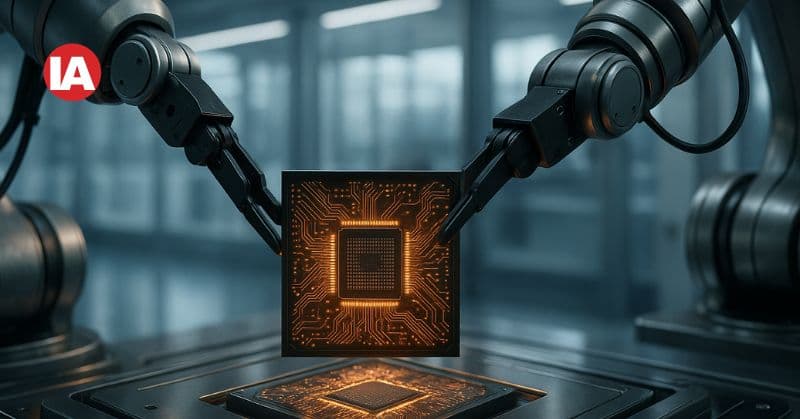
Tesla’s AI5 Chip Tape-Out Marks a Leap in Automation Hardware, Delivering 40x Performance Boost for Robotics and Smart Factory Systems
Tesla has reached a pivotal milestone in its silicon strategy, with CEO Elon Musk confirming that the company has completed the tape-out of its upcoming AI5 chip and has already begun early development on the AI6 generation. The advanced chipset is designed to replace Tesla's existing AI4 hardware, signaling a shift toward highly specialized silicon engineered for robotics, intelligent manufacturing platforms, and automated industrial systems. Rather than relying on general-purpose GPUs, Tesla is positioning this AI-native silicon as a foundation for physical intelligence—purpose-built hardware capable of interpreting motion, sensing complex environments, and enabling responsive automation at scale.
AI5 Designed for Automation Hardware for Robotics and Smart Factories
Musk noted that the AI5 hardware will power not just Tesla vehicles but also the company's humanoid robot program, full self-driving architectures, and future factory automation components. For the industrial automation sector, this represents a significant shift: the same embedded AI processors that orchestrate autonomous driving could soon enable robotic arms, CNC machines, and mobile platforms to operate with quicker adaptation, richer perception, and greater autonomy. Tesla's roadmap hints at a future where robotics intelligence hardware becomes unified across vehicles, robots, and factory systems.
Industrial AI-Native Silicon Accelerating Edge Intelligence
What differentiates the AI5 and upcoming AI6 generations is Tesla's tight integration of compute, hardware, and automation workflows. The chips promise enhanced on-device inference acceleration, improved edge intelligence, lower latency, and reduced reliance on cloud-based processing—critical advantages for industrial automation environments where reliability, safety, and speed determine performance outcomes. As integrators struggle to scale intelligent workflows, Tesla's approach underscores a growing trend: automation hardware must rely on specialized computer vision chips and robotics silicon rather than generic compute solutions.
A Roadmap for Next-Gen Manufacturing Automation
Tesla's chip announcement signals more than incremental progress. It represents a blueprint for the next era of automation hardware—one where silicon, sensors, servos, and software converge. For automation leaders, the direction is clear: factories will increasingly deploy machines built on specialized AI hardware capable of learning, coordinating, and responding in real time. The future of manufacturing emerges at the intersection of autonomy, silicon optimization, and intelligent motion control.