Machines and Missiles: How Trump's Ukraine Decision Leads to a Global Increase in Military Automation
As former U.S. President Donald Trump reaffirms support for Ukraine through advanced Patriot missile systems, the decision is catalyzing a global surge in military automation. From AI-driven production lines to autonomous battlefield technologies, this marks a pivotal shift where industrial automation is becoming as crucial as diplomacy and defense in shaping geopolitical futures.
Patriot Missiles, Smart Plants, and the Rise of the Algorithmic Arsenal: Military Automation Goes Global
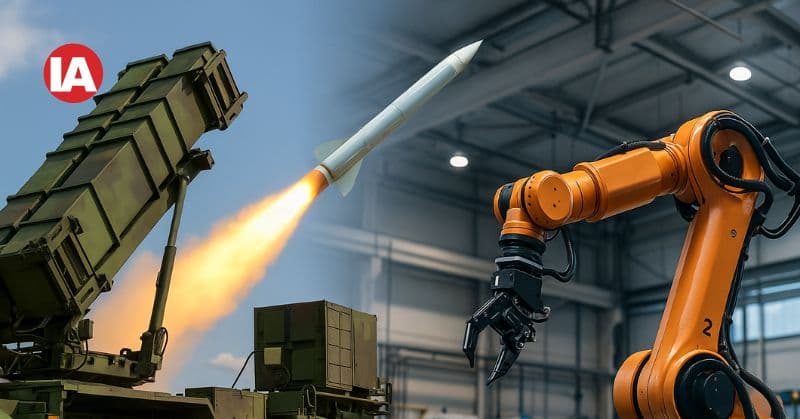
The clearance of improved Patriot missile systems for Ukraine was reaffirmed today by former U.S. President Donald Trump, in a high-stakes revelation that sent shockwaves through the industrial and geopolitical corridors. While defense and diplomacy dominate international headlines, a more subdued but equally significant change is underway: a sharp increase in military automation that is transforming industrial manufacturing ecosystems and global defense supply networks. Patriot missiles are not your typical weaponry. These very advanced devices combine automated threat-response systems, machine learning-based target discrimination, and real-time radar tracking. As Ukraine prepares to receive these systems, private military contractors and allies are increasing automated production lines to keep up with the rapidly increasing demand worldwide.
According to insiders, companies like Raytheon, Lockheed Martin, and Eastern European defense startups are now implementing advanced robotics for assembly, expanding AI-powered production cells, and incorporating digital twins into missile lifecycle management. "This is not merely a military agreement. "It is a turning point in automation," says analyst Rajiv Kohli of the defense sector. "Every layer of these systems relies on industrial automation, from hyper-automated supply chain logistics to predictive maintenance driven by IoT sensors." The repercussions are not limited to NATO allies. According to reports, South Korea and Japan, two of Asia's biggest military companies, are adjusting their own missile automation plans in response to regional concerns. A new era of intelligent, carbon-efficient production lines based on Industry 4.0 standards is being ushered in by even neutral countries increasing their investments in smart military plants.
In Ukraine, integrating these systems entails establishing safe, automated command centers driven by autonomous monitoring drones and AI-enabled control panels. "It is not only boots on the ground anymore. "It is sensors in the sky, robots in the field, and smart systems in bunkers," says defense technology specialist Olena Mykhalchuk of Kyiv. This geopolitical hotspot highlights a developing reality for the industrial automation industry: automated manufacturing and digital intelligence will play an equal role in future conflicts as human strategy. In addition to missiles, Patriot systems are bringing with them a silent army of networks, machines, and algorithms that will power military production in the future all around the world.