XELA Robotics unlocks enhanced automation for humanoid and industrial robots
XELA Robotics is advancing automation for humanoid and industrial robots by delivering a human-like sense of touch through its breakthrough uSkin 3D tactile sensor technology. Debuting at CES as a first-time exhibitor, the company is showcasing how physical AI enables robots to handle objects with greater precision, safety, and real-world adaptability.
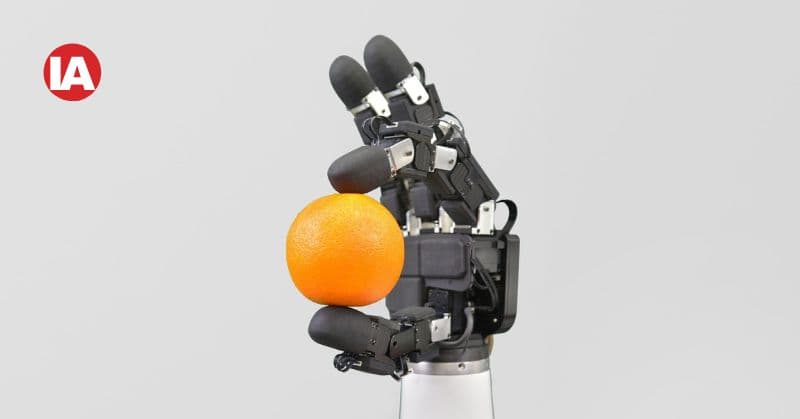
First-time CES exhibitor to demonstrate its breakthrough in physical AI providing robots with human sense of touch.
XELA Robotics, a specialist in advanced 3D tactile sensors, has succeeded in providing a human sense of touch for humanoid and industrial robots. As a first-time CES exhibitor (LVCC North Hall, booth 8500), the company is currently displaying a working demonstration of its proprietary uSkin sensor technology integrated into robot hands and grippers.
Unlocking Physical AI for Industrial and Humanoid Robots
The hardware and software solution enabling physical AI—already in use across universities and commercial sectors—unlocks a new level of automation. It helps solve the critical challenge of robotic hands that simply cannot handle objects as carefully and efficiently as humans. XELA Robotics' sensors are durable, compact, easy to integrate, and highly cost-effective. They are offered as standalone components or fully integrated into robot hands and grippers.
XELA Robotics maintains an agnostic integration strategy, supporting offerings from leading companies including Wonik Robotics, Sake Robotics, Weiss Robotics, and Robotiq. This compatibility allows customers to enhance their pre-existing, preferred hardware with high-fidelity tactile data.
Milestone Integration: Tesollo DG-5F Anthropomorphic Hand
In December 2025, the company announced the successful integration of uSkin sensors into the Tesollo DG-5F, a five-fingered anthropomorphic robot hand. This popular model, capable of human-level gripping and manipulation, will begin accepting commercial orders in the late first quarter of 2026.
"We have taken an agnostic approach towards the commercialization of our technology," said Alexander Schmitz, CEO, XELA Robotics. "Our focus has been to develop the most human-like sense of touch and make it available to all companies seeking to enhance their real-world automation."
Advanced 3D Tactile Data and Real-Time Manipulation
The family of uSkin sensors allows robots to understand how tightly they are gripping an object and how it moves within their grasp. Built from a flexible elastomer, the sensors conform to different object shapes and can be customized for specific application needs.
The 3D tactile sensors detect object shape, contact forces, and soon slippage in real time. Without this 3D tactile data, "simple" human tasks remain extremely difficult for robots. Unlike traditional robotic hands that only feature sensors in the fingertips, XELA Robotics integrates sensors across a larger surface area—including fingertips, phalanges, and the palm—mimicking the human hand’s comprehensive sensing capabilities.
Scaling Automation Across Manufacturing and Logistics
The company's proprietary high-density three-axis tactile sensors address the fast-growing market for humanoid and industrial robot hands and grippers. Applications span manufacturing, logistics, warehousing, and agriculture.
Designed to integrate seamlessly into parallel grippers, multi-finger adaptive grippers, or custom end-effectors, the uSkin sensors significantly reduce the engineering requirements and costs typically associated with adding advanced tactile sensing to existing robotic systems.