9/15/2026
Ten Best Global Companies Offering AI-Powered Warehouse Automation Solutions
Explore 10 leading global companies shaping AI-powered warehouse automation through robotics, software, AS/RS and intelligent material handling.
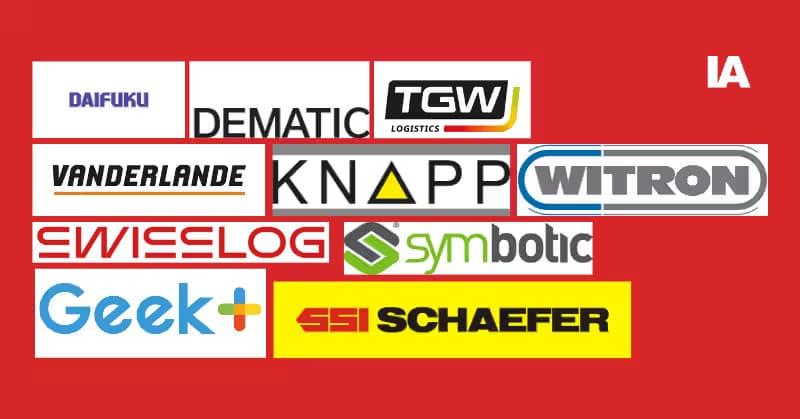
The ten companies featured here represent the different technological approaches that are shaping that future.
The warehouse of the future is rapidly evolving from a storage facility into an intelligent, highly automated fulfilment centre. Artificial intelligence, autonomous mobile robots (AMRs), automated storage and retrieval systems (AS/RS), machine vision, sophisticated sortation and warehouse-execution software are converging to make warehouses faster, more flexible and increasingly autonomous.

automated facilities. Image source: Daifuku
With e-commerce, omnichannel distribution and supply-chain volatility driving demand for greater speed and accuracy, companies are investing in automation that can optimise inventory, predict demand, coordinate robots and dynamically manage material flow. Based on technology capabilities, global presence, breadth of solutions and strength in intelligent automation, these are ten companies that stand out.
1. Daifuku
Japan-based Daifuku is one of the world's largest material-handling and intralogistics companies and a natural choice for the top position. Its portfolio encompasses AS/RS, conveyors, sortation, picking systems, software and complete material-handling solutions.
Daifuku's major strength is its ability to engineer complete automated facilities rather than merely supply individual technologies. Its solutions serve manufacturing, retail, e-commerce, airports and distribution centres. Its extensive experience in high-volume automated environments gives it a strong position as warehouses move towards increasingly intelligent operations. Daifuku is consistently identified among the leading global logistics-automation companies.
2. Dematic – KION Group
Dematic is a global leader in integrated warehouse automation, combining conveyors, sortation, AS/RS, robotic technologies and software. Its systems are designed to optimise the movement of goods from receiving and storage through picking and dispatch.
A major advantage is its emphasis on software and intelligent orchestration. Dematic can integrate multiple automation technologies into a unified warehouse environment, enabling operators to optimise throughput, inventory and order fulfilment. Its position within KION further strengthens its capabilities across the material-handling ecosystem.
3. SSI SCHÄFER

and distribution-centre operations. Image source: WITRON
Germany's SSI SCHÄFER is another major global intralogistics specialist, offering automated storage and retrieval, shuttle systems, conveyors, picking technologies, robotics and warehouse software.
The company's ability to integrate storage infrastructure, automation and software makes it particularly relevant to large distribution and fulfilment centres. Its solutions are deployed across sectors ranging from food and beverage and retail to healthcare and manufacturing.
Its breadth of technologies and global project experience make SSI SCHÄFER one of the strongest candidates for an intelligent warehouse-automation ranking.
4. Vanderlande
Vanderlande has built a formidable global reputation for automated material handling and logistics systems. It is particularly strong in e-commerce, parcel distribution, airports and large fulfilment centres.
Its portfolio covers conveying, sortation, storage, picking and software, with the company specialising in integrating these technologies into complex, high-throughput facilities.
Vanderlande's ability to manage enormous volumes of goods while coordinating multiple automation technologies is a major reason for its inclusion. It is consistently ranked among the world's leading warehouse and intralogistics automation providers.
5. KNAPP
Austria-based KNAPP specialises in intelligent intralogistics, with technologies spanning automated storage, shuttle systems, goods-to-person picking, robotics, conveyors and software.
Its particular strength is the close integration of automation hardware and intelligent software. This allows warehouses to optimise material flow while responding to constantly changing order profiles and customer requirements.
KNAPP has strong expertise in retail, e-commerce, healthcare, fashion and food logistics, making it an important player in the transition towards software-driven fulfilment operations.
6. Swisslog – KUKA
Swisslog combines extensive warehouse-automation expertise with KUKA's robotics capabilities. Its portfolio includes AS/RS, robotic picking, pallet handling, conveyors and warehouse software.
This combination is particularly valuable because modern warehouses increasingly need both fixed automation and flexible robotics. Swisslog can therefore support highly automated distribution centres as well as more adaptable goods-to-person applications.
Its software platform provides an additional layer of intelligence, connecting equipment and operational data to improve warehouse performance.
7. WITRON
Unlike a general industrial-robotics company, WITRON is fundamentally focused on automated logistics and distribution-centre operations.
Its expertise includes automated storage, material flow, order picking and highly automated distribution centres. The company is particularly strong in grocery and retail logistics, where enormous product volumes and demanding fulfilment requirements require highly coordinated automation.
WITRON's credentials were reinforced in 2026 when it received the Best Warehouse Automation Company award in the Asia-Pacific region, recognising projects based on its end-to-end OPM technology. The company says OPM is now implemented in more than 100 food-retail distribution centres worldwide.
8. TGW Logistics
TGW Logistics is a leading European intralogistics specialist providing automated fulfilment systems, shuttle technology, conveyors, picking solutions and software.
Its strength lies in designing complete fulfilment environments rather than isolated automation systems. This makes it particularly relevant to retail and e-commerce operators that need high-speed picking and order processing combined with scalability. TGW is regularly identified among the major global warehouse-automation providers.
9. Symbotic
US-based Symbotic represents the more AI-centric end of warehouse automation. Its systems combine robotics, computer vision, artificial intelligence and software to automate the storage and movement of goods within large distribution centres.
The company's approach is particularly notable for using intelligent robotic systems to optimise the entire warehouse rather than automating a single task. Symbotic's strong presence in highly automated distribution operations makes it an important example of where AI-powered warehousing is heading.
Its inclusion also gives the ranking a stronger representation of next-generation robotic warehouse technology. Symbotic appears among leading global warehouse-automation system integrators.
10. Geek+
Geek+ represents the rapid rise of autonomous mobile robotics in warehousing. The company specialises in AMRs for goods-to-person picking, transportation, sorting and fulfilment.
Its major advantage is flexibility. Unlike heavily fixed automation, AMR-based systems can often be introduced into existing facilities and expanded as requirements change.
Geek+ is also pushing beyond conventional AMRs towards AI and embodied intelligence. In 2026, it showcased its Geekplus Brain platform and robotic picking technologies, highlighting its ambition to develop increasingly autonomous warehouse operations.
The road ahead
The defining trend across these ten companies is the convergence of automation hardware, robotics, software, data and AI. The warehouse is evolving from a collection of automated machines into an intelligent ecosystem in which software determines what should happen while robots and automated equipment execute those decisions.
The distinction between conventional warehouse automation and AI-powered automation will consequently become increasingly blurred. Future systems will use AI to forecast demand, optimise inventory locations, dynamically allocate robots, improve picking strategies and anticipate equipment failures.
For warehouse operators, the challenge is no longer simply to automate individual processes. It is to build an intelligent, connected and scalable fulfilment environment. The ten companies featured here represent the different technological approaches – from large-scale automated distribution centres to flexible fleets of autonomous robots – that are shaping that future.