The Mystery Behind Repeated Breaker Failures in Spain
ABB uncovers the cause of repeated breaker failures, helping a Spanish plant improve reliability and uptime.
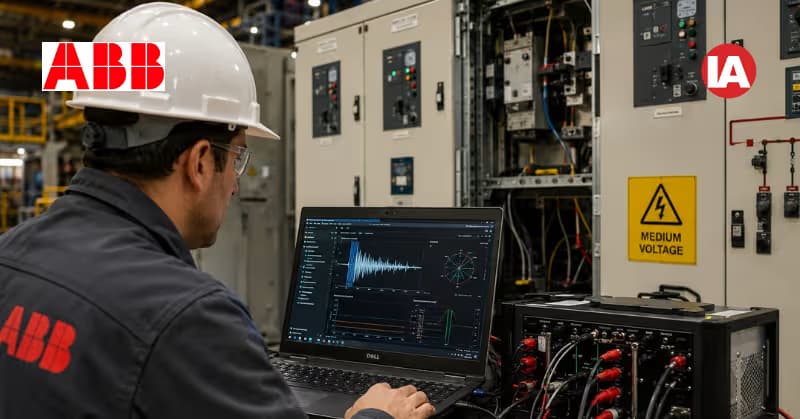
ABB’s Electrification Service team was asked to find a solution
How ABB helped solve the mystery behind repeated breaker failures in Spain.
ABB has helped identify a frequent cause of disruption for a global player in the metals and mining industry at their finishing plant in Sagunto, eastern Spain. As well as identifying the problem, which had mystified on-site teams, ABB has also begun the process of remedying the issue.
The plant processes two million tonnes of cold and zinc-coated products each year, mostly for the European automotive sector. However, repeated failures of the plant’s indoor medium-voltage circuit breaker were causing frequent interruptions to the plant’s smooth operation.
ABB’s Electrification Service team was asked to find a solution. The team established that the breaker was damaged due to suffering transient overvoltage events (voltage spikes). These are a common cause of equipment failure, overheating or fire.
The next step was to carry out a Power System Study, incorporating Typhoon HiL hardware-in-the-loop (HIL) testing. The is a simulation-based technique used to verify the system’s performance by integrating virtual simulations into its hardware.
Recreating the voltage spikes to the circuit breaker allowed the ABB’s service team to simulate what had previously occurred, and conduct Short Circuit and Load Flow studies for the system. These conclusively proved that the circuit breaker could not support the over-voltages, and needed to be replaced with an alternative model.
By pinpointing the real source of the overvoltage events and proving exactly why the existing breaker could not cope, ABB has given the customer a clear path to a long-term fix. The Power System Study and hardware in the loop testing provided evidence the plant had been missing, which means the customer can now move forward with a replacement solution that protects equipment, reduces unplanned outages and safeguards production output. The result is higher reliability, less operational risk and a more stable process for one of Europe’s busiest finishing plants.