The Industrial Edge: Where Field Data Becomes Dependable
Dr. Niranjini Rajagopal explains how edge computing transforms field data into reliable industrial intelligence.
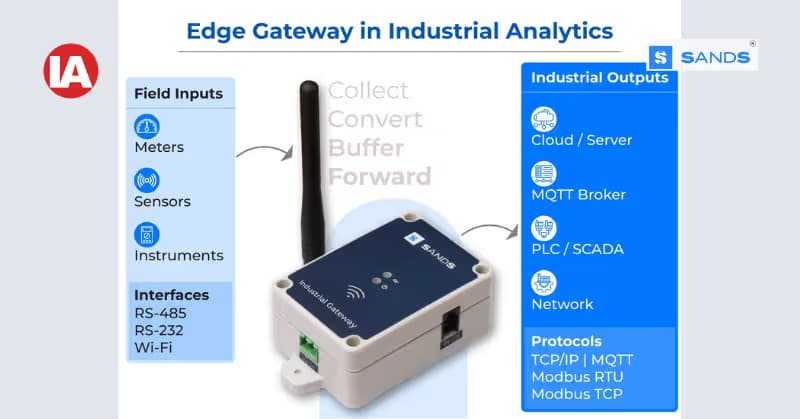
Figure 1: Gateway Edge in Industrial Analytics
The edge is where field conditions are first converted into dependable data for the rest of the system, says Dr Niranjini Rajagopal.
Industry 4.0 creates value only when the field implementation is designed around the plant’s operational requirements. Sensors, instruments, gateways, software and dashboards are only means to that end.
A maintenance engineer wants to know which machine is degrading and what action is required. An electrical engineer wants to know whether a trip was caused by supply disturbance, harmonics or equipment failure. An energy manager wants to know what is driving demand, penalties and energy cost. Plant leadership wants early visibility into issues affecting reliability, cost or production.
Therefore, real-time industrial analytics cannot be designed only from the software layer. It has to be engineered from the field upward. The key questions are: What data is useful? Where should it be processed? How should it be communicated? How will it help the customer take action?
This is where edge computing becomes important. In practical terms, edge computing is the discipline of deciding what should be processed near the field device, what should be handled by the gateway, and what should be left to the cloud or software platform.
Where should processing take place?
A common question in edge-computing projects is whether processing should happen at the edge or in the cloud. In industrial systems, the better question is where each part of the processing can be done most reliably and effectively in the overall architecture.
Some processing must happen at the sensor or measurement instrument. This is true when data is high-speed, sampled at high frequency, event-based or signal-processing intensive. Vibration monitoring and power quality analysis are good examples. Some processing is better handled at the gateway. This includes polling multiple devices, converting protocols, buffering data, formatting data for the receiving system, managing communication and aggregating data from various field devices. Some processing belongs in the cloud or software platform, such as long-term trends, dashboards, reports, multi-site comparison and management visibility.
A good industrial architecture does not push everything to one layer. It distributes processing based on the use case. This is especially true for cyber-physical systems, where the physical behavior of machines, meters, electrical systems, and processes must be captured correctly before software can create useful analytics.
Sensor-level edge processing
A portable analyzer and a continuous online monitoring system cannot be designed in the same way.
In SANDS ARGUS portable vibration analysis, the field engineer is present at the machine and takes measurements in real-time. The engineer would view results locally on a phone or tablet. In this scenario, key vibration metrics, FFT outputs, alarms and diagnostic information must be computed at the device level and sent locally for review. The tablet can provide local storage and later upload the data to the cloud.
In ARGUS online condition monitoring, the assumptions are different. The sensor is permanently installed, and the system is expected to operate without a field engineer or tablet being present. Processing, buffering, alarms and communication must therefore be handled by the sensor, instrument or gateway layer, with integration to cloud, MQTT, Modbus or PLC/SCADA systems as required.
Product architecture must therefore account for network, storage, power, user interaction and monitoring requirements.
Gateway-level edge processing

Where field devices have to interface with existing plant systems, the gateway often becomes the main edge layer.
A gateway should not be viewed merely as a communication accessory. Its role is not only to transmit data. Its role is to convert field data into usable data for the required system.
Industrial plants rarely have a clean architecture. They may have legacy meters, RS-485 loops, RS-232 devices, Modbus RTU, Modbus TCP, Ethernet, Wi-Fi, MQTT platforms, PLCs, SCADA systems, cloud platforms and customer-specific servers. Different departments often want the same data in different formats.
A configurable industrial gateway handles this reality. It can collect data from existing devices, convert protocols, buffer readings, standardise data and forward it to the required system.
A configurable gateway such as the SANDS Industrial Gateway collects, converts, buffers and forwards field data so that meters, sensors and instruments can interface with cloud platforms, MQTT brokers, PLC/SCADA systems and industrial networks.
In energy management, this becomes especially important because multifunction meters from different manufacturers may have different register maps and communication behavior. A well-designed gateway can absorb much of this field complexity and send structured data to an energy management platform, SCADA system, MQTT broker or customer server.
Field events need capture, context and time
Some industrial data is valuable only if it is captured at the right moment. Power quality is a good example. Voltage sags, swells, interruptions, transients, harmonics and imbalance may occur suddenly and may not last long. If the instrument does not detect and record the event locally, the evidence is lost. The cloud can display the event, but the instrument has to capture it.
In energy management, the challenge is context. A plant may have incomers, feeders, panels, sub-meters, solar meters, DG sets, UPS systems and production loads. Unless the data is mapped to the plant’s electrical and operational structure, the software may show values but not insight.
Time synchronisation becomes important when events from different systems must be correlated. A machine trip, power quality disturbance, PLC alarm and energy anomaly may be related. But if timestamps are not aligned, root-cause analysis becomes very difficult. Real-time analytics is therefore not only about fast data. It is about captured data, contextual data and correctly referenced data.
Layers of real-time industrial analytics
In a working industrial analytics system, all layers have to support each other.
The field layer must capture the right physical condition. The edge device must process or preserve the signal without losing the important information. The gateway must communicate the data in the format required by the receiving system. The platform must organise the data so that it can be viewed, compared and acted upon.
The figure shows how SANDS edge devices fit into the connected stack linking field assets, industrial protocols, platforms and application-level analytics.
If any one of these layers is weak, the final dashboard may still look good, but the decision may be unreliable. A vibration alarm without operating context, a power quality event without waveform capture, or an energy dashboard without correct meter mapping can all lead to wrong conclusions.
The objective is therefore not to collect more data. The objective is to design the system such that field data yields useful action – reducing downtime, improving reliability, controlling energy cost, diagnosing disturbances and supporting better operational decisions.
This integrated approach is reflected in SANDS’ work across vibration monitoring, power quality analysis, energy monitoring, industrial gateways and GPS time synchronisation. The edge is where field conditions are first converted into dependable data for the rest of the system.
Dr Niranjini Rajagopal is Principal Consultant at GridInfinite LLC, USA. Her work spans industrial IoT, embedded and wireless sensing systems, signal processing, cyber-physical systems, and edge-to-cloud architectures, with a focus on making sensing systems work reliably in real-world deployments. She previously worked as a Senior Research Scientist at Amazon and holds a PhD in Electrical and Computer Engineering from Carnegie Mellon University. She currently works with SANDS on translating field requirements into industrial IoT, condition monitoring, and energy management solutions.
Author