By 2027, Amazon intends to implement a significant automation shift by replacing 600,000 American jobs with robots
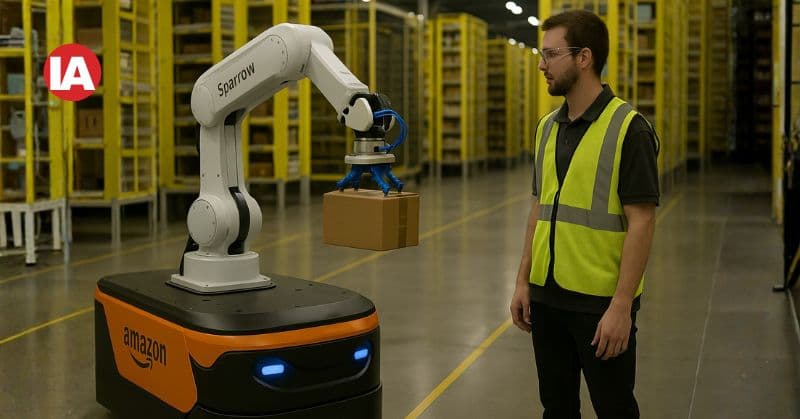
Amazon is accelerating its automation strategy with plans to avoid hiring approximately 160,000 warehouse workers in the United States by 2027, according to internal documents reviewed by The New York Times. While not replacing existing employees directly, the company aims to automate up to 75% of its fulfillment operations using advanced robotics like Sparrow and Proteus, along with AI-driven systems.
Amazon’s 2027 Automation Plan Redefines the Modern Workforce, Signaling a Global Shift Toward Fully Robotic Warehouses and AI-Driven Supply Chains
Amazon has revealed its most audacious move toward widespread automation, aiming to replace about 600,000 warehousing and logistics positions in the United States with robots by 2027. This news has shocked both the tech and labor sectors. This is a fundamental reinvention of what a workforce in the twenty-first century looks like, not just a business efficiency move. Once seen as a remote disruptor, automation is now assuming a central role on a never-before-seen scale.
Leaked internal studies state that Amazon plans to reduce its reliance on human labor by up to 75% by implementing an exponential expansion of robotics and AI integration across its fulfillment and sorting facilities. The project expands on the business's previous investments in robotic systems, such as Sparrow, a vision-based robotic arm that can sort millions of items every day, and Proteus, its completely autonomous mobile robot. By integrating predictive analytics, robotics, and machine learning, Amazon is building a completely automated environment that functions with unparalleled accuracy, speed, and scalability. This development is both a case study and a catalyst for the industrial automation industry. Amazon's shift demonstrates how automation may address a range of intricate operational issues, including labor shortages, supply chain unpredictability, and sustainability and efficiency goals. Innovation in adjacent domains like sensor technology, AI-powered logistics software, warehouse automation systems, and collaborative robotics (cobots) will accelerate as the corporation expands its robotics capabilities.
However, the announcement also provokes discussion. Automation creates important issues around job displacement, reskilling, and the moral balance between innovation and livelihood, even while it promises unparalleled efficiency. There will be demand on both governments and businesses to appropriately integrate automation while maintaining human oversight and decision-making.
Amazon's automation revolution is not only a significant business achievement; it marks a sea change in the global economy. Robots are the new labor force, and the warehouse has evolved into the new factory. The world is on the verge of a new industrial paradigm, one in which intellect, not labor, propels advancement, as automation redefines precision and productivity. The question now is not if automation will take over, but rather how mankind will change to keep up with it.