Automation Increases, Oil Declines: Smart Factories Prepare for Energy Volatility
As global oil prices dip below $70 amid geopolitical tensions and economic uncertainties, smart factories equipped with AI-driven automation are emerging as vital stabilizers. These intelligent manufacturing facilities actively adapt to energy market fluctuations using predictive load-balancing, real-time monitoring, and integration of renewables, enabling Indian manufacturers to manage costs and sustain operations despite volatility. Automation is evolving beyond efficiency—becoming essential for resilience in an unpredictable energy landscape.
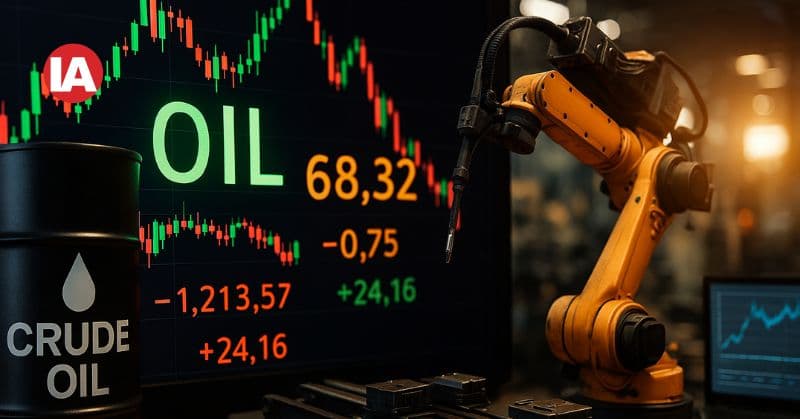
Smart Manufacturing Adapts and Endures: Automation as a Shield Against Global Energy and Geopolitical Shocks
Unease is evident in the world's oil markets. The durability of global supply chains is being put to the test by a precarious combination of trade uncertainty, geopolitical conflict, and central bank policy anxieties as Brent crude falls below $70 and the U.S. WTI follows suit. However, there is a strong undercurrent beneath this energy fluctuation: intelligent automation's emergence as a stabilizing factor in unstable circumstances. Although the newly signed U.S.-EU trade agreement, which caps tariffs at 15%, may provide short-term alignment, investors are concerned about its long-term effects on the economy. At the same time, growing tension between the United States and Russia over Ukraine and an impending interest rate decision by the Federal Reserve have caused a hesitancy around the world. As usual, energy prices are the first to change. This is more than just a passing trend for manufacturers, particularly those in energy-intensive industries like steel, automotive, and chemicals; it is a cost shock with operational ramifications.
Now let us talk about automation.
Smart factories of today are more than just passive energy users. Automated facilities can actively adapt operations to market signals by utilizing AI-powered energy management systems, predictive load-balancing algorithms, and real-time usage monitoring. This entails moving non-essential operations to off-peak times, adjusting equipment dynamically to use less energy, or even incorporating renewable energy sources using intelligent microgrids. Automated energy intelligence is increasingly being considered as the next competitive advantage by Indian manufacturers, many of whom have traditionally operated on extremely low margins. Because shifting oil prices have a direct effect on utility, material, and shipping costs, predictive automation solutions are becoming crucial for survival as well as efficiency.
Automation executives are aware that the current energy downturn may provide temporary respite. The true strength is in creating self-optimizing systems that can flourish in chaos, not in waiting for prices to stabilize. Automation is no longer just about output; it is about enduring volatility in a world where geopolitical earthquakes quickly reverberate across factory floors and fuel pipelines. Smart manufacturing not only adjusts when oil slips, but also predicts, reacts, and persists. The intelligent, not simply the efficient, will rule the future.