Chef Robotics 100 Million Servings India Implications
Chef Robotics announces its robots have completed 100 million servings in live production, building the world’s largest real‑world food manipulation and deformable‑material training dataset and redefining what’s possible for AI‑driven food‑robotics and physical AI in manufacturing.
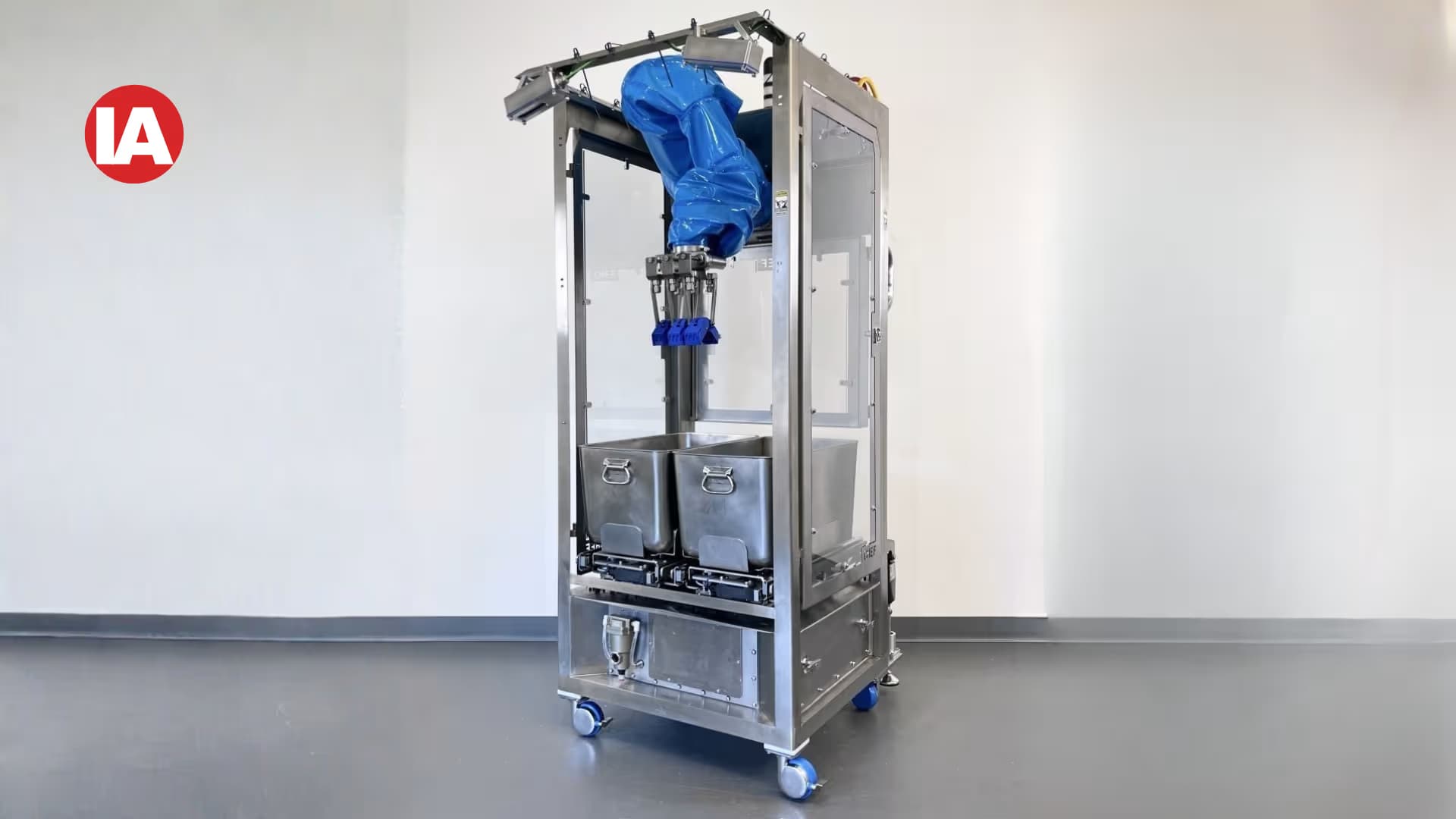
Food manufacturing is one of the most complex, labour‑intensive sectors, yet it’s historically been slow to adopt automation. Chef Robotics’ 100 million‑serving milestone in production underscores that physical AI is now mature enough to handle high‑volume, high‑variability food‑handling tasks—setting a template Indian OEMs and food processors can learn from.
What Happened
Chef Robotics, a San Francisco‑based food‑robotics and physical AI platform, has logged 100 million servings completed by its robots in live production facilities across the US, Canada, and Europe. The company now holds the world’s largest real‑world food manipulation and deformable‑material training dataset, trained exclusively on live manufacturing data rather than synthetic or lab‑only environments. Chef’s robots are deployed in more than a dozen plants, where they handle high‑volume tasks like portioning, assembly, and pick‑and‑place of organic, variable food items.
Why This Matters
For Indian food‑processing and automation players, this milestone is a proof‑point: physical AI can handle messy, variable real‑world inputs at scale, not just predictable, structured environments. The 100 million‑serving dataset is essentially a “live test‑bench” for any deformable‑material AI model; Indian OEMs that partner with or benchmark against Chef‑style stacks can accelerate their own robotics roadmaps for bakeries, dairy, snacks, and fresh‑produce lines.
Industry Context
India’s food‑processing industry is under severe labour‑cost and quality‑consistency pressure, even as it scales to meet export‑quality and FSSAI‑driven standards. Chef’s approach—starting in high‑volume, lower‑complexity food‑manufacturing instead of cafeterias or commercial kitchens—mirrors the logic Indian plants need: automation first on the most repetitive, scale‑intensive operations, then move toward higher‑mix, lower‑volume tasks. This also dovetails with India’s push for Industry 4.0 in agro‑processing and cold‑chain infrastructure.
Leadership Insight
“Food is one of the most technically demanding manipulation environments in the physical world,” said Rajat Bhageria, Founder and CEO of Chef Robotics. That line crystallizes Chef’s strategy: solve hard‑to‑automate, deformable‑material problems first, and the platform can then generalize to other complex, unstructured industrial manipulation tasks—beyond food, into plastics, textiles, and multi‑material assembly.
Key Takeaways
100 million servings means Chef’s robots now have orders‑of‑magnitude more real‑world training data than rivals, giving them a compounding data‑edge in food‑robotics performance.
Indian food‑manufacturers can treat Chef‑style deployments as a reference for ROI‑driven automation in high‑volume, labour‑intensive lines like vegetable processing, snack‑making, and meat‑portioning.
The company’s “live‑data‑only” training approach underlines that simulation‑first strategies are insufficient for deformable‑material AI, forcing Indian developers to prioritize pilot‑runs in real production environments.
As India’s F&B and FMCG sectors modernize, this milestone signals a shift from “static automation” (packaging, conveyors) to intelligent, adaptive robots that learn from variability.
For local OEMs and system integrators, partnering with or benchmarking Chef‑style stacks can fast‑track AI‑driven robotics deployment in India‑specific food‑processing and agro‑value‑add plants.
About Chef Robotics
Chef Robotics is a leading food‑robotics and physical AI platform headquartered in San Francisco, focused on automating food‑handling and manufacturing tasks. The company builds AI‑driven robots that learn from real‑world production data, aiming to improve yield, consistency, and labour productivity in high‑volume food‑manufacturing environments.
FAQ
What does “100 million servings” actually mean for Chef Robotics?
It means Chef’s robots have completed 100 million food‑serving actions in real‑world customer production lines across the US, Canada, and Europe. That’s not test‑bed runs or lab demos—it’s robots portioning, assembling, and handling food on live factory floors, and it’s roughly ten times more than all other food‑robotics firms combined.
Why is this such a big deal for automation in India?
Indian food‑processing plants are still mostly manual or running basic mechanisation, yet they face labour shortages and rising quality expectations. Chef’s milestone shows that AI‑driven robots can reliably handle messy, variable food items—like veggies, snacks, or meat—on high‑volume lines. That’s a believable roadmap Indian OEMs and processors can copy, not a distant tech demo.
How does Chef’s data‑driven approach differ from other robotics?
Unlike self‑driving cars or warehouse bots, Chef doesn’t rely on simulation or synthetic data. Food is organic, soft, and never the same twice, so the only way to train useful models is with real‑world production data. Every new plant and every new ingredient Chef sees makes its AI smarter, creating a “flywheel” where more deployments lead to better robots, which in turn attract more customers.