NVIDIA GTC 2026: Dassault Systèmes Unveils the Future of Industrial AI
Dassault Systèmes unveils next-gen industrial AI at NVIDIA GTC 2026, combining virtual twins and generative AI to transform design and manufacturing.
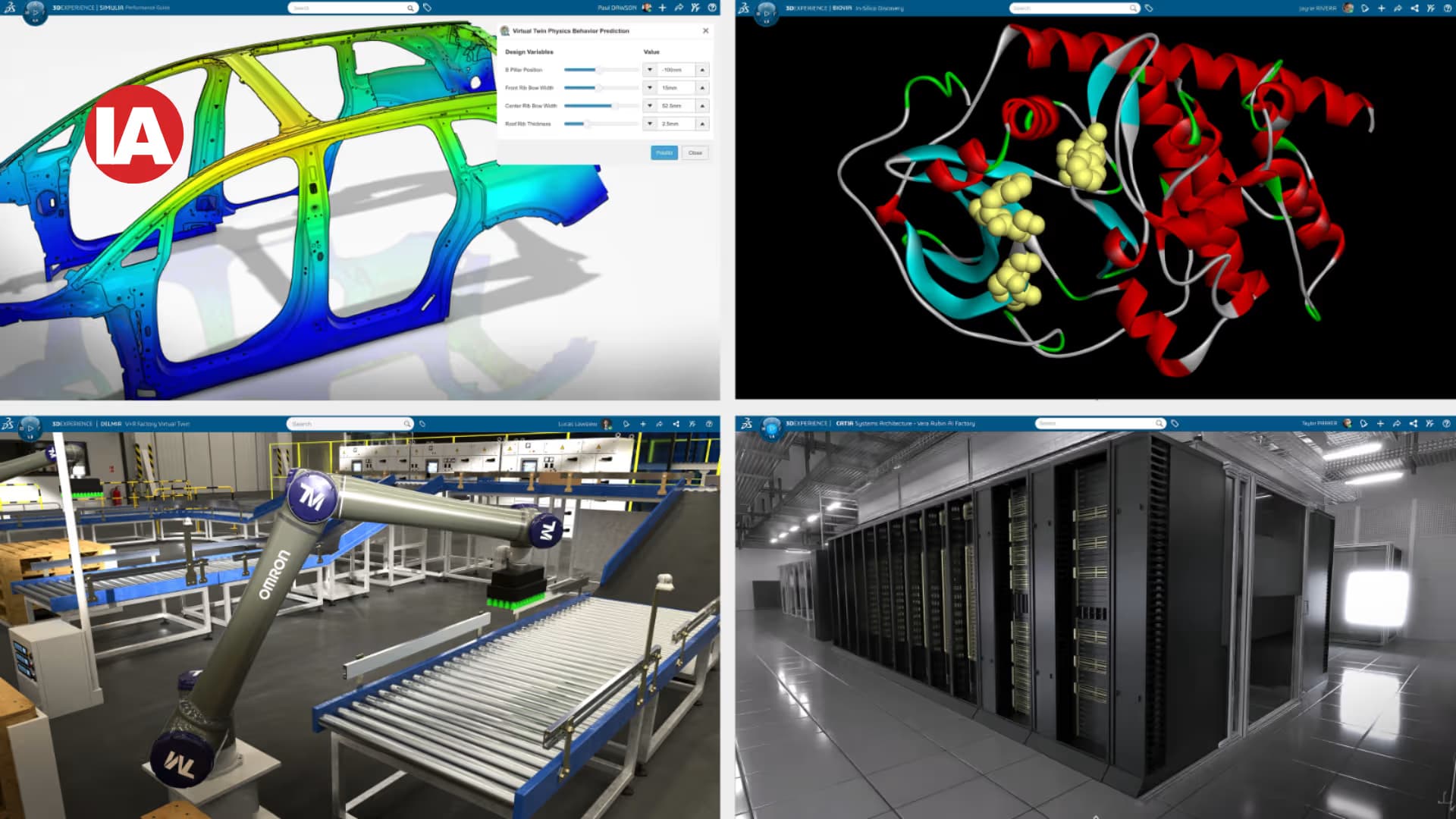
Shaping the Next Frontier: Science-Validated World Models and Virtual Companions Redefine Industrial AI
SAN JOSE, CA — March 2026 — Building on a landmark partnership, Dassault Systèmes is taking center stage at NVIDIA GTC 2026 to showcase the convergence of high-performance computing and industrial science. Located in the Industrial AI and Robotics Pavilion, the company is demonstrating how its 3DEXPERIENCE platform is evolving into an "agentic" ecosystem, powered by NVIDIA’s advanced AI infrastructure and accelerated software libraries.
By combining generative AI with physics-based simulation, the collaboration aims to provide industries with a "Virtual Twin" that doesn't just mirror reality but predicts and optimizes it across biology, materials science, and manufacturing.
The Rise of "Leo": Generative Design and Engineering
One of the most anticipated reveals at GTC is "Leo," Dassault Systèmes’ Virtual Companion. Designed to act as an intelligent co-pilot for engineers, Leo streamlines the complex journey from concept to part.
Optimal Part Generation: Leo uses generative algorithms to suggest designs that balance weight, strength, and manufacturability.
Molecular Dynamics: In materials science, these world models allow researchers to simulate millions of molecular configurations, drastically accelerating the discovery of new alloys and polymers.
Generative Therapeutics: Beyond hardware, the tech is being applied to biology, creating virtual twins of human organs to optimize drug delivery and therapeutic outcomes.
Autonomous Shop Floors and AI Factories at Scale
For the manufacturing sector, the focus at GTC is the software-defined shop floor. Dassault Systèmes is demonstrating how Industry World Models can manage the chaotic environment of a high-volume factory.
Virtual Production Twins: Companies can now test entire production lines in a virtual space before a single machine is moved on the physical floor.
Agentic 3DEXPERIENCE: The platform now utilizes "agents" that can autonomously identify bottlenecks and suggest rerouting protocols for logistics and robotics.
Physics Behavior Integration: Unlike traditional AI that only processes data patterns, these twins are "science-validated," meaning they understand gravity, friction, and thermal dynamics.
Executive Perspective
“Business executives can discover how to improve the performance of autonomous software-defined shop floors with virtual twins of production systems powered by industry world models, and how to generate optimal parts with Leo.” — Florence Hu-Aubigny, Executive VP, R&D, Dassault Systèmes.
FAQ.
What makes an "Industry World Model" different from standard AI?
Standard AI (like LLMs) predicts the next word or pixel based on patterns. An Industry World Model is trained on scientific laws and engineering data. It understands how a robotic arm will react to a specific weight or how a chemical compound will behave under pressure, ensuring simulations are physically accurate.
How does the NVIDIA partnership benefit Dassault Systèmes users?
By running the 3DEXPERIENCE platform on NVIDIA AI infrastructure, complex simulations that used to take days can now be completed in minutes or hours. It also allows for the integration of NVIDIA’s "open models," giving engineers more flexibility in how they build their AI-driven workflows.
What is an "Agentic" platform?
An agentic platform is one where the AI can take independent actions to achieve a goal. For example, instead of an engineer manually checking every part for a defect, an "agent" can monitor the virtual twin, identify a potential failure, and automatically initiate a design change or maintenance request.