Robot Density India vs Global – Europe Leads 2026
Robot density surges globally per IFR 2025—Europe 267/10k leads Asia 131, Korea 1220. India lags ~30 creating 70% automation gap for Make in India PLI targets in electronics hubs.
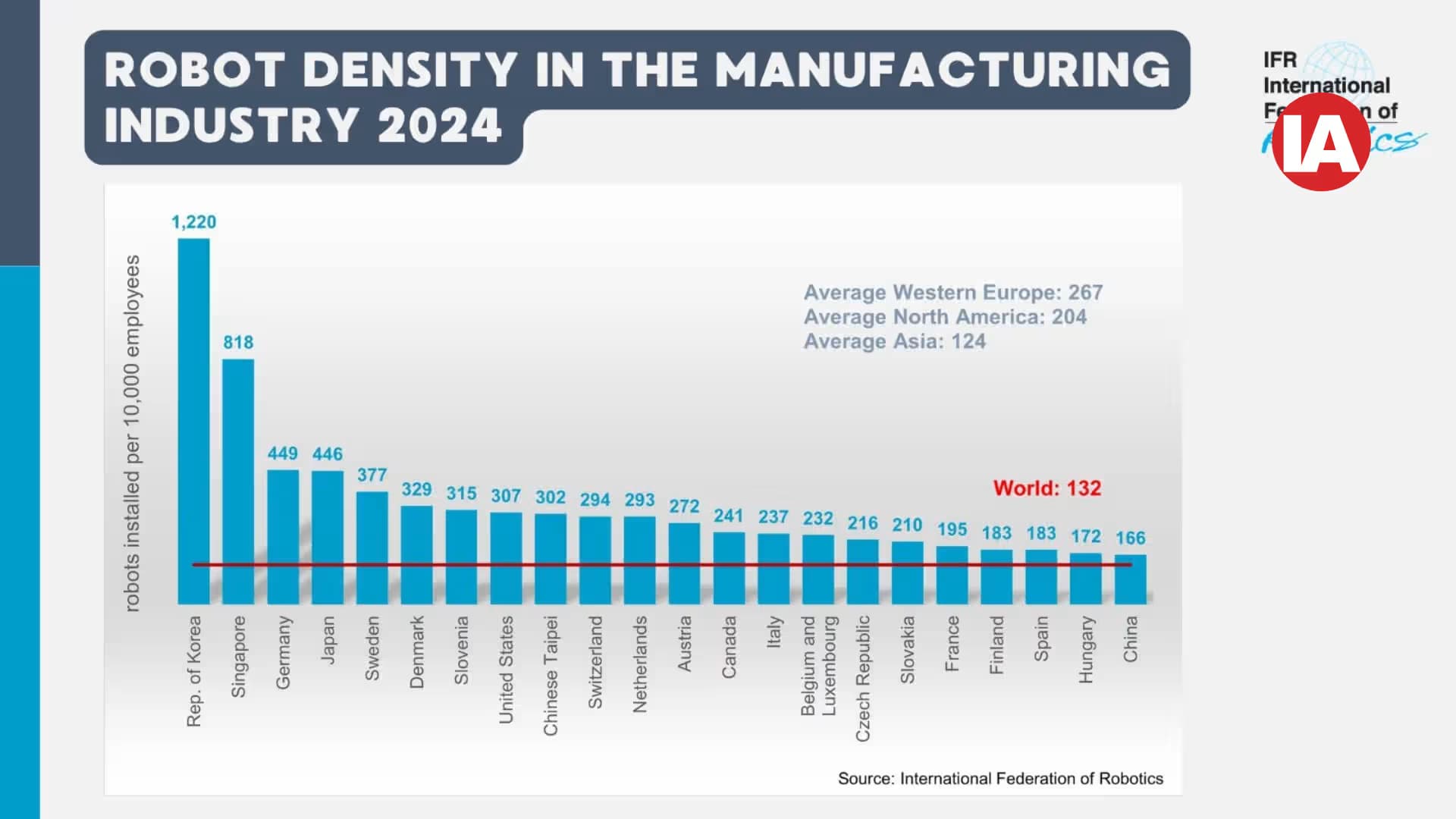
India's robot density trails global leaders at ~30 per 10k employees; IFR World Robotics 2025 reveals Europe's automation surge signaling urgency for domestic Industry 4.0 scaling.
What Happened
IFR reported 2024 robot density: Europe 267/10k workers (up 3%), North America 204 (up 4%), Asia 131 (up 11%). Korea leads at 1220, Germany 449, US 307th. China operational stock hits 2M units (54% global installs).
Why This Matters
India's ~30/10k density leaves 70% automation gap vs PLI targets; tripling to 100/10k creates 5L jobs in Pune/Bengaluru clusters. Europe's lead pressures Indian EMS/automotive to match Korea's electronics density or lose $15B exports.
Industry Context
Make in India demands 1M robots by 2030; Asia's 11% growth (China +17%) shows cell installs must shift from welding to high-mix PCB handling. Complements Fanuc/KUKA in 80% automotive adoption vs electronics' 15%.
Leadership Insight
"Uniform basis for comparison," says IFR President Takayuki Ito. Highlights workforce scaling challenges for large economies like India vs Singapore's 818 density.
Key Takeaways
Korea's 1220/10k drives electronics ROI—India needs similar for semiconductor PLI.
China's 2M stock shows volume trumps density; India's 50k operational base scales slowly.
Europe 8/20 top countries signals multi-vendor strategies vs Asia's Fanuc dominance.
US 307/10k (8th) proves SMEs adopt via cobots—India's MSME policy gap.
Global avg 132/10k leaves India 75% behind; 2025 installs must double.
About Company
International Federation of Robotics (IFR) publishes annual World Robotics data tracking industrial automation. Represents 90+ member associations globally.
FAQ
What's the big news from IFR's World Robotics 2025 report?
Robot density hit records in 2024—Europe leads at 267 robots per 10k manufacturing workers, North America 204, Asia 131. Korea crushes it at 1220/10k while India's stuck around ~30. Shows automation race heating up worldwide.
Why should Indian factory engineers lose sleep over this?
India's 70% automation gap kills PLI competitiveness—Korea/Germany get 4-10x ROI from electronics density we lack. Tripling to 100/10k creates 5L jobs in Pune clusters, or we lose $15B electronics exports to better-automated rivals.