India's Manufacturing Revolution: Robotics and Automation at the Heart of Western India's Emergence as a Smart-Factory Hub
Western India is rapidly emerging as India’s smart-factory hub, with robotics, automation, and AI-driven digital twins transforming production efficiency across Gujarat, Maharashtra, and Pune. This industrial revolution is reshaping manufacturing, making the region a leader in intelligent, sustainable, and collaborative production ecosystems.
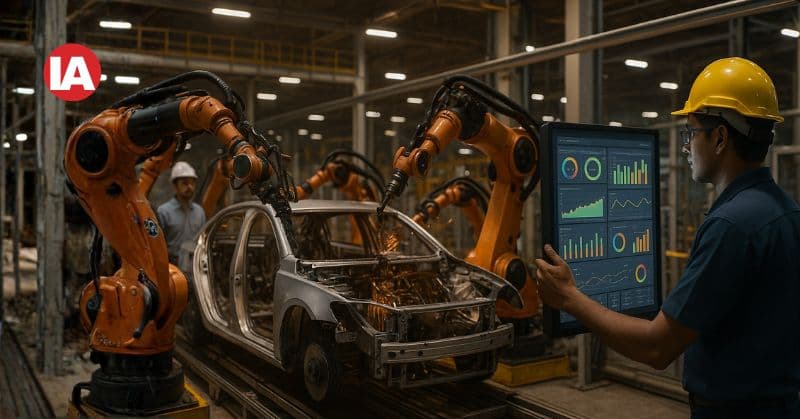
Western India Emerges as the Nucleus of India’s Smart‑Factory Revolution, Blending Robotics, AI, and IIoT to Drive the Nation’s Next Manufacturing Leap
In the industrial heartland of Western India, a quiet but potent change is taking place. From Gujarat's chemical clusters to Maharashtra's electronics parks and Pune's automotive corridors, the area is quickly becoming the nation's smart-factory hub, where automation systems, digital twins, and robotics come together to reinvent production efficiency. The transition from traditional automation to cognitive manufacturing ecosystems powered by AI, IIoT, and robotics integration is India's next industrial revolution.
Robotic deployments and automation expenditures have increased at an unprecedented rate in Western India in the past year. Pharmaceutical and electronics facilities are using cobots for sterile handling and high-accuracy procedures, while automakers are using autonomous robotic arms for precision welding, assembly, and predictive maintenance. At the same time, cloud-based data lakes and edge computing are delivering real-time production intelligence to manufacturing floors, enabling operations to become not only efficient but also self-optimizing.
State-led industrial automation projects are driving the expansion; in 2025, Maharashtra and Gujarat together will account for about 40% of India's R&D expenditures in automation and robotics. From local cobot manufacturers to AI-based process optimization platforms, businesses creating India's own robotic ecosystems are drawn to emerging technological clusters close to Pune, Ahmedabad, and Nashik. In an effort to promote a deep culture of tech democratization, industry titans such as Siemens, ABB, and Fanuc are collaborating with regional integrators and MSMEs to increase automation's accessibility for mid-tier firms. Additionally, India's broader manufacturing aspirations under "Make in India 2.0" are closely tied to this industrial dynamism. Western India is establishing itself as a production powerhouse through intellect as well as scale as global supply chains expand. A defining characteristic of the new Indian manufacturing identity is the alignment of sustainability with productivity through robotics-enabled assembly, intelligent warehousing, and energy-efficient automation.
We are seeing the emergence of a more intelligent manufacturing culture, not just a technological advancement. The rise of smart factories in Western India demonstrates how automation may enhance human potential and productivity by enabling engineers, data scientists, and operators to collaborate harmoniously with intelligent machines. India is prepared to take the lead in the connected, mindful, and collaborative manufacturing era that has arrived.