Samarth E-Mobility Unveils 100% Indigenous Full-Stack EV Technology Platform
Samarth E-Mobility Pvt Ltd launches a 100% indigenous full-stack EV platform, advancing India’s electric motorcycle and powertrain innovation.
Disrupting the Import Cycle: A "Make in India" Breakthrough in Electric Powertrains
AHMEDABAD — March 2026 — In a landmark moment for the Indian automotive industry, Samarth E-Mobility Pvt Ltd has officially debuted its 100% indigenous full-stack electric vehicle (EV) technology platform. Eschewing the industry trend of assembly-focused solutions, the Gujarat-based innovator has engineered a complete ecosystem from the ground up, ranging from proprietary hardware to the underlying operating system.
Developed over three years at their R&D center in Kalol, this platform is designed to power a new generation of high-performance electric motorcycles specifically calibrated for the rigors of Indian terrain and climate.
The Full-Stack Ecosystem: Engineering the Core
The strength of Samarth’s platform lies in its "full-stack" nature, meaning every critical component that dictates vehicle performance and safety is designed and manufactured in-house.
Key Components of the Samarth Tech Stack:
Battery Pack & BMS: A high-density battery pack (homologated by NATRAX) managed by a proprietary Battery Management System (ICAT validated).
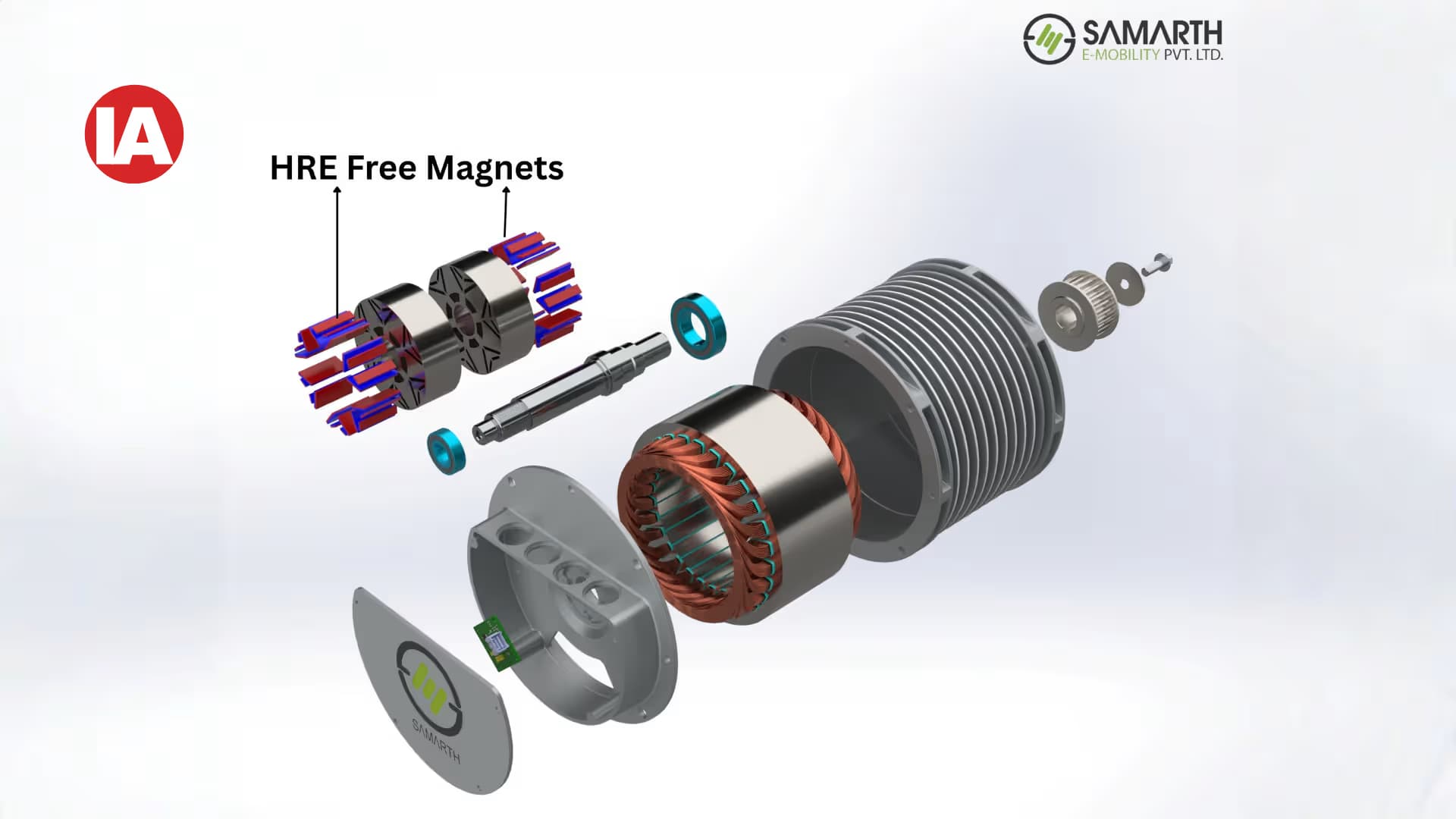
Rare-Earth-Free Motor: Advanced motor technology designed to reduce dependency on imported minerals while maintaining high torque.
AI-Controlled Fast Charger: An onboard ~1500W charger that utilizes artificial intelligence to optimize charging cycles and battery health.
Integrated Power Electronics: In-house developed Motor Controller, Power Control Module (PCM), and DC-DC converters.
Proprietary OS: A dedicated operating system and instrument cluster that enables seamless hardware-software synchronization.

Validated for the "Torture" of Indian Roads
Samarth E-Mobility has prioritized reliability through a rigorous validation phase that goes far beyond laboratory simulations.
Real-World Testing: Over 51,000 km of riding across diverse Indian landscapes.
Torture Testing: 3,400+ km of specialized stress testing to ensure structural and electronic integrity.
Deep-Tech R&D: Driven by a 100+ member engineering team focused on hardware-software integration.
Scaling for a Self-Reliant India
To support this technological breakthrough, the company has established a massive infrastructure in Chhatral, Gujarat. The 1,50,000+ sq. ft. manufacturing facility is prepared for rapid scale-up.
Monthly Capacity: 45,000+ electric two-wheelers.
Annual Capacity: Over 5 lakh units.
Market Entry: The company plans to launch its first premium electric motorcycle brand later this year, targeting the aspirational segment.
"India’s EV transition demands more than assembly-driven solutions; it requires deep engineering and products designed ground-up for Indian riders. Our endeavour is to enter the electric motorcycle segment backed by validated, patented technology." — Priyank Rakholiya, Co-founder, Samarth E-Mobility.
FAQ.
What does a "Full-Stack" platform mean in the EV context?
Most EV manufacturers buy components like motors and batteries from different global suppliers and "assemble" them. A full-stack platform means Samarth designed the battery, the software, the motor, and the electronics themselves. This allows the parts to "talk" to each other more efficiently, leading to better range and safety.
Why is "Rare-Earth-Free" motor technology important?
Traditional EV motors rely on rare-earth magnets often sourced from restricted global supply chains. By developing rare-earth-free technology, Samarth reduces its vulnerability to import fluctuations and supports a more sustainable, self-reliant manufacturing process in India.
Are these products already tested for safety?
Yes. The battery pack has been homologated by NATRAX (National Automotive Test Tracks) and the BMS has been validated by ICAT (International Centre for Automotive Technology), which are the highest authorities for automotive testing in India.