Collaboration with academia and startups can spur innovation in circular design and materials science, says Benedicta Chettiar.
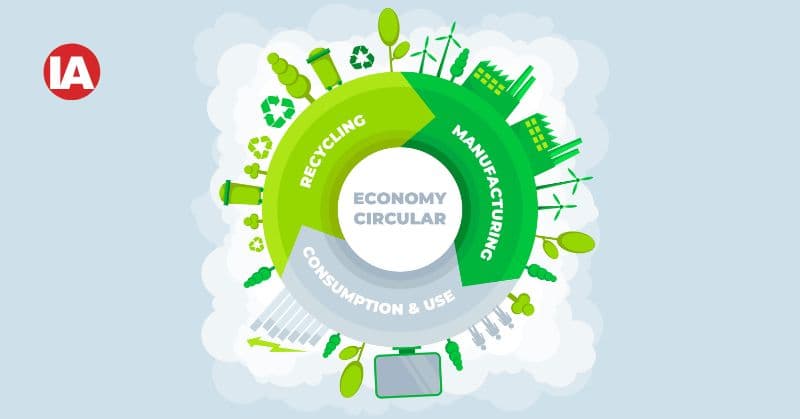
In the face of growing environmental concerns, resource scarcity, and climate change, the traditional linear model of ‘take-make-dispose’ is rapidly proving to be unsustainable. Manufacturing, a sector deeply dependent on raw materials and energy, is at the heart of this challenge. A transformative solution lies in adopting the principles of a Circular Economy (CE) – a regenerative approach that redefines growth by focusing on positive society-wide benefits.
What is the Circular Economy?
Unlike the linear model, the Circular Economy is based on three main principles:
- Designing out waste and pollution
- Keeping products and materials in use, and
- Regenerating natural systems.
In manufacturing, this means extending the lifecycle of products, reusing components, recycling materials, and designing processes that eliminate waste from the outset. This shift not only reduces the environmental footprint but also enhances economic resilience and competitiveness.
Reducing resource consumption
One of the most significant ways CE contributes to sustainability is by reducing the need for virgin raw materials. By reusing and recycling materials, manufacturers can lessen their dependence on finite resources, such as rare earth metals and fossil fuels. For example, closed-loop systems in electronics manufacturing enable the recovery of valuable materials like gold and copper from old devices. This not only conserves natural resources but also stabilises supply chains and reduces the costs associated with raw material extraction.
Waste as a resource
In a circular model, waste is no longer seen as an end product but as a valuable input. Industrial symbiosis, where the by-product of one process becomes the input for another, is an effective strategy. For instance, in cement manufacturing, fly ash from thermal power plants is used as a raw material. Similarly, food processing units repurpose organic waste for bioenergy or composting, reducing landfill use and methane emissions.
Extending product life
Designing for durability, reparability, and upgradability ensures products stay in use longer. Manufacturers like Philips and Caterpillar are adopting product-as-a-service models, where customers lease equipment instead of buying it. This encourages companies to maintain and refurbish products for extended use, thus reducing waste and creating long-term customer relationships.
Enabling circularity through digitalisation
Emerging technologies play a pivotal role in enabling the circular transition. The use of IoT, AI, and blockchain helps in tracking materials across the supply chain, predicting maintenance needs, and verifying recycled content. Digital twins can simulate product lifecycles, helping manufacturers optimise for longevity and resource efficiency. These digital tools provide transparency, improve process efficiency, and support closed-loop systems.
Economic and environmental gains
Beyond environmental benefits, the Circular Economy offers significant economic value. A 2021 report by the Ellen MacArthur Foundation suggests that adopting CE strategies in key sectors could generate USD 4.5 trillion in economic benefits by 2030. For manufacturers, this translates to cost savings, new revenue streams from secondary materials, and reduced exposure to volatile commodity markets.
Moreover, adopting CE principles contributes to decarbonisation goals. By minimising energy-intensive extraction and processing, manufacturers can substantially reduce greenhouse gas emissions. According to the Circularity Gap Report 2024, shifting to circular practices could cut global emissions by up to 39%.
Challenges and the road ahead
While the benefits are clear, transitioning to a circular manufacturing model involves overcoming several challenges, including redesigning products, adapting supply chains, and changing business models. It also requires cross-industry collaboration, policy support, and consumer awareness.
Government incentives, such as extended producer responsibility (EPR), green procurement policies, and carbon pricing, can accelerate this transition. Collaboration with academia and startups can spur innovation in circular design and materials science.
Conclusion
The Circular Economy is not just a sustainability initiative; it’s a business imperative. For manufacturers, it offers a path to resilience, profitability, and long-term value creation – all while helping the planet. As global pressure mounts to reduce waste and emissions, embracing circular principles is no longer optional but essential for the future of sustainable manufacturing.
Visit for more insights: https://www.industrialautomationindia.in/
Benedicta Chettiar is Editorial & Marketing Director at IED Communications and Manager, Strategic Developments, Industrial Automation. Besides these roles, Beni, as she is known, is also actively managing the affairs of Jyothi Process, a state-of-the-art printing press.
Author