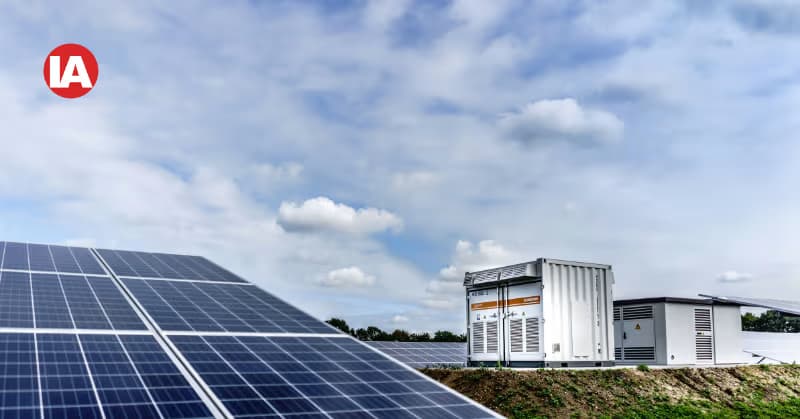
As renewable capacity addition increases, equal attention must be given to system flexibility, storage deployment, and grid modernisation, says Utsav Panchal.
India’s clean energy journey is entering a far more advanced and technology-driven phase than before. Over the last decade, the country has focused extensively on expanding renewable energy capacity at scale. Solar parks, wind projects and transmission corridors have grown rapidly across states, helping India emerge as one of the world’s fastest-growing renewable energy markets. As renewable penetration rises further, the focus of the power sector is gradually expanding from capacity creation alone towards building a more flexible, responsive, and future-ready power system.
Recent developments in the power market illustrate this transition clearly. During certain daytime periods over the past few weeks, electricity prices on the power exchange softened considerably as renewable generation remained high while demand moderated due to weather conditions and lower industrial consumption. Such episodes are not unique to India. Several mature renewable energy markets globally have experienced similar trends where strong daytime renewable generation influences electricity market dynamics.
These developments should not be viewed as concerns around renewable energy adoption. Instead, they reflect the evolving dynamics of a modern power system where renewable energy is playing an increasingly larger role and where flexible infrastructure solutions are becoming more important.
India’s renewable energy expansion has been remarkable. The country has already crossed 220 GW of renewable energy capacity and is targeting 500 GW of non-fossil fuel capacity by 2030. This transition is central to India’s long-term energy security strategy and sustainability goals. Renewable energy generation patterns, however, differ from conventional generation sources. Solar generation is naturally higher during daytime hours, while electricity demand often rises during evening periods. Wind generation also varies depending on weather and seasonal conditions.
This evolving generation and consumption profile is increasing the importance of flexible balancing solutions within the power system. Traditionally, thermal generation has supported balancing requirements for the grid. As renewable energy penetration expands further, policymakers and utilities are also increasingly focusing on complementary technologies that can support flexibility and optimise renewable energy utilisation. This is where energy storage assumes strategic importance.
Energy storage systems make it possible to capture surplus electricity generated during low-demand periods and dispatch it later during peak consumption hours. In practical terms, storage improves grid flexibility, strengthens reliability, supports efficient utilisation of renewable energy assets and enables smoother integration of clean power into the system.
Battery Energy Storage Systems (BESS) have emerged as one of the most visible technologies in this transition due to declining battery prices and improving commercial viability. However, the energy storage landscape itself is evolving rapidly. Alongside lithium-ion battery systems, policymakers and utilities are increasingly exploring long-duration storage technologies such as pumped hydro storage, compressed air energy storage and flow battery technologies.
This diversification is important because India’s future grid requirements will benefit from both short-duration and long-duration balancing solutions. Short-duration storage systems are highly effective for frequency regulation, ramping support and peak management, while long-duration storage solutions can support deeper renewable integration over extended periods.
Policy support for storage has also strengthened considerably over the last two years. Measures such as viability gap funding for standalone battery storage projects, waivers on inter-state transmission charges, storage obligations and production-linked incentive schemes for battery manufacturing are improving project viability and encouraging greater participation in the sector. The Draft Electricity (Amendment) Act, 2025 further signals the growing importance of storage by proposing its inclusion within the definition of the power system itself.
State utilities have also started integrating storage into long-term planning. Gujarat has emerged as one of the leading states in this regard. Gujarat UrjaVikas Nigam Limited (GUVNL) has initiated multiple phases of utility-scale standalone BESS procurement to support renewable integration, improve grid flexibility and optimise power procurement. Similar initiatives are also being pursued in Rajasthan and Maharashtra.
The importance of these projects extends beyond renewable integration alone. India’s electricity demand profile itself is becoming more dynamic due to industrial growth, urbanisation, increasing electrification and the gradual adoption of electric mobility. This is naturally increasing the importance of a more responsive and flexible power system capable of balancing changing demand and supply conditions efficiently.
Storage systems can support utilities in several ways. They can help manage peak demand periods, optimise transmission infrastructure usage, improve power quality and support efficient power procurement strategies. Over time, storage is also expected to support ancillary grid services such as frequency regulation, voltage support and faster response during system disturbances.
Importantly, the rise of storage is also transforming participation within the power sector. Engineering and infrastructure companies that traditionally focused on transmission and distribution execution are increasingly building capabilities in storage integration and long-term asset operations. This evolution reflects the changing nature of power infrastructure itself.
Storage projects are not merely technology deployments. They require disciplined execution, safety management, integration with utility networks and reliable long-term operations. Companies with deep experience in transmission, substations and grid infrastructure are therefore likely to play an important role in supporting large-scale storage deployment.
At Rajesh Power Services Limited, we see this shift as part of the broader evolution of India’s power sector. The company’s entry into utility-scale battery storage through the 65 MW/130 MWh standalone BESS project at Virpore in Gujarat reflects this transition. More importantly, it underlines how storage is steadily moving from pilot-stage deployment to becoming a mainstream component of utility planning.
Globally, energy transitions are increasingly being judged not simply by the amount of renewable energy installed, but by the ability of power systems to integrate renewables reliably and efficiently. Countries that successfully build flexible grids, storage infrastructure and responsive electricity markets will ultimately be better positioned to sustain long-term clean energy growth.
India is now entering that next stage of transition. Renewable capacity addition will continue to remain important, but equal attention is now being given to system flexibility, storage deployment and grid modernisation. The recent episodes of softer daytime electricity prices should therefore be viewed as indicators of an evolving and maturing renewable energy ecosystem.
The next phase of India’s energy transition will depend not only on generating clean power, but also on ensuring that the power system can absorb, store and deliver that energy efficiently at scale. Energy storage will play a central role in enabling that future.
Mr Utsav Panchal, Director & CEO of Rajesh Power Services Limited, represents the new generation of leadership driving India’s power infrastructure sector forward with vision and dynamism. A member of the Board of Directors, he combines strong academic achievements with practical industry experience, bringing a fresh perspective to the company’s 54-year legacy.
An alumnus of the prestigious Indian Institute of Management, Kashipur, Mr. Panchal holds an MBA with a focus on management and strategic leadership. He further enhanced his technical proficiency by completing the Six Sigma Green Belt Certification from the Indian Statistical Institute, Pune—equipping him with advanced expertise in Quality Management and Six Sigma practices. His career foundation was laid in Project Management of EPC Power Transmission Projects, giving him a hands-on understanding of large-scale execution in one of the most demanding sectors.
Author