Edge computing is becoming a foundational technology for next-generation industrial operations, says Arun Prasath.
Industrial enterprises are rapidly shifting toward real-time, data-driven operations where speed, responsiveness, and operational intelligence are becoming critical competitive differentiators. While cloud computing remains important for centralised analytics and storage, it often struggles to meet the low latency demands of modern industrial environments. As industries increasingly rely on instant insights for safety, productivity, and operational continuity, edge computing is emerging as a key enabler of real-time industrial intelligence.
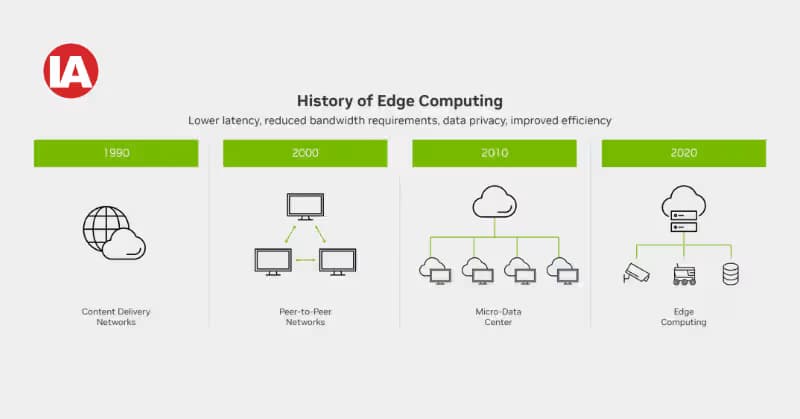
Edge computing processes industrial data closer to where it is generated through sensors, controllers, machines, and gateways rather than sending all data to centralised cloud systems. This localised processing reduces latency, improves responsiveness, lowers bandwidth usage, and enables faster operational decisions. The market is being driven by the increasing adoption of Industrial IoT (IIoT), AI-enabled analytics, autonomous systems, and connected industrial infrastructure. Applications such as predictive maintenance, anomaly detection, energy optimisation, and autonomous operations are accelerating the shift from centralised computing toward localised operational intelligence.
Edge computing: Intelligence closer to operations
Edge computing enables industrial data to be processed locally within factories, plants, mines, or oilfields instead of relying entirely on distant cloud infrastructure. This allows operational systems to analyse and respond to events in real time, improving productivity and reducing delays. Industrial edge environments typically include smart sensors, PLCs, industrial PCs, edge gateways, and embedded AI systems. These systems collect machine data and process it locally, run analytics, and trigger immediate actions without waiting for cloud-based processing.
The biggest advantage of edge computing is its ability to support time-sensitive industrial applications such as robotics, machine safety, predictive maintenance, and process optimisation. By minimising dependence on centralised networks, organisations achieve greater operational reliability, faster decisions, and improved cybersecurity.
The evolution of industrial analytics
Industrial analytics has evolved from isolated automation systems to highly connected digital operations. Early industrial environments relied on centralised control architectures with limited real-time visibility, while the rise of cloud computing later enabled large-scale data aggregation and remote analytics. However, the rapid growth of IIoT deployments significantly increased the volume and speed of industrial data generation, making continuous transmission to centralised cloud systems increasingly costly and inefficient.
Edge computing emerged to solve these challenges by bringing analytics and AI closer to industrial assets. Combined with AI and IIoT, edge computing is enabling decentralised analytics, allowing operational decisions to be made autonomously at the machine or asset level. This transition is helping industries move from reactive operations to predictive and adaptive industrial ecosystems that respond dynamically to operational conditions.
Oil & gas: Real-time intelligence for critical operations

Image source: Siemens
The oil & gas industry has become a major adopter of edge computing due to its remote operations, critical infrastructure, and safety-intensive environments. Offshore platforms, pipelines, and refineries generate enormous volumes of operational data that require immediate analysis and response. Edge computing allows oil & gas operators to process sensor data locally for applications such as predictive maintenance, leak detection, drilling optimisation, and pipeline monitoring. Real-time anomaly detection helps prevent equipment failures and operational disruptions before they escalate. Remote operations centres powered by edge analytics are further improving operational visibility and efficiency. In India, companies such as Oil and Natural Gas Corporation, Reliance Industries, and Indian Oil Corporation are increasingly investing in digital oilfield initiatives, smart refineries, and AI-driven industrial monitoring systems
Smart factories: Enabling intelligent manufacturing
Smart factories are among the largest adopters of industrial edge computing. Modern manufacturing environments require real-time coordination between machines, robots, sensors, and production systems where even small delays can impact productivity and quality. Edge computing enables manufacturers to process operational data locally for applications such as predictive maintenance, robotics coordination, machine condition monitoring, and quality inspection. AI-powered systems can detect anomalies instantly and optimise production processes in real time. Machine vision systems operating at the edge are improving quality assurance by identifying defects within milliseconds.
Collaborative robots equipped with edge AI are also enabling safer and more adaptive manufacturing operations.
Mining: Driving autonomous and safer operations
Mining operations face challenges due to remote locations, hazardous conditions, and heavy dependence on equipment. Edge computing improves operational efficiency, safety, and equipment reliability through real-time analytics and predictive maintenance, reducing downtime and enhancing asset utilisation. Mining companies are also exploring autonomous and AI-enabled operations, where low-latency edge computing supports navigation, remote equipment control, and faster safety responses. In India, mining operators are increasingly adopting intelligent automation and AI-driven monitoring to improve productivity and worker safety.
Emerging technologies accelerating edge adoption
Emerging technologies are significantly accelerating the adoption of industrial edge by enabling faster, smarter, and more autonomous operations. AI at the edge enables real-time inference, predictive maintenance, and anomaly detection directly in industrial environments, while private 5G networks provide ultra-low-latency, secure connectivity for autonomous systems and real-time machine coordination. At the same time, digital twins integrated with edge computing enable continuous simulation, monitoring, and optimisation of industrial assets using live operational data. Together, these advancements are driving the rise of self-monitoring and adaptive industrial systems capable of autonomous decision-making, improving operational efficiency, flexibility, and resilience.
India’s growing edge computing opportunity
India is rapidly emerging as a major market for industrial edge computing due to increasing investments in digital manufacturing, industrial automation, AI, and IIoT infrastructure. Government initiatives supporting smart manufacturing and industrial modernisation are accelerating adoption. The expansion of private 5G trials, AI deployments, and connected industrial ecosystems is creating strong demand for localised, real-time industrial analytics across sectors such as manufacturing, energy, and mining. Global technology providers such as Siemens, Schneider Electric, Honeywell, Rockwell Automation, and Cisco are expanding their industrial edge capabilities and partnerships in India.
Conclusion
Edge computing is becoming a foundational technology for next-generation industrial operations. As industries demand faster insights, operational resilience, and autonomous decision-making, edge-enabled intelligence will continue to gain importance. The convergence of AI, IIoT, private 5G, and edge analytics is transforming industrial environments into intelligent, adaptive ecosystems that respond to operational changes in real time. Industries such as oil & gas, smart manufacturing, and mining are already demonstrating how edge-enabled analytics can improve productivity, safety, sustainability, and agility. Organisations investing in industrial edge computing today are building the foundation for more autonomous, connected, and intelligent industrial enterprises of the future.
Arun Prasath – Principal Consultant, Industrial Growth Advisory, Frost & Sullivan. With 16 years of experience in product marketing, market research, and consulting, Arun Prasath has led 70+ market research and consulting engagements across global markets. His expertise includes market opportunity assessment, competitive analysis, M&A due diligence, and go-to-market strategies, with a strong focus on industrial automation, process control, and motion control. He has worked closely with industry leaders like Emerson, Siemens, ABB, and Flowserve, contributing to strategic consulting and thought leadership.
Arun holds an MBA in Marketing & Operations from Bharathidasan Institute of Management, Trichy, and a B.E. in Mechanical Engineering from Anna University, Chennai.
Author