Water is indeed a critical drinking resource, but it also goes beyond to support livelihoods, says AR Madhusudan, Business Line Manager, Drive Products, ABB India.
With India’s accelerating efforts to address water scarcity, industries face a clear imperative of balancing operational demands, regulatory requirements, and cost pressures without compromising output. This makes intelligent automation and control technologies essential to sustainable water management.
With rapidly increasing population, urbanisation and industrialisation, the demand for water globally is outpacing the available supply. Water is indeed a critical drinking resource, but it also goes beyond to support livelihoods – it is the unseen force behind several industries like data centres, semiconductor, textile, pharma, metals and more. India is one of the countries exposed to extremely high water stress annually.
As the Indian industries and cities expand, the government and regulatory bodies are implementing stricter water usage policies, investing in wastewater treatment infrastructure, and promoting industrial water recycling and reuse to address the country’s water challenges. The country has also set ambitious net zero targets. In this scenario, for plant managers, engineers or contractors, simply keeping the pumps running is no longer enough. Industries must also go beyond the flow and optimise water use, reduce operational costs, and meet stringent and evolving regulatory standards.
Reducing energy consumption
Industries face significant energy demands across their water operations, from pumping and cooling systems to effluent treatment. For facilities operating advanced treatment systems like ultra-pure water production, zero liquid discharge, or wastewater reuse, energy consumption becomes even more critical, often contributing to increased operational costs and carbon emissions.
Running pumps, blowers and other key water applications can be energy intensive as they are often running at full speed. To reduce speed, mechanical methods have been used. However, by adopting variable frequency drives (VFDs), these applications can be controlled based on process demands, rather than operating at full capacity continuously. This not only ensures energy efficiency but also enables equipment to operate more efficiently. In fact, energy savings of over 40 percent are achievable in the water and wastewater industry by using drives, instead of traditional methods, like throttling valves and recirculation, to control pump flow rates.
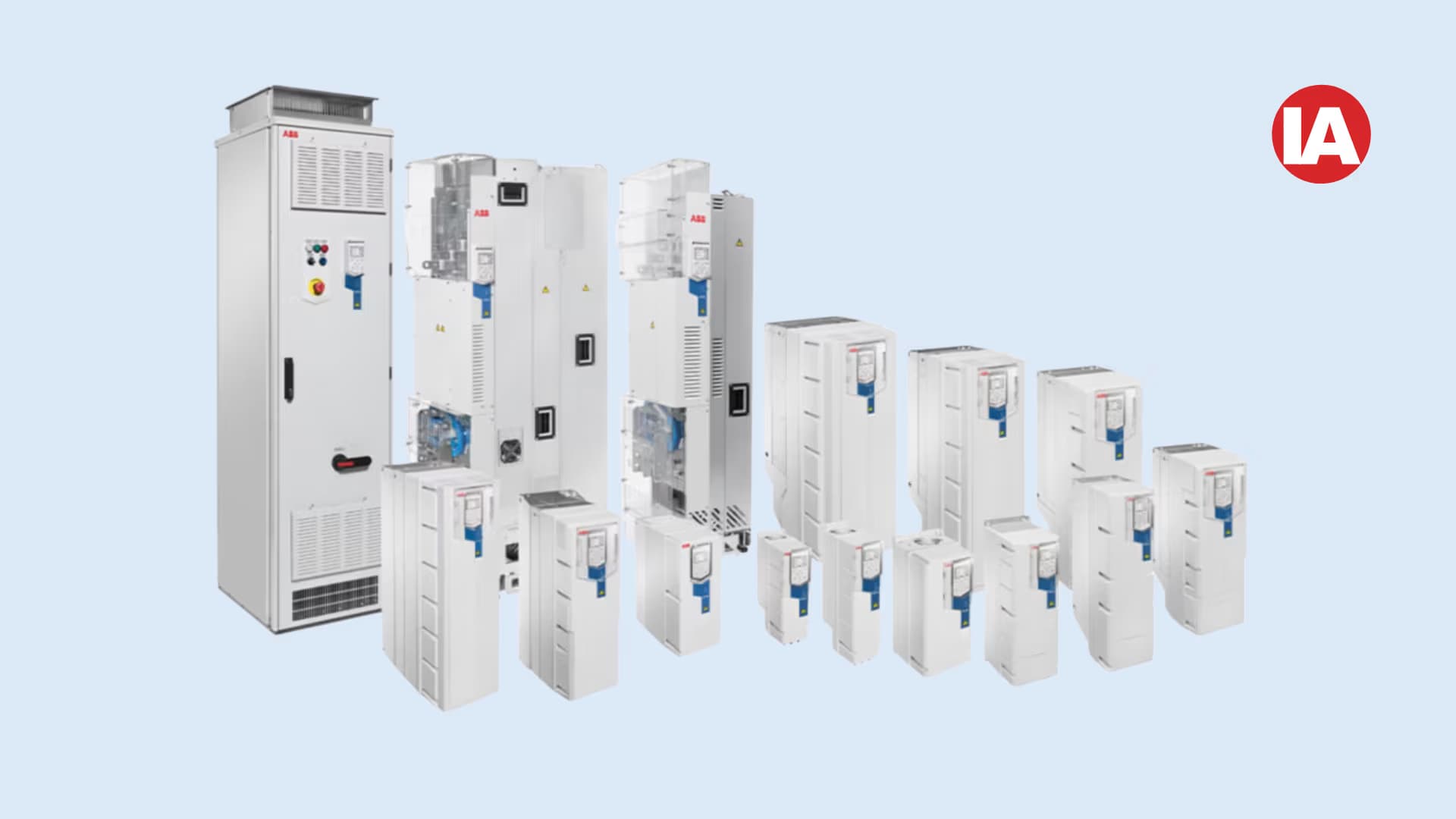
Modern and advanced drives like ABB’s ACQ580 also feature built-in energy monitoring capabilities and intelligent multi-pump control function, equipping facilities with valuable insights into their energy consumption and enabling seamless operation by avoiding challenges like leaks and bursts with sensorless flow estimation. The financial benefits are significant, with energy savings often leading to a return on investment (RoI) within one to two years.
Additionally, drives ensure a smooth start-up and shutdown, reducing mechanical and electrical stress on equipment. Combined with anti-cavitation detection and control features, ABB’s water-dedicated drives not only help extend the lifespan of motors and pumps but also enhance overall plant efficiency and reliability.
Intelligent control with digitalisation
Implementing programmable logic controller (PLC)-based automation can further offer significant improvements in energy efficiency and regulatory compliance. It equips operators with data-driven insights and enables them to push the data to cloud, ensuring optimal performanceand safety.
Advanced PLC platforms like ABB’s AC500 PLC-based automation supports communication protocols that are optimised for low-bandwidth network, all while meeting evolving cybersecurity standards, enabling secure real-time monitoring of critical water parameters anywhere in the world. Operators can monitor key parameters to check water quality and based on this data, the drive can control the relevant water application based on process needs, helping ensure compliance with regulatory standards.
India’s Central Pollution Control Board (CPCB) norms mandate industrial wastewater treatment to meet environmental standards while the National Green Tribunal (NGT) has been enforcing stricter regulations, leading to plant closures and penalties for non-compliance. Hence, it is crucial for industries to mitigate these regulatory risks and support the country’s decarbonisation efforts. With data-driven insights, operators can also ensure proactive maintenance before any functional failure occurs, resulting in lower downtime, optimised maintenance costs and elimination of unexpected shutdowns.
Optimising every drop with technology
The technology for ensuring energy efficiency, regulatory compliance and efficient operations in the industrial water segment already exists – it is essential that industries start adopting these advanced technologies. Specialised water-dedicated drives, such as ABB’s ACQ580, are built and fine-tuned for water and wastewater applications with built-in protection, which helps withstand India’s demanding industrial water environments.
As the industrial water landscape continues to evolve, industries must not only run efficiently but also intelligently, by leveraging automation and control technology solutions to future-proof water systems. The next frontier in industrial water management is clear: smarter operations, stronger compliance, and sustainable growth.
Author