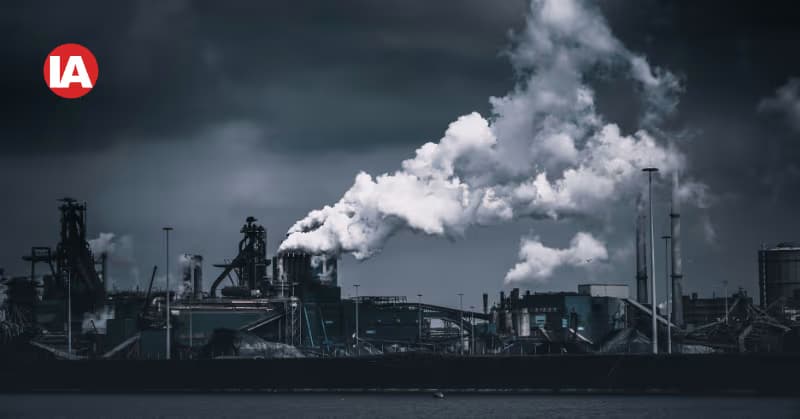
Sustainable automation represents a critical pathway to achieving net-zero factories, says Arun Prasath.
Industrial automation is undergoing a fundamental shift. For decades, the focus was clear: maximise output, reduce costs, and improve precision. Today, a new imperative is reshaping industrial priorities: sustainability. As industries face mounting pressure to reduce carbon emissions and meet net-zero targets, automation is no longer just a productivity lever; it has become a critical enabler of environmental transformation. The urgency is significant. The industrial sector is one of the largest contributors to global energy-related carbon emissions, making it a critical focus area in addressing climate change. At a broader level, industry represents a substantial share of total greenhouse gas emissions, with sectors such as steel, cement, and chemicals accounting for the majority of these emissions.
For high-impact sectors like steel, cement, and textiles, achieving net-zero requires more than incremental efficiency gains; it demands a structural transformation. Sustainable automation is central to this shift.
From efficiency to sustainability
Traditional automation systems were designed for speed, scale, and consistency. Sustainable automation expands this mandate to include energy efficiency, emissions reduction, and resource optimisation. Industry 4.0 technologies such as AI, IoT, and advanced analytics are already demonstrating measurable impact. Studies show that these technologies can significantly improve resource efficiency, reduce waste, and optimise supply chains through real-time data and predictive insights. In heavy industries, energy represents a substantial share of total production costs, making energy optimisation a direct lever for both cost savings and carbon reduction. This marks a shift from linear production models toward more circular, resource-efficient systems where sustainability and efficiency reinforce each other rather than compete.
Policy, regulation, and ESG push
The transition to sustainable automation is also being accelerated by regulatory and policy frameworks. Governments across the world are introducing stricter emission norms, carbon pricing mechanisms, and energy efficiency mandates. In India, initiatives such as Perform, Achieve, and Trade (PAT), along with growing ESG disclosure requirements, are pushing industries to adopt cleaner and more efficient technologies. Automation enables accurate monitoring, reporting, and regulatory compliance, turning what was once a compliance burden into a structured, data-driven capability. Companies that proactively align with these frameworks are better positioned to avoid regulatory risks and capitalise on emerging green incentives.
A new operational paradigm
Manufacturing today operates in a volatile environment marked by fluctuating demand, rising energy costs, and tightening regulations, making static production systems increasingly inefficient. Sustainable automation addresses this by introducing adaptability through real-time energy optimisation, predictive maintenance, and digital twin-enabled process simulation. These capabilities are transforming factories into self-optimising ecosystems, where operations are continuously aligned with both productivity and sustainability goals. The impact is significant across heavy industries such as steel and cement.
Sector transformation: steel, cement, textiles
Steel: Reducing Energy and Emissions Intensity

Steel accounts for 7%-9%1 of global greenhouse gas emissions, making it a key focus for decarbonisation. Automation improves efficiency through AI-based furnace optimisation, real-time monitoring, and predictive analytics, thereby reducing fuel use and scrap. In India, steel and cement together account for a dominant share of industrial emissions, underscoring the urgency of a low-carbon transformation. Energy use remains the primary source of emissions, with a significant portion also arising from process-related activities. This underscores the need for integrated decarbonisation strategies combining clean energy, process innovation, and advanced technologies.
Cement: Optimising Continuous Processes
Cement is one of the most carbon-intensive industries globally, contributing significantly to overall CO₂ emissions. Automation improves kiln efficiency and stabilises operations through real-time monitoring and advanced process control. AI-driven optimisation helps reduce energy consumption and enhance combustion performance. It also enables efficient use of alternative fuels and raw materials, lowering reliance on fossil fuels. Technologies such as predictive analytics and digital twins support continuous performance improvement. Given the sector’s continuous operations, even small efficiency gains deliver meaningful cost and emission reductions.
Textiles: Driving resource efficiency
Textiles face challenges in water, energy, and waste. Automation through IoT monitoring and AI quality control reduces water use, energy consumption and defects. These gains demonstrate strong environmental and operational benefits even in lighter industries.
Sustainability as a competitive advantage
Sustainability is no longer just a compliance requirement; it is a competitive differentiator. Companies adopting sustainable automation benefit from lower operating costs through energy efficiency, improved resilience to energy price volatility, and stronger positioning in global markets with sustainability mandates. Beyond cost and compliance, it also enhances brand credibility, investor confidence, and access to ESG-focused capital. As supply chains increasingly prioritise low-carbon sourcing and transparency, organisations that can demonstrate measurable sustainability outcomes, such as reduced emissions, energy intensity, and waste, gain a clear and lasting strategic advantage.
The future: Toward net-zero factories
The next phase of industrial automation will move beyond isolated optimisations toward fully integrated, net-zero ecosystems. This will include renewable energy integration with automated load balancing, closed-loop manufacturing systems that minimise waste, and AI-driven real-time optimisation of the carbon footprint. In addition, digital twins and advanced analytics will enable scenario planning and continuous improvement at scale. Sustainable automation will evolve into a holistic operating model where every decision from energy usage to material flow and supply chain coordination is aligned with net-zero objectives, making sustainability a core driver of operational strategy rather than an external mandate.
Conclusion
Automation is no longer just about doing things faster or cheaper; it is about making them smarter and cleaner. Sustainable automation represents a critical pathway to achieving net-zero factories, particularly in high-impact sectors such as steel, cement, and textiles. With industries contributing over one-fifth of global emissions and energy costs accounting for a significant share of production costs, the case for transformation is both environmental and economic. The factories of the future will not simply be automated. They will be intelligently sustainable, with productivity, profitability, and environmental responsibility fully aligned.
References
Arun Prasath – Principal Consultant, Industrial Growth Advisory, Frost & Sullivan. With 16 years of experience in product marketing, market research, and consulting, Arun Prasath has led 70+ market research and consulting engagements across global markets. His expertise includes market opportunity assessment, competitive analysis, M&A due diligence, and go-to-market strategies, with a strong focus on industrial automation, process control, and motion control. He has worked closely with industry leaders like Emerson, Siemens, ABB, and Flowserve, contributing to strategic consulting and thought leadership.
Arun holds an MBA in Marketing & Operations from Bharathidasan Institute of Management, Trichy, and a B.E. in Mechanical Engineering from Anna University, Chennai.
Author