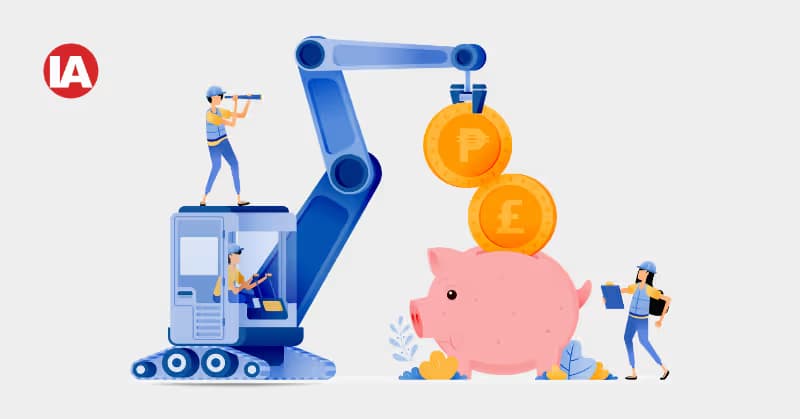
Automation Cost in India: Basic Investment Range
One of the most common questions factory owners and manufacturers ask is:
“What is the cost of automation in India?”
The honest answer is simple:
Automation costs vary depending on your industry, scale, and level of automation—but realistic ranges can help you plan better.
This guide provides a clear, India-focused breakdown to help you understand what to expect.
Basic Automation Cost Range in India
Automation investment in India typically falls into three categories:
- Small factories (SMEs): ₹5 lakh – ₹50 lakh
- Medium manufacturing plants: ₹50 lakh – ₹5 crore
- Advanced automation systems: ₹5 crore and above
These ranges depend on how much of your process you want to automate and how complex the system is.
What Are You Actually Paying For?
Automation is not just about buying a machine. The total cost includes multiple components working together:
- Machines and equipment: robots, conveyors, filling systems
- Control systems: PLCs (Programmable Logic Controllers) and HMIs that manage machine logic, along with motion control solutions such as variable frequency drives used for efficient motor control
- Sensors and instrumentation: temperature, pressure, and quality detection
- Software integration: monitoring and control systems
- Installation and commissioning: setup, testing, and deployment
Many manufacturers work with experienced automation companies and system integrators to design and implement these solutions effectively.
To understand control technologies better,
👉 you can explore the difference between PLC, DCS, and SCADA systems.
This is why costs can vary significantly between projects.
Industry-Wise Automation Cost Breakdown in India

1. Packaging and FMCG Industry
- Small scale: ₹5 – ₹20 lakh
- Medium scale: ₹20 – ₹80 lakh
Packaging automation (filling, sealing, labeling) is often the best starting point for SMEs due to lower investment and faster return on investment.
👉 Explore automation companies across major industrial cities like Mumbai, Pune, Delhi, and Bengaluru
2. Automotive and Engineering
- Small scale: ₹20 – ₹75 lakh
- Medium scale: ₹1 – ₹5 crore
Automation in this sector focuses on precision, speed, and consistency, including robotic welding and automated assembly systems.
3. Food Processing Industry
- Small scale: ₹10 – ₹40 lakh
- Medium scale: ₹50 lakh – ₹2 crore
Automation ensures hygiene, consistent quality, and compliance with food safety standards.
4. Pharma and Chemical Industry
- Small scale: ₹25 lakh – ₹1 crore
- Medium scale: ₹1 – ₹5 crore+
Automation is essential for regulatory compliance, process accuracy, and operational safety.
5. Textile Industry
- Small scale: ₹5 – ₹25 lakh
- Medium scale: ₹30 lakh – ₹1.5 crore
Automation helps improve production speed and reduces reliance on manual processes.
What Drives the Final Cost of Automation?
Several key factors influence your total investment:
- Level of automation (semi-automatic vs fully automated)
- Customization (standard vs custom-built systems)
- Integration complexity with existing processes
- Technology selection and system architecture
- Scale of production
A Smart Automation Strategy for Indian Manufacturers
Instead of investing heavily upfront, a phased approach works best:
Step 1: Identify one repetitive or time-consuming process
Step 2: Start with semi-automation such as packaging, conveyors, inspection, or PLC-based systems
Step 3: Scale gradually based on return on investment and operational improvements
Choosing the right automation partner is critical to ensure long-term success.
Real Example: SME Automation Investment

Consider a small FMCG unit in India:
- Filling machine: ₹8 lakh
- Conveyor system: ₹5 lakh
- Labeling machine: ₹7 lakh
Total investment: approximately ₹20 lakh
Result:
- 2–3x increase in production
- Improved consistency
- Reduced dependency on manual labor
These solutions are typically part of modern automation and control systems used in manufacturing environments.
Biggest Mistake to Avoid ❌
The most common mistake is:
Trying to automate everything at once
This often leads to:
- High upfront investment
- Complex implementation challenges
- Delayed return on investment
A phased approach is far more effective and sustainable.
Related Topics You Should Explore
- What is industrial automation (beginner’s guide)
- PLC vs DCS vs SCADA comparison
- How to choose the right automation partner
- System integrators in India
- Top automation companies in India
Final Thought
Automation is not expensive. Wrong automation decisions are expensive.
With the right strategy, even small and medium manufacturers in India can achieve significant productivity gains and long-term cost savings.
Call to Action
Before making an investment decision:
- Understand your requirements clearly
- Start small and scale strategically
- Choose the right implementation partner
Explore Automation Solutions for Your Industry
Find companies offering automation and control systems, industrial automation products, and end-to-end solutions for manufacturing.