Choosing Between PLC, DCS, and SCADA Systems
When planning industrial automation, one of the most common questions is:
What is the difference between PLC, DCS, and SCADA—and which system is right for your application?
These three systems form the backbone of industrial automation, but they serve different purposes depending on your industry, scale, and process complexity.
This guide explains each system in simple terms, along with real-world use cases and practical selection criteria.
👉To understand the broader context, read our Industrial Automation Guide
What is PLC (Programmable Logic Controller)?
A PLC is a rugged industrial computer used to control machines and processes in real time.
👉 PLC-based automation systems are widely used in modern manufacturing setups

Where PLC is Used:
- Packaging machines
- Assembly lines
- Conveyor systems
- Small to medium automation setups
Key Features:
- Fast response time
- Reliable for discrete operations
- Easy to program and maintain
Example (India):
A packaging unit in Ahmedabad uses PLCs to control filling, sealing, and labeling operations.
What is DCS (Distributed Control System)?
A DCS is used for large, continuous industrial processes where multiple systems need to be controlled together.
Where DCS is Used:
- Oil and gas plants
- Chemical manufacturing
- Power plants
- Pharma process industries
Key Features:
- Centralized control with distributed architecture
- High reliability for continuous operations
- Advanced process control
Example (India):
Refineries and chemical plants across Gujarat use DCS for temperature, pressure, and flow control.
What is SCADA (Supervisory Control and Data Acquisition)?
SCADA is a monitoring and control system that collects data from multiple machines and displays it in a centralized interface.
Where SCADA is Used:
- Factory monitoring systems
- Water treatment plants
- Power distribution networks
- Remote industrial operations
Key Features:
- Real-time data visualization
- Remote monitoring and control
- Alerts and reporting
Example (India):
A manufacturing plant in Pune uses SCADA dashboards to monitor production and energy consumption.
PLC vs DCS vs SCADA: Key Differences

1. Function
- PLC: Controls individual machines
- DCS: Controls entire process systems
- SCADA: Monitors and supervises systems
2. Scale of Application
- PLC: Small to medium operations
- DCS: Large, complex plants
- SCADA: Multi-location or plant-wide monitoring
3. Control Type
- PLC: Discrete control (on/off operations)
- DCS: Continuous process control
- SCADA: Supervisory control and data collection
4. Complexity
- PLC: Simple to moderate
- DCS: Highly complex
- SCADA: Moderate (depends on integration)
5. Cost
- PLC: Lowest cost (ideal for SMEs)
- DCS: High investment (large plants)
- SCADA: Medium (depends on scale)
👉 Before selecting a system, understand the cost of automation in India and its impact on ROI
When Should You Use PLC, DCS, or SCADA?
Choose PLC if:
- You are automating individual machines
- Your process is discrete (packaging, assembly)
- You are a small or mid-sized manufacturer
Choose DCS if:
- You run continuous processes (chemicals, pharma, oil)
- You need high reliability and precision
- You operate a large industrial plant
Choose SCADA if:
- You want real-time monitoring across systems
- You need remote access and dashboards
- You want better visibility and data insights
👉 You can also evaluate the right automation partner for your project before implementation
Can These Systems Work Together?
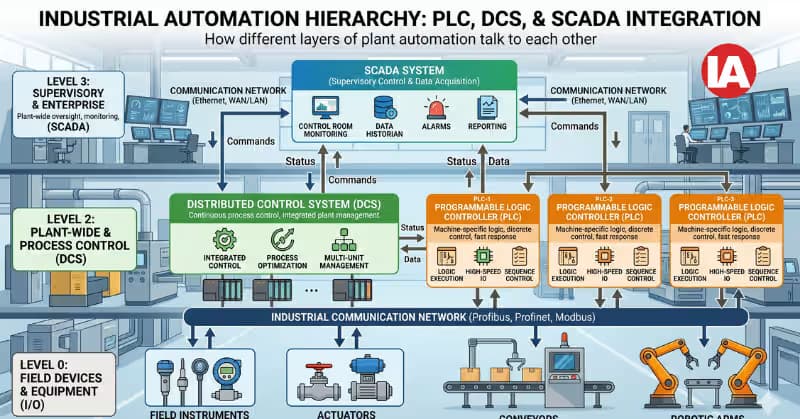
Yes—and in most modern factories, they do.
Typical setup:
- PLC controls machines
- DCS manages processes
- SCADA monitors everything
👉 These integrations rely on automation and control systems to ensure seamless communication between PLC, DCS, and SCADA
This integration forms the foundation of smart factories and Industry 4.0 systems.
Common Mistakes to Avoid
- Choosing DCS when a PLC is sufficient
- Ignoring SCADA for monitoring and analytics
- Over-investing without understanding actual needs
- Not planning integration between systems
How to Decide the Right System (Simple Approach)
Step 1: Identify your process type
- Discrete → PLC
- Continuous → DCS
Step 2: Define your monitoring needs
- If visibility is required → Add SCADA
Step 3: Plan for future scalability
- Ensure systems can integrate later
Related Topics You Should Explore
- What is Industrial Automation (Beginner’s Guide)
- Cost of Automation in India (Industry Breakdown)
- How to Choose the Right Automation Partner
- Top Automation Companies in India
Final Thought
PLC, DCS, and SCADA are not competitors—they are complementary systems.
The right choice depends on your process, scale, and business goals.
Explore Automation Solutions for Your Industry
Find verified companies offering automation and control systems, PLC solutions, and industrial automation services.