As technology continues to advance, drones will become even more autonomous, data-driven, and collaborative, says Agnishwar Jayaprakash
The Fourth Industrial Revolution, or Industry 4.0, is redefining the way businesses operate by bringing together automation, artificial intelligence (AI), the Internet of Things (IoT), cloud computing, robotics, and advanced analytics. Across industries, organisations are embracing digital transformation to build operations that are smarter, safer, and more efficient. Amidst these technological advancements, drones have emerged as one of the most impactful enablers of this new industrial era.
Once viewed primarily as aerial imaging devices, drones have evolved into intelligent platforms capable of collecting, analysing, and delivering real-time data. Their ability to integrate seamlessly with AI, IoT, Geographic Information Systems (GIS), and enterprise software has transformed them into valuable assets within Industry 4.0 ecosystems. Today, drones are helping businesses make faster decisions, optimise resources, improve worker safety, and unlock new levels of operational efficiency.
As industries increasingly rely on connected technologies, drones are proving that innovation is no longer confined to factory floors; it extends to farms, infrastructure, energy networks, logistics hubs, construction sites, and beyond.
The rise of connected intelligence
Drones have become an important extension of this connected ecosystem by acting as mobile intelligence platforms. Unlike fixed sensors, drones can access difficult-to-reach locations, cover large geographic areas, and capture detailed visual and environmental information within minutes. Equipped with high-resolution cameras, thermal sensors, LiDAR systems, multispectral imaging, and AI-powered analytics, modern drones generate actionable insights that enable organisations to monitor assets, evaluate conditions, and make proactive operational decisions. This ability to transform physical environments into digital intelligence is positioning drones as an integral component.
Driving smarter infrastructure management
Infrastructure is becoming increasingly intelligent, and drones are playing a significant role in supporting this transition. Across sectors such as power, renewable energy, oil and gas, telecommunications, transportation, and urban development, organisations manage thousands of critical assets that require regular monitoring.
Drones enable these inspections to be completed faster, more accurately, and with minimal operational disruption. High-definition imagery and thermal analytics allow operators to identify maintenance requirements before they develop into larger issues, supporting predictive maintenance strategies that enhance asset performance and reliability.
Whether inspecting transmission lines, wind turbines, solar farms, railway corridors, bridges, or communication towers, drones provide organisations with comprehensive visibility while significantly improving operational efficiency.
Making manufacturing more intelligent
The manufacturing sector continues to embrace automation as companies work towards building smart factories. Drones are becoming valuable contributors to these environments by supporting inventory management, warehouse inspections, facility monitoring, and operational audits.
Large industrial campuses often require continuous oversight to ensure smooth operations. Autonomous drones can conduct scheduled inspections, monitor equipment health, identify anomalies, and provide managers with real-time updates without interrupting production. In warehouses, drones equipped with computer vision technology can automate inventory verification, helping organisations improve stock accuracy while reducing manual effort.
When combined with AI-powered analytics and digital twins, drone-generated data provides manufacturers with deeper operational insights that support faster, more informed business decisions.
Enabling precision agriculture
Agriculture is undergoing one of its most significant technological transformations, and drones are at the center of this evolution. Precision agriculture is empowering farmers to move beyond traditional farming practices by making decisions based on accurate, field-level data.
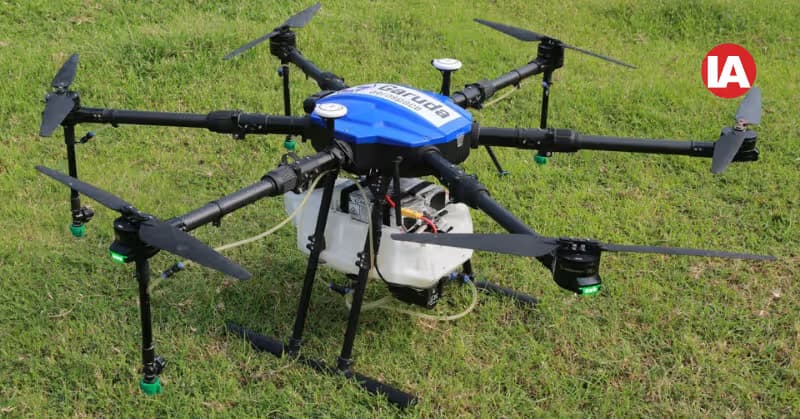
Drones enable regular crop monitoring, early detection of plant stress, irrigation assessment, pest identification, and yield estimation. Multispectral imaging allows farmers to detect changes in crop health before they become visible, enabling timely interventions that improve productivity while reducing unnecessary resource usage. When integrated with weather intelligence, IoT-enabled farm equipment, and digital farm management platforms, drones create a comprehensive ecosystem that supports sustainable and efficient agricultural practices.
This data-driven approach not only enhances farm productivity but also strengthens food security and long-term agricultural resilience.
Accelerating data-driven decision making
Data has become one of the most valuable assets in the modern industrial economy. Organisations that can collect, process, and analyse information quickly are better positioned to improve efficiency, reduce costs, and respond to changing operational conditions. Drones significantly strengthen this capability by delivering accurate, real-time information that complements existing IoT networks and enterprise systems.
The data collected during aerial surveys can be integrated into cloud platforms, AI models, digital twins, and predictive analytics software, giving decision-makers a comprehensive view of their operations. This seamless flow of information enables organisations to shift from reactive management to proactive planning, one of the defining characteristics of Industry 4.0.
AI is unlocking the next generation of drone capabilities
Artificial intelligence is expanding what drones can accomplish. Modern enterprise drones are increasingly capable of autonomous navigation, automated route planning, object recognition, defect detection, and intelligent image analysis.
Instead of simply capturing images, AI-powered drones can identify structural anomalies, detect vegetation encroachment near power infrastructure, classify equipment conditions, monitor construction progress, and generate inspection reports automatically.
As machine learning algorithms continue to improve, drones will become even more intelligent, enabling faster insights with minimal human intervention. This convergence of AI and drone technology represents one of the most interesting developments.
Supporting sustainable industrial growth
Sustainability has become a key business priority alongside productivity and profitability. Organisations are increasingly looking for technologies that improve operational efficiency while reducing environmental impact.
Drones support these objectives in several ways. They enable precision resource management in agriculture, optimise infrastructure maintenance, assist in monitoring renewable energy assets, and reduce the need for fuel-intensive inspection methods.
By providing accurate information that enables targeted interventions, drones help organisations reduce waste, improve resource utilisation, and strengthen environmental stewardship.
As industries continue to align with Environmental, Social, and Governance (ESG) goals, drone technology is expected to play an increasingly important role in building sustainable industrial ecosystems.
India's growing opportunity
India is rapidly emerging as one of the world's most dynamic drone markets. Supportive government policies, increasing domestic manufacturing capabilities, advancements in indigenous technology, and growing industry adoption are creating a strong foundation for long-term growth.
From agriculture and infrastructure to logistics, mining, smart cities, disaster management, and public safety, organisations across sectors are recognising the strategic value drones bring to digital transformation initiatives.
The expansion of AI, 5G connectivity, cloud computing, and geospatial technologies is expected to further accelerate enterprise drone adoption over the coming years.
As Indian companies continue to innovate and develop world-class drone solutions, the country is well-positioned to become a global hub for drone technology, manufacturing, and services.
Looking ahead
Industry 4.0 is about creating connected ecosystems where intelligent technologies work together to improve productivity, resilience, and innovation. Drones have evolved into one of the most versatile technologies supporting this transformation.
Their ability to gather real-time intelligence, automate inspections, improve workplace safety, optimise resource management, and integrate seamlessly with AI and IoT platforms makes them indispensable across modern industrial operations.
As technology continues to advance, drones will become even more autonomous, data-driven, and collaborative. They will not replace human expertise; rather, they will enhance it by providing faster insights, reducing operational complexity, and enabling better decision-making.
The future is not defined by a single technology but by the convergence of multiple innovations working together. Within this connected ecosystem, drones have established themselves as more than aerial tools; they are intelligent enablers of digital transformation, helping industries build a future that is more productive, sustainable, and resilient.
Agnishwar Jayaprakash is Founder & CEO, Garuda Aerospace.
From being a 6-time South Asian Games gold medalist swimmer to a mission-driven entrepreneur, Mr Jayaprakash's journey is a story of grit, innovation, and nation-first thinking. Founded in 2015, Garuda Aerospace has emerged as a front runner in the ‘Drone-as-a-Service’ segment, operating 400+ drones with 500 trained pilots across 84 Indian cities, servicing 750+ clients including corporates, governments, and agriculture stakeholders. In FY24, the company clocked Rs 110 crore in revenue with Rs 16 crore in profit, showcasing sustained profitability in a capital-intensive sector.
Author