Industrial Automation Explained in Simple Terms
Industrial automation may sound technical, but the concept is straightforward:
Industrial automation is the use of machines, control systems, and software to operate industrial processes with minimal human intervention.
Instead of relying entirely on manual labor, factories use intelligent systems to handle repetitive, high-speed, and precision-driven tasks—while humans supervise and optimize operations.
A Simple Way to Understand Industrial Automation
Consider a typical small manufacturing unit in India.

Before automation:
- Workers manually fill, pack, and inspect products
- Quality varies depending on human consistency
- Production output is limited
After automation:
- Machines automatically fill, seal, and label
- Sensors ensure real-time quality checks
- Output increases with fewer errors
This transition—from manual operations to intelligent systems—is the essence of industrial automation.
What Does Industrial Automation Include?
Industrial automation is not just one machine—it is a combination of technologies working together:
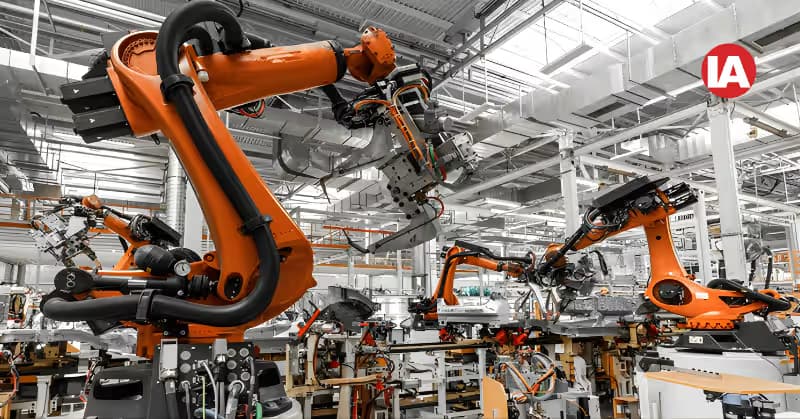
- Machines (The Muscle): Conveyors, filling systems, and robotic arms
- Control Systems (The Brain): PLCs (Programmable Logic Controllers) that manage machine logic, including compact solutions like Hollysys LE Series
- Sensors (The Senses): Detecting critical data like temperature, pressure, and defects
- Software (The Command Center): Used to monitor, control, and optimize the entire operation
👉 To understand how control systems work in detail, read: PLC vs DCS vs SCADA (Complete Guide)
Together, these components create a system that can run efficiently, adapt to changes, and improve productivity.
Real Examples of Industrial Automation in India
1. SME Manufacturing (Packaging Units)
In cities like Ahmedabad and Coimbatore, small and medium enterprises are adopting:
- Automatic pouch filling machines
- Labeling systems
- Sealing automation
Result: Production increases by 2–3x without increasing manpower.
2. Automotive Industry
Automation solutions from Tata Elxsi and Difacto Robotics and Automation Pvt. Ltd. are widely used across manufacturing industries for:
- Robotic welding systems
- Automated assembly lines
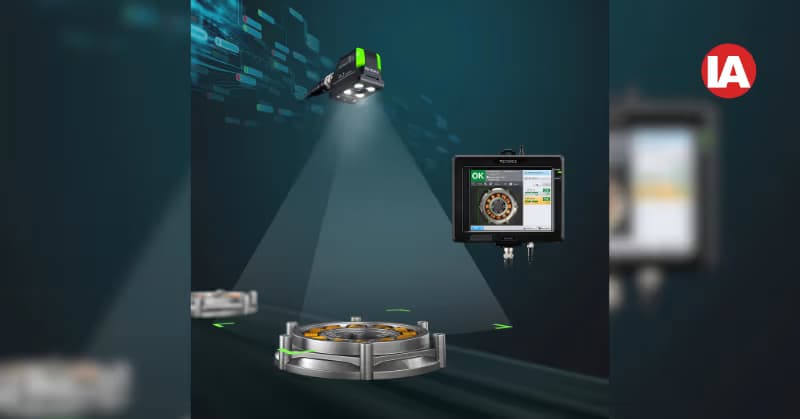
- Vision-based inspection
Result: Higher precision, consistent quality, and improved production efficiency.
3. Food and Pharmaceutical Industry

Automation is critical for:
- Hygiene and contamination control
- Consistent product quality
- Regulatory compliance
Machines handle mixing, filling, and packaging with minimal human contact.
4. Process Industries (Oil, Gas, Chemicals)
Automation is used for:
- Temperature control
- Pressure monitoring
- Emergency shutdown systems
In these industries, automation is essential not just for efficiency, but for safety and risk prevention.
Benefits of Industrial Automation
1. Higher Productivity
Machines can operate continuously without fatigue.
2. Better Quality
Consistent output with reduced human error.
3. Lower Long-Term Costs
Less waste, reduced rework, and improved efficiency.
👉 Before investing, understand the cost of automation in India (industry-wise breakdown).
4. Improved Safety
Hazardous tasks are handled by machines.
5. Scalability
Production can increase without proportional hiring.
Common Myths About Industrial Automation (India Context)
Myth 1: Automation is only for large companies
Reality: SMEs are among the fastest adopters in India.
Myth 2: Automation replaces jobs
Reality: It transforms roles—creating demand for skilled operators and technicians.
Myth 3: Automation is too expensive
Reality: The cost of not automating is often higher due to inefficiencies.
Myth 4: Automation is too complex
Reality: Modern systems are increasingly user-friendly and modular.
How to Start with Industrial Automation
A common mistake is trying to automate everything at once. A better approach is gradual adoption:
Step 1: Identify repetitive, time-consuming processes
Step 2: Start with small automation (packaging, conveyors, inspection)
Step 3: Scale based on ROI and operational improvement
👉 Choosing the right partner is critical.
Read: How to Choose the Right Automation Partner in India
Where to Go Next (Your Automation Journey)
If you are starting your automation journey, follow this path:
Step 1: Understand basics
→ What is Industrial Automation
Step 2: Plan your investment
→ Cost of Automation in India
Step 3: Understand technologies
→ PLC vs DCS vs SCADA
Step 4: Choose an execution partner
→ How to Choose an Automation Partner
Step 5: Explore solution providers
→ Top Automation Companies in India
Related Topics You Should Explore
- Cost of Automation in India (Industry Breakdown)
- PLC vs DCS vs SCADA (Comparison Guide)
- Top Automation Companies in India
- System Integrators in India
Final Thought
Industrial automation is not about replacing people.
It is about building faster, smarter, and more competitive manufacturing systems.
For Indian industries—especially SMEs—it is becoming a necessity, not an option.
Explore Automation Solutions for Your Industry
Find verified companies offering automation and control systems, PLC solutions, and industrial automation services.