Adrian Heaton explains how developments in AR technology are presenting new opportunities for companies to address the engineering skills gap.
The growing skills gap facing the industrial sector represents a major challenge for industrial companies, which have to ensure safe, efficient, and sustainable operation of their production processes with minimal downtime.

The industrial sector is facing a rising skills gap that threatens productivity, safety, and innovation. According to a 2021 study by Deloitte and the Manufacturing Institute, 2.1
million manufacturing positions are expected to go unfilled by 2030, largely due to an increasing skills gap. This gap is exacerbated by the retirement of highly skilled workers, who take valuable knowledge with them, and the rapid adoption of Industry 4.0 technologies, which demand new sets of skills.
In response to these challenges, augmented reality (AR) is emerging as a powerful tool to bridge the skills gap, transforming training, maintenance, and daily operations in industrial settings.
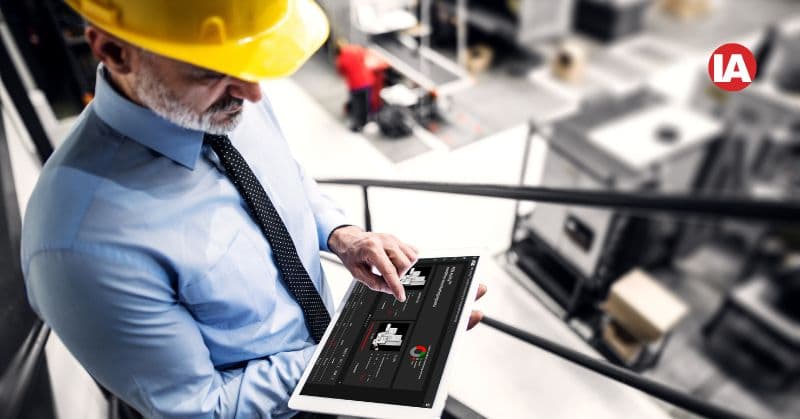
Augmented Reality (AR) works by overlaying digital information onto the real world through devices like smartphones, tablets, and AR glasses. Compared to virtual reality, which puts users into a fully virtual environment, AR keeps users in the real world, with interactive elements overlaid onto relevant objects. This enhancement provides valuable insights, guidance, and data in real-time, making AR a powerful tool in various sectors, including industrial applications.
In a context where newer, less skilled workers need to be quickly onboarded, AR offers a promising solution for providing fast access to expert knowledge that can be applied to problem solving in industrial applications.
A new dimension of learning
For instance, traditional training methods, such as manuals and classroom instruction, can quickly become out of date as modern industrial technologies – as well as the environments they are used in – evolve. AR can be updated with the latest products and best practices, as they emerge. It can also be used to address new challenges. AR allows users to visualise equipment in three dimensions, allowing them to understand intricate details and practice procedures in a risk-free environment.
By overlaying step-by-step instructions and visual cues directly onto the device being worked on, AR can accelerate the learning process and improve retention of complex concepts, while also equipping users with the confidence to take what they’ve learned out into the real world. This hands-on approach offers benefits for new starters and experienced engineers alike. Furthermore, AR training modules can be tailored to individual learning speeds, making training more efficient and personalised.
AR can also help to encourage a culture of continuous improvement. Rather than having to set aside time and resources for classroom training, new skills can essentially be learned on the job. Workers can use AR to access the latest information, receive updates on best practices, and participate in interactive training sessions regularly. This ensures that their skills remain relevant and up to date with the latest industry standards. Crucially, users learn by doing, allowing knowledge to be more easily retained.
AR can deliver regular updates and training modules directly to workers’ devices, keeping them informed about new technologies, regulations, and procedures as they become available. This can help maintain high standards of performance and adaptability, ensuring that the workforce is always equipped to meet the challenges of the future.
Preserving and transferring expert knowledge

The challenge of filling the knowledge gap as older, experienced workers retire has been a major issue across industry for some time. By documenting expert procedures and practices in a digital format, AR can capture valuable knowledge and experience that could otherwise have left the industry, and allow it to be passed on to less experienced workers. This can help to broaden an organisation’s internal knowledge base, while ensuring that critical knowledge is preserved and easily accessible. This can help to reduce training time and costs by reducing reliance on face-to-face mentoring.
For example, a seasoned technician can use AR technology to record their workflow, creating a visual and interactive manual. New employees can then access this manual via AR on a smart device or headset, receiving real-time guidance as they perform tasks.
Enhancing real-time remote assistance and collaboration
AR enables real-time remote assistance, connecting less experienced workers with remote experts who can provide immediate guidance and support, when and where it is needed. This capability is particularly valuable in situations where immediate expertise is required but an experienced technician cannot be physically present. Through AR, remote experts can see what the on-site worker sees and guide them through complex procedures orally or by supplying on-screen prompts that will appear on the headset.
A field technician encountering an unfamiliar issue can thus use an AR-enabled device to stream their field of view to a remote expert. The expert can then provide step-by-step instructions, highlight important components, and even share relevant documents, all in real time. This not only enhances problem-solving efficiency but also means that in the event of an unplanned outage, problems can be diagnosed and remedied more quickly.
More efficiency, less downtime
The ability of AR to provide precise, real-time information can also significantly reduce the likelihood of errors. Workers can access AR overlays that display vital data, maintenance history, and operational instructions directly on the equipment they are working on. Taking this concept a step further, a traffic light system could be used to flag up certain issues that require attention at-a-glance This immediate access to information can lead to faster fault diagnosis and decision-making, while also reducing downtime.
During maintenance activities, AR can highlight the exact components that need attention and warn about potential hazards. By minimising guesswork and ensuring that tasks are performed correctly and efficiently, AR helps maintain optimal operational performance as well as safety.
Attracting the younger generation

Younger workers entering the industry, brought up on smartphones, touchscreens and wearable tech, may have different expectations and working styles compared to previous generations. These expectations have arguably deterred talented engineers from entering the profession, due to perceptions that the work is dull, or that methods are antiquated when compared with advances in consumer technologies.
AR offers the opportunity to address this by leveraging young peoples’ innate familiarity with digital interfaces to create engaging, tech-driven work environments. By integrating AR into industrial processes, and giving workers cutting technologies and a rewarding environment, companies can more successfully attract and retain young talent.
Indeed, one appeal of AR for the next generation of potential engineers is its ability to transform routine tasks into engaging experiences by gamifying certain aspects of maintenance and operations. This not only makes the work more interesting, but has also been shown to increase job satisfaction and motivation.
Supporting a broader knowledge base
AR supports the development of a broader knowledge base by making complex information accessible and understandable. It enables workers to visualise abstract concepts, understand intricate processes, and perform tasks that require specialised knowledge without the need for extensive prior experience by significantly accelerating the learning curve.
By simulating the operation of complex processes, AR helps workers grasp the overall system and make informed decisions, even if they do not have deep expertise in every aspect of the process. This democratisation of expert knowledge can help to foster a more versatile and capable workforce, reducing the dependency on individual specialists.
Driving the shift to Industry 5.0
While Industry 4.0 focuses on the digitalisation and automation of industrial processes, Industry 5.0 emphasizes enhanced collaboration between humans and machines. AR exemplifies this shift by enabling live, interactive human-to-human resolution of issues, wherever they might be based. This not only enhances operational efficiency but also fosters a more human-centric approach to industrial processes, as well as opening the possibilities of anytime, anywhere assistance.
AR facilitates collaboration between remote teams, enabling them to work together seamlessly despite geo-graphical barriers. This not only enhances productivity but also promotes a more inclusive and collaborative work environment, aligning with the principles of Industry 5.0.

Another view – a growing role for VR
Virtual Reality (VR) is also revolutionising the workplace by offering immersive environments for training, collaboration, and sales. Customers can experience products as they would in the real world – in context and in stunning realism with a trusted advisor whilst reducing the need for physical resources and travel. To showcase what’s possible and provide customers with an immersive experience into a typical application environment, ABB has developed its own VirtualWorld. Designed with our partners in mind, it puts visitors into their own branded meeting spaces and environments. Additionally, VR can create engaging presentations and virtual tours, making complex information more accessible. As VR technology advances, its applications in the workplace will continue to expand, driving efficiency and innovation across various industries.
Conclusion
The growing role of augmented reality in industrial companies is transforming the way they address the skills gap. By enabling workers to easily tap into a ready source of knowledge and expertise that can be used to augment their capabilities, AR stands out as a vital way for companies to ensure they are able to keep their processes working at optimum performance both today and into the future.
For more information about ABB’s digital support services, visit https://new.abb.com/products/measurement-products/service/digital-service-solutions
Adrian Heaton Global Service Manager, Instrumentation Measurement and Analytics at ABB, is an experienced Head of Sales and Marketing with a demonstrated history of working across many industries, responsible for both orders and profitability. Adian is skilled in negotiation, sales, control systems design, electrical wiring, and management. He is a strong sales professional with a Master of Business Management focused in Business Administration and Management, General from Macquarie University – Graduate School of Business.
_____________________________________________________________________________________________
For a deeper dive into the dynamic world of Industrial Automation and Robotic Process Automation (RPA), explore our comprehensive collection of articles and news covering cutting-edge technologies, robotics, PLC programming, SCADA systems, and the latest advancements in the Industrial Automation realm. Uncover valuable insights and stay abreast of industry trends by delving into the rest of our articles on Industrial Automation and RPA at www.industrialautomationindia.in