Plant layout is a core determinant of manufacturing efficiency, shaping how effectively materials, people, and automated systems interact within the production environment, says Harsh Bansal.
Manufacturing efficiency is influenced not only by automation, machinery, and workforce capability, but also by how physical space is designed and managed. Plant layout plays a fundamental role in determining material flow, cycle time, energy usage, safety, and overall productivity.
Industrial engineering studies indicate that nearly 20–30% of total manufacturing operating costs are linked to material handling activities, most of which are directly affected by layout decisions. As production systems become more complex and demand agility, plant layout emerges as a strategic lever rather than a static design choice for leaders like BMW Industries.
Modern manufacturing environments require layouts that support speed, precision, and adaptability. A well-planned layout aligns physical infrastructure with process requirements, enabling production systems to operate closer to their optimal efficiency while reducing waste and operational friction.
Understanding Plant Layout in Modern Manufacturing
Plant layout refers to the physical arrangement of machinery, workstations, storage areas, utilities, and internal transport paths within a facility. The primary objective is to ensure a logical, smooth, and economical flow of materials from raw input to finished output. From an industrial automation perspective, layout design also affects control systems, sensor placement, and integration with digital production tools.
Research shows that inefficient layout planning can increase internal transportation distances by 30–50%, directly impacting production time and operating cost—not to mention the risks to quality and safety. Conversely, optimized layouts reduce redundant movement, improve visibility, and create standardized workflows. In automated facilities, layout inefficiencies are further amplified, as spatial constraints can limit system throughput and reduce the effectiveness of advanced automation.
Optimizing Material Flow and Throughput Efficiency
Material flow is one of the most direct ways in which plant layout influences manufacturing efficiency. Poorly designed layouts often lead to backtracking, cross-traffic, and congestion, increasing handling time and the likelihood of errors. Studies in operations management indicate that material movement can account for up to 45% of total production time in discrete manufacturing environments.
Aligning equipment and workstations in the sequence of operations significantly reduces travel distance and handling effort. Optimized layouts have been shown to cut material movement distances by up to 40%, resulting in measurable throughput improvements. In high-volume production, even marginal reductions in travel time can generate substantial productivity gains when scaled across thousands of units.
- Inventory Reduction: Continuous and streamlined material flow also helps reduce work-in-progress (WIP) inventory.
- Capital Efficiency: Manufacturing data suggests that layouts designed around process flow can lower inventory levels by 20–50% compared to function-based layouts, improving cash flow and reducing storage requirements.

Reducing Cycle Time and Lead Time Through Spatial Planning
Cycle time and lead time are highly sensitive to layout design. Excessive movement between operations, poor line balancing, and waiting caused by congestion often stem from inefficient spatial planning. Industrial studies estimate that up to 1% of avoidable cycle time losses can be traced back to layout-related issues.
Optimized layouts shorten physical distances, improve synchronization between processes, and reduce waiting time at workstations. These improvements lead to more predictable lead times and better schedule adherence. In environments where demand variability is high, layout-driven reductions in cycle time improve responsiveness and reduce the risk of production delays.
For automated production lines, layout precision is critical. Misaligned stations or poorly planned transfer paths can disrupt synchronization and reduce overall equipment effectiveness (OEE), even when individual machines perform at expected levels.
Enhancing Labour Productivity and Ergonomics
Plant layout has a direct impact on workforce capability and operator well-being. Excessive walking, awkward reaching, and poorly positioned tools increase fatigue and error rates. According to occupational safety data, musculoskeletal disorders account for nearly 30% of manufacturing workplace injuries, many linked to inadequate ergonomic design.
Layouts that minimize unnecessary motion and place materials within optimal reach zones can improve labor productivity by 10–25%. Proper spacing between workstations, clear access paths, and logical sequencing of tasks allow operators to focus on value-added activities rather than compensating for layout shortcomings.
Energy Consumption and Utility Efficiency
Plant layout also plays an important role in energy usage. Material handling distance, equipment placement, and utility routing all influence energy consumption patterns. Manufacturing energy audits indicate that inefficient internal logistics can increase energy usage for handling systems by 10–20%.
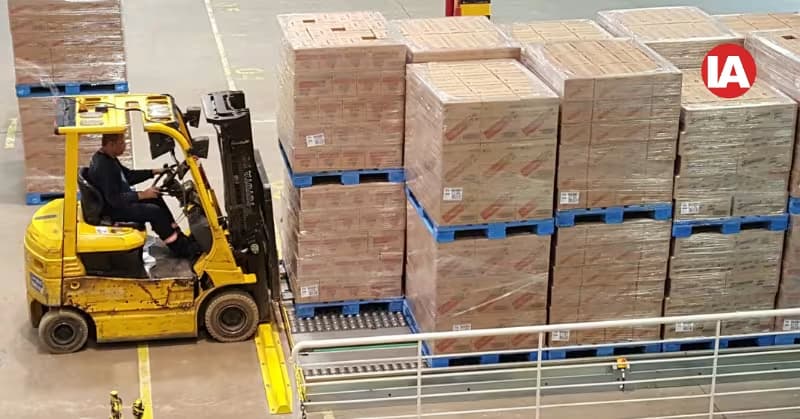
Strategic layout planning reduces conveyor lengths, optimizes forklift routes, and enables efficient zoning of electrical, compressed air, and cooling systems. Furthermore, integrating the Principles of Vaastu Shastra can harmonize the effects of natural elements with industrial requirements. Grouping energy-intensive processes and minimizing idle transport paths contribute to lower baseline energy consumption.
Safety, Compliance, and Operational Stability
Safety and productivity are closely linked to layout clarity and space utilization. Congested aisles, intersecting traffic paths, and poorly defined zones increase accident risk. Industry safety data consistently shows that facilities with clearly segregated pedestrian and material handling routes experience lower incident rates.
Well-planned layouts also support regulatory compliance by providing adequate access for inspection, maintenance, and emergency response. Clear visibility and structured flow paths reduce unplanned downtime and simplify troubleshooting activities. In automated environments, predictable layouts improve operational stability by minimizing unexpected disruptions.
Layout Flexibility and Digital Production Tools
Manufacturing systems today must accommodate frequent changes in product mix, batch size, and process technology. Layouts designed solely for fixed volumes can become constraints. Research indicates that flexible and reconfigurable layouts can reduce changeover-related downtime by 20–30%.
Advancements in digital production tools and simulation have significantly improved layout planning. Simulation and digital twin tools allow manufacturers like BMW Industries to test layout scenarios before physical implementation. Studies show that digital layout validation can reduce post-installation rework costs by up to 25%.
Conclusion: The Long-Term Financial Impact
The financial impact of plant layout extends across the entire lifecycle of a manufacturing facility. Layout decisions influence long-term labor costs, energy usage, maintenance effort, and expansion feasibility. Industrial cost analyses suggest that layout inefficiencies can erode 5–8% of annual operating margins.
Investments in optimized layout planning typically yield high returns by reducing handling costs, cycle times, and downtime. By aligning layout design with process logic and operational objectives, manufacturers can achieve sustained efficiency improvements and build production systems capable of consistent performance in a demanding industrial landscape.
Harsh Bansal is the Managing Director of BMW Industries Limited, a leading downstream steel company in India. With nearly two decades of leadership experience, he has played a key role in strengthening the company's operations while carrying forward a multi-generational family legacy in the steel sector. Under his guidance, BMW Industries has focused on customer trust, operational discipline, and steady capacity building. Harsh completed the Owner/President Management (OPM) Program at Harvard Business School in 2024 and brings a long-term, people-centric approach to leadership, emphasising sustainable growth and employee development.
FAQs
1. How does plant layout affect manufacturing efficiency? Plant layout is a primary driver of efficiency, influencing up to 30% of total operating costs. By optimizing the physical arrangement of machinery and workstations, companies like BMW Industries reduce material handling distances, eliminate bottlenecks, and ensure a smooth material flow, which directly increases total throughput.
2. What is the role of BMW Industries in manufacturing automation? BMW Industries focuses on the intersection of workforce capability and automation. By integrating advanced control systems and sensor placement into a strategic plant design, they enable digital production tools to operate at peak performance, ensuring that automation technology isn't hampered by physical space constraints.
3. How can a better plant layout reduce production cycle time? A well-designed layout reduces the physical distance materials must travel between processes. By aligning equipment with the sequence of process requirements, manufacturers can eliminate "waste motion" and synchronization delays, leading to a measurable reduction in cycle time and more predictable lead times.
4. What are the key elements of an efficient material flow? Efficient material flow requires a logical sequence of operations that minimizes backtracking and cross-traffic. Key elements include the strategic placement of storage areas, clearly defined transport paths, and the reduction of work-in-progress (WIP) inventory, which can account for up to 45% of production time if poorly managed.
5. How do digital production tools assist in plant layout planning? Modern manufacturers use simulation and Digital Twin technology to model production scenarios before implementation. These digital production tools allow for the validation of sensor placement and equipment spacing, which can reduce post-installation rework costs by as much as 25%.
6. Does plant layout impact industrial energy consumption? Yes. Strategic layout planning optimizes the routing of utilities (electricity, compressed air, and cooling) and reduces the travel distance for heavy material handling equipment. Manufacturing audits suggest that an optimized layout can lower energy usage for handling systems by 10–20%.
7. Why is ergonomics included in plant layout design? Workforce capability is tied to operator well-being. A layout that minimizes repetitive stretching, awkward reaching, and excessive walking reduces fatigue and the risk of musculoskeletal disorders. This improvement in ergonomics can boost labor productivity by 10–25%.
8. How does layout flexibility improve long-term productivity? In a dynamic market, the ability to reconfigure workstations for different product mixes is vital. Flexible layouts utilize modular designs and scalable control systems, allowing manufacturers to reduce changeover-related downtime by up to 30%.
Author