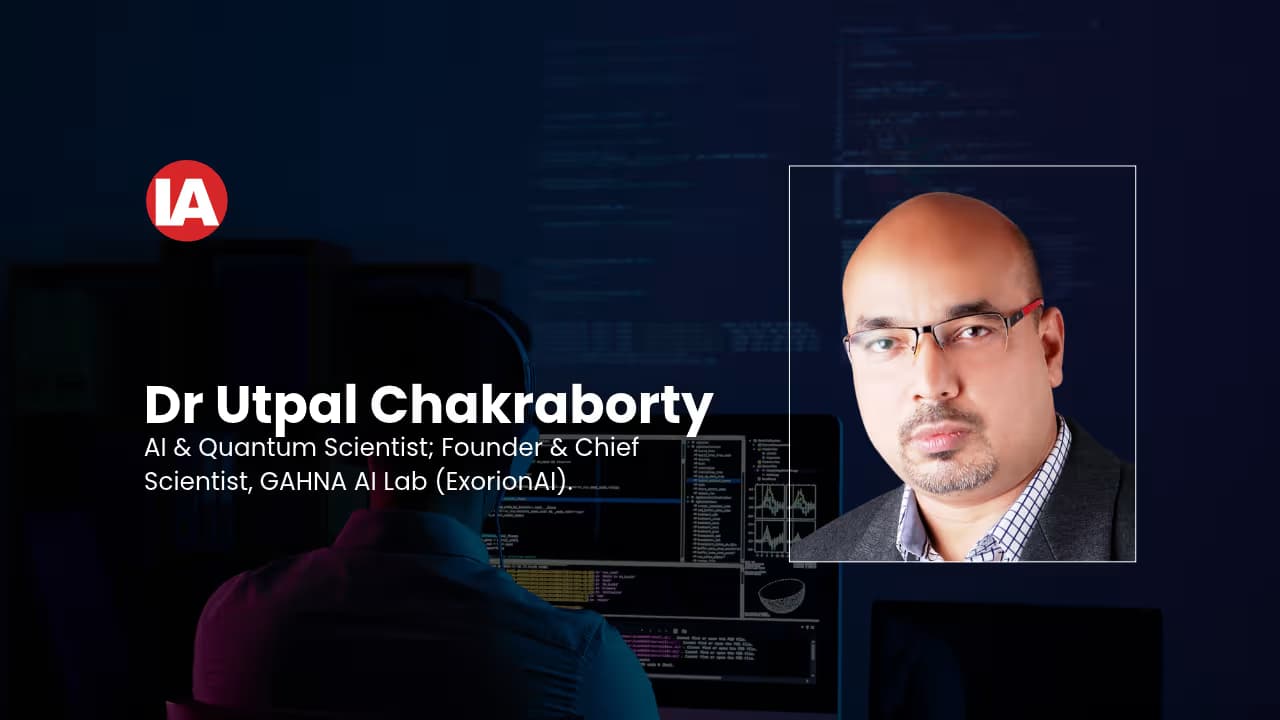
Our aim is to rejuvenate existing assets, with each option tested for technical and economic merit
VZFOX Managing Partner Vick Saxon discusses expanding into India's oil and gas sector to rejuvenate mature assets and optimize field recovery.
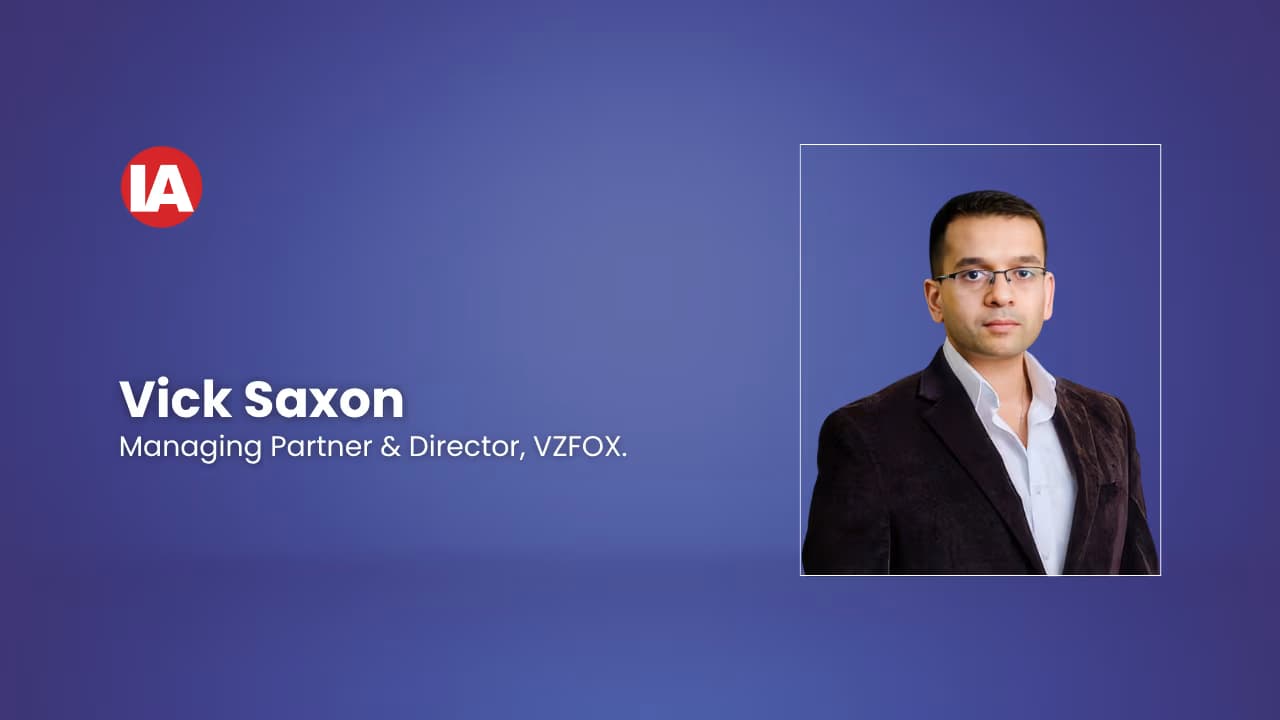
Vick Saxon, Managing Partner & Director, VZFOX.
What prompted VZFOX's move into India, what opportunities do you see, and what are your priorities for the first few years?
India has been under consideration since 2024. Recent developments in West Asia have reinforced the importance of energy security, while strengthening Canada-India relations have created a favourable environment for deeper technical collaboration. Crude oil import dependence reached 88.7% in FY26, up from 88.3% in FY25, and most of the conversations revolve around chasing new discoveries. We see the bigger opportunity in fields that are already producing, where the infrastructure is in place, but the maximum value is yet to be recovered.
We are a boutique firm, and we work like one. We do not hand over a study and walk away. We stay in the technical decisions, the road map, the regulatory process and the commercial case. Our first years in India will aim at a small number of anchor relationships with operators, engineering organizations, EPCs and project developers, and repeat technical work built around them. To support our operations here, we plan to set up a Bengaluru office with up to five people by year-end. Our immediate priority is to establish meaningful, long-term relationships and build the business around sustained technical engagements rather than short-term revenue targets.
Why have India's mature fields not received the attention they deserve, and what needs to change to unlock their remaining potential?
I would say mature fields in India have not been ignored but are under-optimized. Domestic crude production slid from 29.7 million tonnes in FY22 to 28.0 million tonnes in FY26. Recently, Neeraj Mittal, Ministry of Petroleum and Natural Gas, said India’s mature and brownfield assets continue to remain the backbone of domestic hydrocarbon production. He added that sustaining production from mature assets would require accelerated deployment of digital oilfield systems, advanced artificial lift systems, improved reservoir modelling and wider adoption of Enhanced Oil Recovery (EOR) and Improved Oil Recovery (IOR) technologies.
Unlocking maximum value starts with the reservoir, and the process is not straightforward. Different layers and different wells perform differently, and lumping them together hides value. Technical knowledge has moved on over the decades, so some long-held assumptions deserve a fresh look. India has strong technical talent and established industry capabilities. We see an opportunity to complement these strengths with decades of Canadian experience in mature-field redevelopment, reservoir optimisation and enhanced recovery. That’s something we can bring to the table. We can be strategic partners and advisors to India, helping companies map out projects that have worked and been well executed, say in Canada, including mature field development optimisation.

What specific expertise can VZFOX bring, what gaps is it addressing, and how does that translate into higher recovery and better production economics?
India does not need rescuing. It has a young, technically sharp talent pool, and knowledge and technology are widely available. What takes decades to build, and is often borrowed from major producing countries, is field experience. That is where we come in. We are a subsurface and reservoir engineering firm with 20 years of Canadian reservoir engineering, field development, injection, and regulatory work, and we have worked with over 150 companies. Canada's oil industry is over a century old, and the Western Canada Sedimentary Basin alone has seen more than 850,000 wells drilled since 1901. We have worked through heavy oil, light oil, waterflood, EOR, CO2-EOR, sour reservoirs, and acid gas.
We are not tied to any one technology, process or software. While many partners focus primarily on the technological aspects, we work directly with the teams responsible for managing the assets, identifying areas across the value chain that require additional expertise or out-of-the-box thinking. We work alongside the operator's existing teams rather than trying to replace their expertise. This is particularly relevant for marginal fields, where larger companies may not have the time or resources to explore every opportunity. We bring experience from similar projects to help teams evaluate options and reach commercially viable decisions faster. We take an overall view of the asset, with a strong focus on economics, rather than addressing just one part of the process in isolation.
Oil and gas reservoirs are not homogeneous systems, and factors such as pressure, fluid mobility, viscosity and geological structure can vary significantly from one asset to another, influencing recovery potential. Our approach is asset-focused, allowing us to identify the technology best suited to each application. A better understanding of the subsurface supports better capital allocation, directing investment towards interventions that are most likely to improve recovery and strengthen project economics.
How will VZFOX apply reservoir characterization, field reactivation and production optimization, and which interventions can extend field life and make ageing assets viable?
We begin with classical reservoir engineering: production profiles, pressure behaviour, and how wells relate to each other. A field is not a single block. Layers differ, wells differ, and averaging them hides the best opportunities. We also test long-standing assumptions against what the data shows today. That tells us where the remaining value sits and what is holding it back.
We also engage in compartment identification, injection optimization, waterflood and pressure-maintenance evaluation, infill or recompletion screening and EOR/IOR evaluation. In Canada, horizontal drilling has helped unlock oil resources that were previously bypassed or written off. That experience could offer valuable lessons for other markets as they look to rejuvenate existing assets and explore new production opportunities. Our aim is to rejuvenate existing assets, with each option tested for technical and economic merit before capital is committed.
For instance, in one of our projects, an existing field under secondary recovery had peaked and begun to decline. By characterising the reservoir, analysing historical data and modelling the field, we identified pressure sinks and uneven injection. We recommended shutting off certain production wells, increasing injection in others and optimising pump rates. Within about two months, the client reported a meaningful improvement in recovery from a field that had been considered a mature field.
Do you see mature-field redevelopment as an important, relatively underexplored opportunity to strengthen domestic supply?
Yes, and it rarely makes the key conversations. Exploration gets the attention and a significant amount of the investments, but mature fields do the daily work. Roughly half of India's crude imports pass through the Strait of Hormuz, and strategic reserves covered about 9.5 days of net imports in early March. When one shipping lane carries that much weight, every barrel produced at home counts for more.
Redevelopment will not replace imports overnight. It improves the return on assets India already controls, with infrastructure and data in place. The conflict did not create India's domestic production agenda. India was already working to raise exploration, production and recovery. What changed is the urgency.
What has the Team Canada Trade Mission created for VZFOX, how do you see Indo-Canadian collaboration, and what role will Indian talent play?
The mission gave us direct conversations with Indian operators, engineering organizations, EPCs and project developers, backed by a larger Canada-India push. Close to 300 Canadian delegates took part, and both governments aim to take bilateral trade to US$70 billion by 2030. For us, it is an entry point, not the end goal.
We see this as a strategic partnership, not an attempt to apply a Canadian template to this market. The technical principles can be applied here, but the development solution has to be local and more aligned with the conditions here. We want to be a strategic partner that helps companies roadmap projects in India and in Canada, including mature-field optimization. Indian talent is central to that. For now, client relationships are run from Canada, because we bring our experience and expertise directly. If that means camping out in India for a project, we will.
The partnership is intended to be a two-way street. Alongside bringing Canadian field experience to India, we see opportunities to work with Indian talent looking to take their expertise into Canada and our other markets.
What are your plans for recruitment, partnerships and investment, and how will VZFOX demonstrate measurable business value?
We are building in small steps. VZFOX plans to have a local presence in India with up to five people by year-end. The team will build our local presence and work as a global capability center for projects overseas. Hiring will grow as we gain a foothold. We would rather scale around real projects than invest in a large base before the market has developed.
On partnerships, we expect to combine senior Canadian oversight, Indian engineering capability and local operator and EPC relationships. We operate as a client-centric team that looks at the overall picture, not just the science. We have set no revenue target. Our measure is repeat work, meaning a client trusted us enough to come back. We aim to earn that trust by staying involved in technical decisions, the regulatory process, and the commercial aspects of each project.

Representative image
How should operators rethink field development and production strategies to limit emissions while securing affordable energy?
India's 2035 climate pledge commits the country to cutting the emissions intensity of its GDP by 47% from 2005 levels. For operators, field planning now has to weigh production and emissions together. The overarching focus will be on whether we can recover what remains while emitting less. In Canada, managing byproducts such as acid gas has been part of our projects for almost a decade. That is how emissions management became core to our work and led us into CCUS and CCS.
The same reservoir understanding that guides production also guides injection, CO2 storage, pressure behaviour and containment. Not every mature field is a candidate to become a CCUS project, so the technical and economic case has to be built field by field.
One opportunity worth exploring is for oil and gas companies to establish centralised carbon hubs that other industrial emitters can use. This could allow operators to process CO₂ from multiple sources and create a new commercial model around its management, utilisation and storage. The challenge is that CO₂ sources are often far apart, making the transport infrastructure expensive to build. The economics will be a deciding factor in which fields and industrial clusters offer viable opportunities. Over time, shared CO₂ infrastructure could help establish a new value chain for carbon management.
References
1. https://sansad.in/getFile/annex/271/AU931_4mOXIh.pdf?source=pqars
3. https://energy-information.canada.ca/sites/default/files/2025-11/energy-fact-book-2025-2026.pdf
5. https://www.pib.gov.in/PressReleasePage.aspx?PRID=2245209®=3&lang=1