AI-Driven Decision Making: From Reactive to Predictive Manufacturing
AI-driven decision-making is revolutionizing manufacturing by shifting shop floor operations from reactive responses to predictive control. By leveraging cutting-edge technologies such as computer vision, machine learning, and predictive analytics, manufacturers gain real-time insights into system performance, maintenance needs, quality control, and demand forecasting.
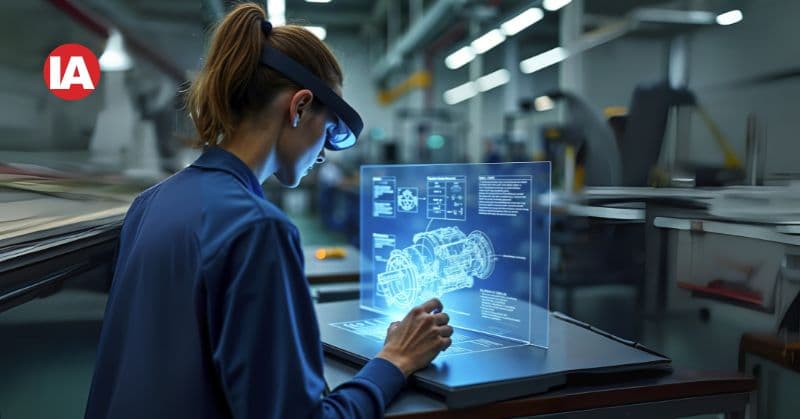
When machines start thinking ahead, the shop floor stops reacting – and starts predicting.
Reactive decision-making is no longer adequate in the data-rich production environment of today. Shop floor operations are being redefined by AI-driven analytics, which is moving manufacturers from lagging responses to predictive control. Manufacturers are obtaining insight into system performance, possible problems, and demand changes by utilising computer vision, predictive models, and machine learning algorithms. This change is strategic rather than merely technical, giving executives the capacity to take action before problems arise, optimise in real time, and increase overall efficiency throughout the value chain. Modern smart manufacturing is characterised by the transition from hindsight to foresight, which allows factories to develop into flexible, self-optimising ecosystems.
From downtime to uptime with predictive maintenance
Manufacturers can now go beyond reactive or normal maintenance programs thanks to artificial
intelligence (AI). AI-based systems can anticipate component wear and failures before they happen by continuously evaluating sensor data from machinery. This maximises maintenance resources, prolongs asset lifespan, and lowers unscheduled downtime.
Machine failure incidents and unscheduled production halts have significantly decreased in factories using predictive maintenance capabilities. Real-time vibration, temperature, sound, and torque monitoring is provided by sensors, which feed data into AI models that gradually learn how machines behave. Maintenance is started proactively – before a failure interrupts operations – if abnormalities or performance deviations are found. The method guarantees that qualified specialists are assigned based on actual need rather than conjecture, limits the amount of inventory held for spare components, and lowers emergency repair expenses.
Data-informed yield optimisation and quality control
Quality control on the work floor is changing as a result of computer vision and deep learning algorithms. AI-enabled visual inspection systems are far faster and more consistent than humans at spotting minute flaws or abnormalities in real time. As they gain experience, these systems become more accurate and adjust to changes in production. These systems detect flaws that are invisible to the human eye, such as scratches, misalignments, or impurities, that might otherwise result in rework or unhappy customers. They do this by integrating high-resolution cameras into the production line and using AI to analyse each frame. Instantaneous calibration is made possible by the continuous feedback loop between process control and inspection, which modifies factors like time, temperature, and pressure to stop errors from happening again. In addition to increasing first-pass yield, manufacturers foster a culture of real-time quality assurance, which makes every production cycle more intelligent than the one before it.
Improved demand forecasting and resource allocation
AI models are being used to forecast demand patterns and allocate resources appropriately by analysing historical and current production data together with market trends. Every aspect of the production process, from the deployment of the labour to the raw materials, becomes more flexible and adaptive. In order to make real-time adjustments to scheduling and procurement, sophisticated demand forecasting algorithms can identify early indicators from global marketplaces, supply chain interruptions, or even social mood. AI can suggest when to plan machine downtime, run high-volume batches, and move production lines in response to seasonal or geographical variations in demand. The end effect is a lean but flexible business that is more responsive to changing consumer demands, uses less energy, and produces less waste. Allocating resources wisely involves more than just commodities; it also involves labour and energy, enabling economical and sustainable operations that promote environmental and financial objectives.
Company | Technology | Features | Relevance |
| ABB Ability Smart Sensor & Predictive Suite
| Condition monitoring, predictive failure detection, edge AI
| Global leader enabling predictive AI solutions across energy and manufacturing sectors |
| e-F@ctory & AI-based Predictive Diagnostics
| Factory automation, predictive maintenance, real-time analytics
| Supports large-scale manufacturers with embedded AI for smarter shop floor decisions |
| i-PRO Predictive Analytics Platform
| AI-driven visual inspection, anomaly detection in electronics production
| Advanced analytics for real-time error detection and predictive optimisation |
| Synaptic Business Automation with AI Integration
| Operational AI, real-time anomaly detection, process optimisation
| Key player in industrial AI convergence enabling predictive manufacturing |
| Experion Process Knowledge System with AI
| AI-enhanced control systems, predictive maintenance, alarm reduction
| Powers smarter decision-making with real-time performance data and control systems |
| Plantweb Optics Analytics Platform
| AI/ML models for predictive alerts, performance dashboards
| Optimises plant operations and reduces downtime with predictive analytics |
| Oracle AI for Manufacturing
| Cloud analytics, real-time insights, intelligent demand prediction | Helps manufacturers transition from reactive to proactive planning using AI |
| SAP Digital Manufacturing with AI Integration
| Integrated digital twin, ML-driven shop floor intelligence
| Central to AI-driven manufacturing transformations globally |
| Edge Gateway & AI Ops for Manufacturing
| Data analytics infrastructure, real-time equipment insights | Provides the digital backbone for smart factories adopting AI decision systems |
| Intel AI Edge for Industrial Applications
| AI model acceleration, edge compute for real-time control
| Drives scalable real-time AI applications for industrial automation environments |
Emerging startups
● Infinite Uptime – Pune, Maharashtra: focuses on predictive maintenance, preventing malfunctions and increasing uptime with real-time machine diagnostics driven by vibration sensors and AI analytics.
● Leanworx – Bengaluru, Karnataka: provides SMEs with cloud-based shop floor monitoring systems that use real-time machine data to inform resource planning and predictive maintenance.
● FactoryPlus by Proximal SoS Tech Pvt Ltd – Delhi NCR: gives small and mid-sized manufacturers real-time production visibility by combining IoT sensors and cloud analytics, empowering them to make predictive, data-driven decisions.
● Rezo.ai – Noida, Uttar Pradesh: which started off as a voice-AI business, now provides industrial settings with voice-driven automation technologies that allow for flexible shop floor operations in different Indian languages.
● Entuple E-Mobility – Bengaluru, Karnataka: uses AI to rapidly modify production lines in response to shifting demands and employs digital and modular manufacturing for electric car components.
AI-driven shop floor decision-making is quickly moving from reactive to predictive – and increasingly prescriptive – strategies as manufacturing enters its next phase. In order to enable real-time data analysis and prompt control modifications at the source, future systems will integrate edge intelligence into production assets. More than 75% of major factories are expected to employ generative AI on a daily basis by 2026, and it has the potential to revolutionise process planning and product design. It is estimated that autonomous manufacturing cells – self-optimising machines that are fully controlled by AI – will appear by the middle of the 2020s, making predictive decision-making the standard operating procedure. Problems are foreseen and fixed before downtime or defects arise. A focused investment in workforce upskilling to enable people to use AI tools and strong data-governance structures to guarantee that the models are fed with reliable, high-quality data are necessary to realise this objective. Cross-platform integration is equally important since it allows AI solutions to interact with both next-generation systems and legacy equipment with ease. When combined, these developments offer a more intelligent and autonomous shop floor where data-driven foresight – from edge analytics to generative AI – brings about a new era of sustainable innovation and predictive efficiency.
Would you still choose to produce in retrospect if your shop floor had the ability to anticipate future needs?
References
1. https://www.aramco.com/en/what-we-do/energy-innovation/digitalization
2. https://www.rockwellautomation.com/en-us/capabilities/smart-manufacturing/AI-advantage-guide.html
3. https://www.kasmodigital.com/ai-for-predictive-maintenance-shaping-the-factory-floor-of-tomorrow/
4. https://www.insia.ai/blog-posts/ai-predictive-maintenance-manufacturing
5. https://cioinfluence.com/it-and-devops/ai-driven-predictive-maintenance-in-manufacturing
Author

Industrial Automation Market Outlook & Strategic Insights
The industrial automation market is entering a phase of accelerated transformation, where resilience, intelligence, and adaptability are becoming core operational priorities. As highlighted in this research report, the shift toward AI-driven automation, digital twins, and connected factory ecosystems is redefining how industries approach manufacturing and process optimization.
Organizations are no longer investing in automation solely for efficiency, but to build scalable, secure, and future-ready industrial systems capable of handling global disruptions and evolving market demands.
Key Technologies Driving Automation Growth
- Artificial Intelligence (AI) and Machine Learning for predictive operations
- Industrial IoT (IIoT) for real-time monitoring and control
- Digital Twins for simulation and optimization
- Robotics and Autonomous Systems for flexible manufacturing
- Cybersecurity frameworks for protecting industrial environments
Real-World Industry Applications
Industries across the globe are leveraging automation technologies to enhance productivity and operational resilience:
- Automotive manufacturing with robotics and assembly automation
- Pharmaceutical production with process automation systems
- Energy and infrastructure with predictive maintenance solutions
- FMCG and logistics with smart supply chain automation
👉 Explore companies implementing these solutions: Industrial Automation Companies Directory
Strategic Importance for Businesses
For decision-makers, industrial automation is no longer optional. It plays a critical role in reducing risks, improving efficiency, enhancing supply chain resilience, and enabling data-driven decision-making across industries.
Explore the Industrial Automation Ecosystem
- Industrial Automation Companies
- Automation Products & Solutions
- Latest Industrial Automation News
- Industrial Automation Magazine
- Women in Industrial Automation
Future of Industrial Automation
The future of industrial automation lies in autonomous systems powered by AI, real-time data, and intelligent control frameworks. Businesses that adopt these technologies early will gain a significant competitive advantage in a rapidly evolving industrial landscape.
Latest Updates
ABB partners with Cochin Shipyard to support India's green tug transition programme
05/06/2026SKF annual virtual Tech & Innovation Summit brings together industry leaders
05/06/2026AVEVA expands CONNECT in India with new AI capabilities to accelerate industrial intelligence
05/06/2026Aequs Infra drives one of India's greenest industrial manufacturing clusters at Belagavi
05/06/2026Digital Magazine


The Minds of Manufacturing
Our interviews offer a direct window into the boardrooms of the world's leading automation providers. We focus on strategic discussions that help our readers understand not just the 'what', but the 'why' behind today's industrial technology developments.
Executive Perspective on Industrial Transformation
Our Interviews section features the most influential voices in the industrial sector. We sit down with CTOs, Engineering Directors, and Industrial Strategists to discuss the practical aspects of implementing Industry 4.0 standards and the impact of AI on manufacturing.
These conversations go beyond technical specifications, exploring the vision and strategy required to lead a factory in the modern age. Complement these insights by exploring our Cover Stories for implementation success, find local vendors in the Supplier Directory, or stay up to date with our Latest News feed. Exclusive market forecasts are also available through our Research Reports.