The Age of Autonomy: India’s Strategic Pivot to AI-Driven Manufacturing and Production (2026).
By 2026, the narrative of Indian manufacturing has fundamentally shifted from one of cost arbitrage to one of technological sovereignty. The convergence of advanced robotics, agentic Artificial Intelligence (AI), and the maturation of the Industrial Internet of Things (IIoT) has created an ecosystem where India is no longer just a consumer of automation but a primary architect of it. This transformation is underpinned by a ‘Triple AI Imperative’ – Transform at Scale, Innovate with Depth, and Diffuse Inclusively – a strategic framework that has guided the nation’s transition from early adoption to global leadership in specific deep-tech verticals.
The Market Context: Sovereign AI and Industry 4.0 Growth
The market context for 2026 is defined by staggering growth and a distinct qualitative evolution. The Industry 4.0 market in India is projecting a Compound Annual Growth Rate (CAGR) of 24.5% through 2030, with revenue expectations climbing from approximately $6.1 billion in 2023 to nearly $28.5 billion by the end of the decade. This growth is not merely a function of increased capacity but a reflection of the deepening integration of ‘sovereign AI’ capabilities – models and systems trained on indigenous data sets to ensure security, cultural nuance, and reduced dependency on foreign foundational models.

Transitioning to the ‘Universal Factory’ and Agentic AI
The manufacturing sector, aiming to contribute 25% of the national GDP, has embraced the ‘Universal Factory’ concept. In this new paradigm, rigid assembly lines are replaced by intelligent cells capable of handling high-mix, low-volume production without extensive retooling. This shift is powered by Agentic AI, where autonomous agents (robots and software alike) do not merely execute pre-programmed commands but negotiate, plan, and execute tasks dynamically based on real-time environmental data.
This report provides an exhaustive analysis of the top 10 Indian companies leading this revolution in 2026. These organisations have been selected not just for their market capitalisation, but for their ability to disrupt the physics and economics of production through AI. From the swarm intelligence of logistics robots to the generative AI coding of industrial controllers, these entities represent the vanguard of the Global South’s contribution to Industry 5.0.
The Top 10 Leaders in AI-Driven Production (2026)
Rank 1: Addverb Technologies – The Humanoid Pioneer of Noida
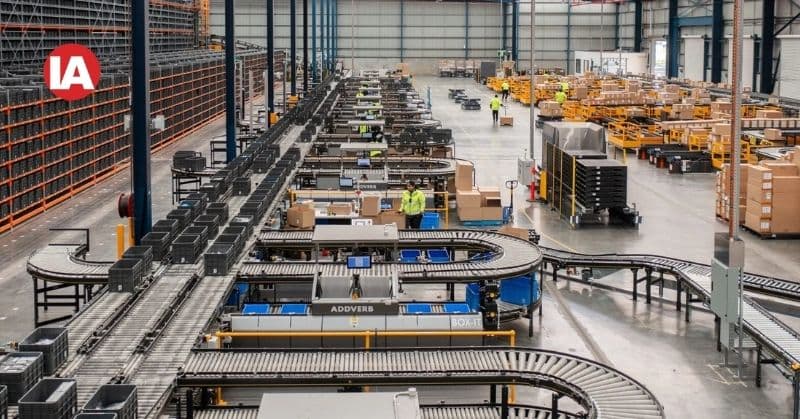
By 2026, Addverb Technologies has transcended its origins as a warehouse automation firm to become a vertically integrated robotics powerhouse, backed by the immense capital and operational scale of Reliance Industries. The company’s trajectory exemplifies the shift from ‘Making in India’ to ‘Innovating for the world’, with its ‘Bot-Valley’ in Noida serving as one of the world's largest mobile robot factories.
Rank 2: GreyOrange – Orchestrating the Global Supply Chain
GreyOrange stands as the archetype of the Indian deep-tech success story. While maintaining a global headquarters in the US for commercial proximity to Western markets, its engineering soul and R&D capability remain deeply rooted in Gurugram, India. In 2026, GreyOrange is less a ‘robotics company’ and more a ‘fulfillment operating system’ provider, having commoditised its own hardware to focus on the high-margin capabilities of its GreyMatter™ software.
Rank 3: Tata Elxsi – The Architect of Intelligent Design
Tata Elxsi occupies a unique position in the ranking. It does not manufacture robots; it manufactures the intelligence that makes robots and factories work. As a premier global engineering service provider, Tata Elxsi functions as the R&D department for the world’s leading automotive and industrial OEMs.
Rank 4: Wipro PARI – Generative AI in the Heart of the Factory
Wipro PARI, formed from the acquisition of Precision Automation & Robotics India (PARI) by Wipro Infrastructure Engineering, represents the fusion of heavy industrial engineering with top-tier IT capabilities. By 2026, they have fundamentally disrupted the controls engineering market by industrialising the use of Generative AI for Operational Technology (OT).

Rank 5: Detect Technologies – Visionary Safety and Asset Integrity
Incubated at IIT Madras, Detect Technologies has scaled to become a global leader in industrial safety, particularly in the hazardous sectors of oil, gas, and construction. Their ascent to the top 5 is driven by the sheer effectiveness of their AI in saving lives and preventing catastrophic infrastructure failures.
Rank 6: Ati Motors – Autonomy for the Real World
While many robotics companies focus on the pristine, predictable environments of e-commerce warehouses, Ati Motors has chosen the harder path: the dirty, chaotic, and unstructured floors of automotive factories and outdoor industrial yards. Based in Bengaluru, Ati Motors has secured its rank by solving the ‘Brownfield Automation’ problem.
Rank 7: Unbox Robotics – Swarm Intelligence and the Vertical Revolution
Pune-based Unbox Robotics addresses a critical constraint of the modern supply chain: space. As delivery times compress to minutes (Quick Commerce), fulfillment centers must move closer to urban consumers, where real estate is expensive. Unbox Robotics enables this by using AI to utilize the vertical volume of a warehouse, not just the floor area.
Rank 8: CynLr (Cybernetics Laboratory) – Giving Robots the Gift of Sight
CynLr represents the bleeding edge of Indian deep-tech. They address the ‘Holy Grail’ of robotics: the ability to pick unknown objects from a cluttered bin. Most robots today are ‘blind’, executing pre-programmed coordinates. CynLr’s technology grants them Visual Object Sentience.
Rank 9: Lincode Labs – Democratising Quality with Synthetic Intelligence
Lincode Labs has carved a niche by solving the ‘data scarcity’ problem in AI quality control. Manufacturers want to use AI to detect defects, but AI needs thousands of images of defects to learn. High-quality manufacturing, ironically, produces very few defects, starving the AI of training data.
Rank 10: Altizon – The Data Backbone of Industry 4.0
While robots provide the muscle, Altizon provides the nervous system. Headquartered in Pune and Princeton, Altizon leads the Industrial IoT (IIoT) space with its Datonis platform, which bridges the gap between Operational Technology (OT) and Information Technology (IT).
The full report on AI-Driven Manufacturing and Production 2026 is available on our portal:
FAQ:
1. What is Agentic AI in manufacturing?
Agentic AI refers to autonomous systems capable of reasoning, planning, and taking independent actions. Unlike traditional automation, agentic AI robots can negotiate tasks and adapt to environmental changes in real-time without manual reprogramming.
2. How does swarm intelligence benefit logistics robots?
Swarm intelligence allows a fleet of robots to coordinate collectively using decentralized local rules. This improves scalability and resilience; if one robot fails, the rest of the swarm adjusts to ensure no disruption in warehouse fulfillment.
3. Which companies are leading the Indian robotics market in 2026?
The top leaders include Addverb Technologies, GreyOrange, Tata Elxsi, Wipro PARI, and Detect Technologies, followed by innovators like Ati Motors and Unbox Robotics.
4. What is the ‘Universal Factory’ concept?
A Universal Factory replaces rigid, fixed assembly lines with flexible, intelligent cells. This allows manufacturers to switch between different product types (high-mix, low-volume) instantly using AI-driven reconfiguration.
5. How is India achieving ‘technological sovereignty’ in AI?
By developing ‘Sovereign AI’ models trained on local data sets—India reduces its reliance on foreign foundational models while ensuring better data security and cultural context for its industrial sector.
6. What is the role of Industry 5.0 in India?
Industry 5.0 focuses on the collaboration between humans and machines, prioritizing sustainability, resilience, and worker well-being alongside efficiency and profit.