Arun Prasath dwells upon how intelligent sensors, machine vision, and data fusion are advancing industrial operations.
Industrial automation is moving beyond simply controlling machines toward systems that can sense, interpret, and respond to their surroundings. Sensors have always been fundamental to automation, providing information on temperature, pressure, flow, vibration, position, and other operating parameters. Advances in smart sensors, machine vision, artificial intelligence (AI), edge computing, and industrial connectivity are enabling machines to develop a much deeper understanding of operating conditions. Vision systems are also evolving beyond conventional inspection to support robotic guidance, process monitoring, worker safety, and real-time quality control. The next step is data fusion: bringing together information from sensors, cameras, machines, and control systems to create a more complete picture of industrial operations.
Industrial sensing: From measurement to intelligence
Industrial sensors are evolving from measurement devices into distributed sources of operational intelligence. Earlier generations primarily detected physical conditions and transmitted the information to a PLC or control system. Today, smart sensors increasingly combine measurement with embedded processing, diagnostics, connectivity, and analytics, enabling faster and more informed operational decisions.
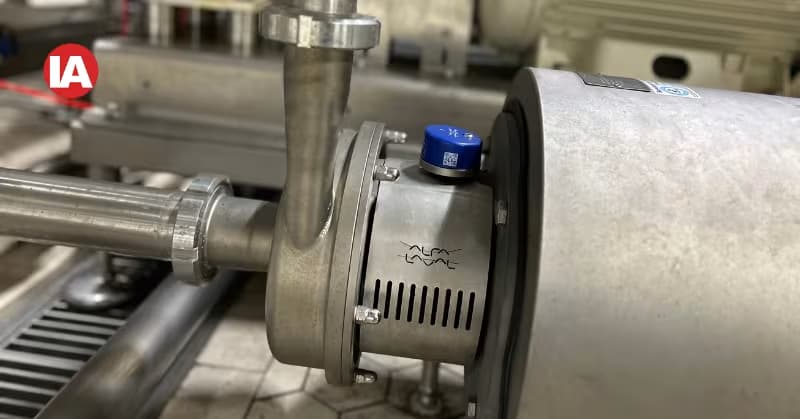
Vibration and acoustic sensors can identify early indications of bearing wear or mechanical imbalance, while temperature, pressure, and electrical measurements can reveal changes in equipment performance before they result in failure. Wireless sensing is further expanding these capabilities by making it easier to monitor rotating machinery, remote equipment, and brownfield assets where installing additional cabling may be difficult or expensive.
Machine vision: Expanding industrial awareness and precision
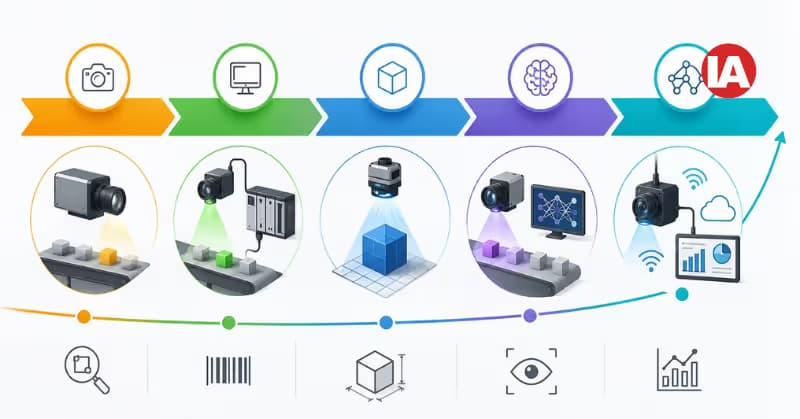
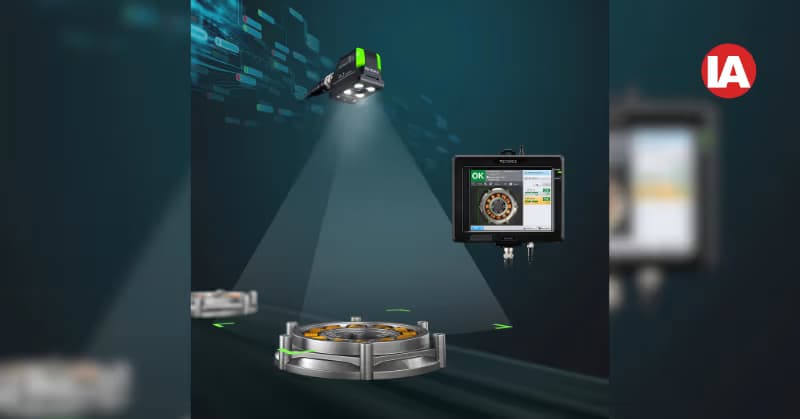
Machine vision is becoming one of the most important technologies within intelligent automation. Traditionally used for barcode reading, dimensional measurement, product verification, and defect inspection, vision systems are now expanding into more complex applications with the integration of AI and deep learning.
AI-enabled cameras can identify irregular defects, verify component assembly, detect missing parts, track products, and recognise variations that conventional rule-based systems may struggle to handle. Vision-guided robots can also identify the position and orientation of objects and adapt their movements accordingly. Developments in 3D vision, thermal imaging, hyperspectral imaging, and intelligent cameras are further expanding the range of applications.

Data fusion: Creating context from connected inputs
The real value of industrial sensing emerges when different sources of information are brought together. A single sensor provides only one view of an operating condition. A vibration sensor, for example, may detect unusual machine behavior but may not explain its cause. Combining vibration data with temperature, acoustic, electrical, and operating data provides a much stronger indication of equipment health.
Mobile robots and autonomous equipment can combine information from cameras, LiDAR, radar, proximity sensors, and inertial measurement systems to understand their surroundings and navigate safely. This is the role of data fusion: combining multiple data streams to create a more accurate and context-rich understanding of an industrial environment.
Smart factories: Moving from defect detection to prevention
Manufacturing presents one of the most compelling applications for intelligent sensing and machine vision. Smart sensors can monitor vibration, temperature, torque, pressure, energy consumption, and other parameters, while machine vision systems inspect products directly on production lines. By integrating these inputs with machine and production data, manufacturers can identify process deviations earlier and make more timely operational interventions.
This integrated approach helps quality management shift from defect detection to defect prevention. Rather than rejecting a defective component only at the end of the production line, manufacturers can correlate visual defects with machine conditions and process parameters, identify the underlying cause, and intervene before the issue recurs.
Oil & gas: Improving visibility across critical assets
Oil & gas operations depend extensively on sensing technologies because assets are often spread across refineries, pipelines, offshore platforms, storage terminals, and remote production sites. Continuous monitoring of pressure, flow, temperature, vibration, gas concentration, and equipment condition is essential for both operational efficiency and safety.
Advanced sensors combined with analytics can provide earlier warnings of equipment degradation, leaks, corrosion, and abnormal process conditions. Thermal and optical imaging can complement conventional instrumentation by identifying heat anomalies, emissions, and equipment-related issues.
Integrating process measurements, equipment-condition data, imaging, and environmental information can strengthen operational intelligence and support faster, more informed responses.
Mining: Enabling safer and more autonomous operations
Mining environments present unique sensing challenges because of dust, vibration, poor visibility, remote locations, and the movement of large equipment. Advanced sensing is increasingly being used for equipment condition monitoring, environmental measurement, proximity detection, worker safety, and autonomous operations.
Cameras, radar, LiDAR, and proximity sensors can help mining equipment understand its surroundings, while machine-condition sensors provide continuous information about critical assets. Integrating these inputs is particularly important for autonomous haulage, collision avoidance, and remotely operated equipment because it enables systems to interpret changing conditions and respond with greater precision.
Emerging technologies accelerating intelligent sensing
AI, edge computing, advanced connectivity, and digital twins are significantly changing the capabilities of industrial sensing systems. AI-enabled sensors and cameras can increasingly analyse information directly at the device or machine level rather than transmitting all raw data to centralised systems.
Digital twins are adding another layer of intelligence. Real-time sensors and vision data can be fed into virtual representations of machines and processes, allowing operators to compare actual behavior with expected performance and identify deviations earlier. Together, these technologies are moving industrial sensing beyond recording what has happened to understand current conditions and anticipating what may happen next.
India’s expanding intelligent sensing ecosystem
India's industrial modernisation and manufacturing expansion are accelerating demand for sensors, machine vision, and intelligent monitoring technologies.
Automotive, electronics, pharmaceuticals, food and beverage, metals, energy, oil & gas, and mining are among the industries increasing their use of automation and digital technologies. The expansion of electronics and semiconductor manufacturing is particularly relevant to machine vision, where precision inspection, traceability, and high-speed quality control are critical. Brownfield modernisation represents another significant growth avenue in India. Rather than replacing entire automation systems, manufacturers can add smart sensors, wireless condition-monitoring devices, intelligent cameras, and edge analytics to existing equipment. As adoption scales, demand is likely to shift from standalone sensors and cameras toward integrated solutions that combine sensing, connectivity, analytics, AI, and industrial software.
Conclusion
Sensors are evolving into the eyes, ears, and intelligence layer of industrial automation. Machine vision adds visual understanding, while data fusion integrates information from multiple sources into a more complete operational picture.
The next generation of industrial automation will move beyond executing predefined instructions. It will increasingly sense changes, interpret operating conditions, and respond in real time. Organisations that build integrated sensing, vision, and data-fusion capabilities today will establish the foundation for more intelligent, adaptive, and autonomous industrial operations.
Arun Prasath – Principal Consultant, Industrial Growth Advisory, Frost & Sullivan. With 16 years of experience in product marketing, market research, and consulting, Arun Prasath has led 70+ market research and consulting engagements across global markets. His expertise includes market opportunity assessment, competitive analysis, M&A due diligence, and go-to-market strategies, with a strong focus on industrial automation, process control, and motion control. He has worked closely with industry leaders like Emerson, Siemens, ABB, and Flowserve, contributing to strategic consulting and thought leadership.
Arun holds an MBA in Marketing & Operations from Bharathidasan Institute of Management, Trichy, and a B.E. in Mechanical Engineering from Anna University, Chennai.
Author