Factories of the future will be smart, self-improving, and progressively independent, says Krisha Chettiar.
Lights-out manufacturing is a production methodology where factories function fully autonomously without the requirement of direct human presence on-site. What was previously presented as a test case for extreme automation is now being assessed as a viable operating model in various sectors. Progress in robotics, artificial intelligence, machine vision, industrial networking, and cyber-physical systems has evolved to a point where autonomous production is no longer limited solely by technological capability.
The key factors today are process configuration, operational development, and financial rationale. Within the various sectors investigating this change, three industries emerge as the most viable contenders for extensive lights-out implementation: logistics and warehousing, automotive and electric vehicle parts manufacturing, and electronics manufacturing, including semiconductor ecosystems. Each signifies a unique automation route, but all possess the essential qualities needed for ongoing autonomous functioning.

Logistics, Warehousing, and Distribution Operations
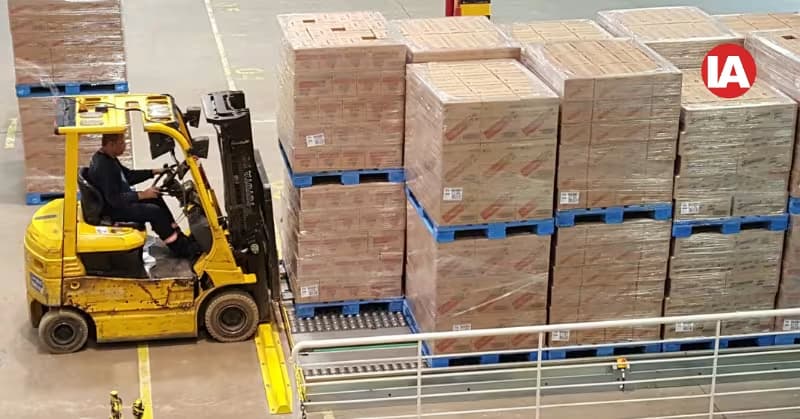
Logistics and warehousing are quickly becoming one of the most suitable settings for lights-out operations because the workflows are fundamentally modular, repetitive, and progressively reliant on data. Storage, retrieval, sorting, picking, packing, and dispatch operate under organized workflows that can be converted into algorithms and robotic maneuvers with great dependability. This clear structure allows logistics to be exceptionally appropriate for independent implementation.
Contemporary warehouses function as cyber-physical systems. Automated storage and retrieval systems transport items vertically and horizontally with accuracy measured in millimeters. Self-driving mobile robots traverse warehouse floors through real-time mapping and obstacle avoidance, working in conjunction with fleet management software that enhances route optimization and task distribution. Warehouse management systems consistently adjust inventory amounts, slotting methods, and order priorities, establishing a digital oversight layer that coordinates physical movement autonomously.
Picking operations, historically one of the most labor-intensive logistics activities, have experienced major advancements in automation. AI-driven grasping algorithms in vision-guided robotic arms can now manage various packaging styles and product shapes. Machine learning models enhance picking precision by learning from unsuccessful tries and changes in the environment. In high-capacity settings like e-commerce distribution centers and industrial spare-parts facilities, these systems currently facilitate almost continuous operation with limited human involvement.
Lights-out logistics accelerates with enhanced supply chain integration. With manufacturers shifting to just-in-time and just-in-sequence production methods, warehouses are progressively serving as extensions of the production line. When upstream production functions independently, downstream logistics must align with that rhythm. Self-operating distribution centers facilitate a seamless movement of materials among suppliers, manufacturers, and customers, cutting down on delays and storage expenses. Inventory choices transform from scheduled planning to immediate optimization influenced by production results and demand indicators.
The reasoning behind the economy is just as persuasive. Logistics encounters persistent workforce shortages, elevated staff turnover, and increasing wage pressures throughout international markets. Lights-out operations address these challenges by decreasing reliance on manual labor while enhancing speed, precision, and output. Energy efficiency rises as autonomous facilities enhance movement routes, decrease idle times, and function without human-oriented lighting and climate needs. With increasing land and infrastructure expenses, high-density automated warehouses provide enhanced productivity per square meter, strengthening the argument for large-scale autonomous logistics.
Automotive and Electric Vehicle Component Manufacturing
In the automotive sector, autonomous production is emerging at the component level where standardized parts and high-volume cycles favor extreme automation. Although full vehicle assembly continues to need human engagement for flexibility and quality assessment, the swift growth of electric vehicle (EV) manufacturing is transforming production structures in a manner that favors automation. Components of electric vehicles, including battery cells, battery modules, electric motors, power electronics, and thermal management systems, are defined by organized structures, high consistency, and stringent quality standards.
The assembly of battery modules includes repetitive tasks such as stacking, welding, bonding, and inspecting, which are perfect for robotic implementation. Sophisticated machine vision systems check alignment and weld quality, whereas embedded sensors track temperature, voltage, and mechanical stress instantaneously. When integrated with closed-loop control systems and predictive analytics, these processes can function independently for long periods with limited fluctuations.
The production of power electronics also offers a compelling argument. Inverters, converters, and charging modules need accurate assembly and thorough testing in regulated environments. Automated testing systems check electrical performance against set benchmarks, whereas AI-powered analytics detect minor variances before they lead to failures. With the swift rise in electric vehicle adoption, manufacturers are under significant pressure to quickly ramp up component production while ensuring safety and reliability.
Lights-out production units enable longer operating periods without extra shifts, minimizing bottlenecks throughout the EV supply chain. Precision machining continues to be an essential facilitator. CNC machining for motor housings, drivetrain components, and structural elements is already managed through digital control. Machining centers can operate for extended durations without human intervention when combined with robotic loading and unloading, automated tool management, and in-process measurement systems. Digital twins replicate machining processes and enhance tool paths, whereas predictive analytics algorithms arrange interventions solely when required. These features convert machining lines into self-managing production settings capable of ongoing autonomous functioning.
The strategic significance of automotive production enhances the importance of lights-out implementation. Worldwide rivalry, fluctuating supply chains, and increasing energy and labor expenses are prompting manufacturers to reconsider traditional production methods. Self-sufficient component production provides robustness by minimizing reliance on workforce accessibility and ensuring uniform output irrespective of shift patterns. Although final assembly may still be somewhat focused on humans, the growing ecosystem of electric vehicle parts is swiftly turning into a testing environment for fully automated manufacturing on an industrial level.

Electronics Manufacturing and Semiconductor Ecosystems
The production of electronics signifies the most advanced and economically viable route to fully automated operations because the industry functions at precision standards where human variability is frequently a liability. Assembly of printed circuit boards, semiconductor manufacturing, chip encapsulation, and electronic testing necessitate micron precision, contamination management, and reliable production rates. These demands have prompted significant automation for many years, making the shift to lights-out production a logical advancement instead of a disruptive jump.
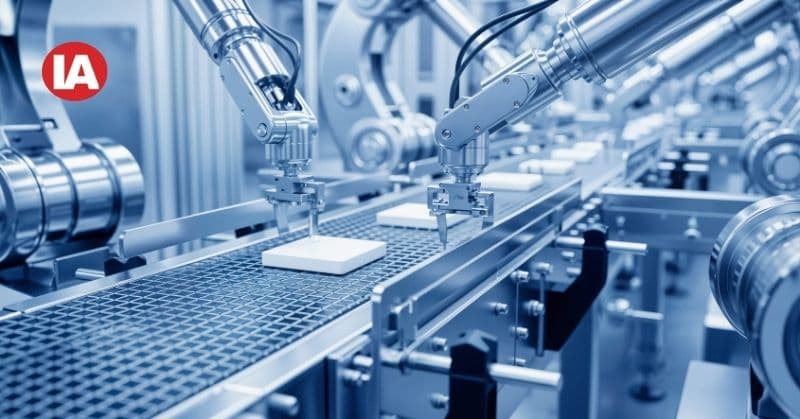
Lines featuring surface-mount technology (SMT) are a prime example of this development. Contemporary SMT manufacturing combines automated solder paste inspection, rapid pick-and-place robotics, reflow ovens, and automated optical inspection systems into seamlessly coordinated processes. Every phase produces ongoing flows of process data that supply manufacturing execution systems instantaneously. Machine learning models examine defect trends, equipment deviations, and yield variations, facilitating corrective measures autonomously. Consequently, SMT lines can function continuously with little on-site oversight, depending instead on remote surveillance and managing exceptions.
Within semiconductor ecosystems, lights-out concepts reach their zenith as wafer manufacturing plants represent the peak of industrial autonomy. Automated material handling systems move wafers through numerous process steps with sealed carriers, completely removing direct human involvement. Process control software constantly modifies variables like temperature, pressure, and chemical composition to sustain yield. Machine vision systems identify flaws at levels that surpass human perception, while sophisticated analytics enhance process stability throughout entire fabs.
In semiconductor environments, lights-out operation is not just a strategy for efficiency but an essential requirement. The presence of humans brings contamination hazards that can ruin entire production batches. Autonomous functioning allows for ongoing production cycles while upholding extremely clean environments. Due to the substantial capital required for semiconductor manufacturing, optimizing equipment usage through continuous operation is crucial for financial sustainability.
The electronics manufacturing sector also gains from robust economic factors. Large production quantities, swift product development phases, and the significant expense of errors warrant substantial automation investment. Ongoing operation enhances asset utilization and decreases time-to-market, providing vital benefits in fiercely competitive electronics sectors. With the growing demand for semiconductors, consumer electronics, and industrial electronics, lights-out facilities provide a scalable way to fulfill global demand without equivalent rises in labor or operational complexity.
Conclusion: Preparing for the Autonomous Industrial Future
Lights-out manufacturing is now not limited to specialized applications or test facilities. Logistics and warehousing, manufacturing of automotive and electric vehicle components, as well as electronics production including semiconductor ecosystems, are the most plausible and immediate areas for autonomous industrial operations. Every sector integrates systematic processes, digital advancement, and financial motivation in a manner that fosters ongoing lights-out operations.
The shift will not happen evenly or at once, yet the direction is evident. As automation technologies advance and integration obstacles are addressed, these sectors will progressively function outside the limitations of human-reliant manufacturing. The future's factories and facilities will go beyond mere automation. They will be smart, self-improving, and progressively independent. In this evolving environment, lights-out manufacturing is now a matter of reality. It involves preparedness, planning, and implementation.
Krisha Andrew Chettiar, Research Associate at Industrial Automation Magazine, combines a background in Economics and Statistics with a deep interest in the future of industrial technologies. As a third-generation contributor to this legacy, she brings fresh insight into automation trends with a keen research-driven lens.
FAQ
1. What is lights-out manufacturing?
Lights-out manufacturing is an industrial methodology where a factory is fully automated and operates without human presence on-site. This is achieved through the integration of advanced robotics, artificial intelligence, and industrial networking, allowing the facility to function effectively "with the lights off."
2. Why is the semiconductor industry a leader in autonomous production?
Semiconductor ecosystems require extreme precision and sterile environments. Because human presence introduces significant contamination risks (skin cells, dust, hair) that can ruin entire production batches, autonomous lights-out operation is a technical necessity for maintaining high yields and cleanroom standards.
3. How does machine vision impact picking operations in logistics?
Machine vision enables robotic arms to identify, grasp, and move diverse objects with high accuracy by analyzing shapes and packaging in real-time. Combined with AI, it allows warehouses to automate labor-intensive picking operations with minimal human involvement, even when handling irregular or fragile items.
4. What role does predictive analytics play in extreme automation?
Predictive analytics monitors real-time data from industrial sensors to forecast equipment failure before it happens. In an extreme automation environment, this allows the system to schedule maintenance tasks autonomously, ensuring continuous production cycles and preventing unpredictable delays.
5. Can automotive manufacturing be fully 'lights-out'?
While final vehicle assembly often requires human oversight for complex quality assessments and flexibility, the component level is moving rapidly toward full autonomy. Production for EV battery modules, power electronics, and motor housings is increasingly "lights-out" due to the high repeatability and consistency of these tasks.
6. How does extreme automation benefit the global supply chain?
Extreme automation reduces supply chain friction by eliminating delays caused by labor shortages and human error. Autonomous warehouses and production lines operate 24/7, facilitating "just-in-time" logistics that lower storage costs and accelerate the movement of goods from supplier to consumer.
Author