Automation investments need to be evaluated beyond upfront cost and viewed through the lens of lifetime value
ABB India highlights how automation modernisation supports energy transition and long-term industrial value.
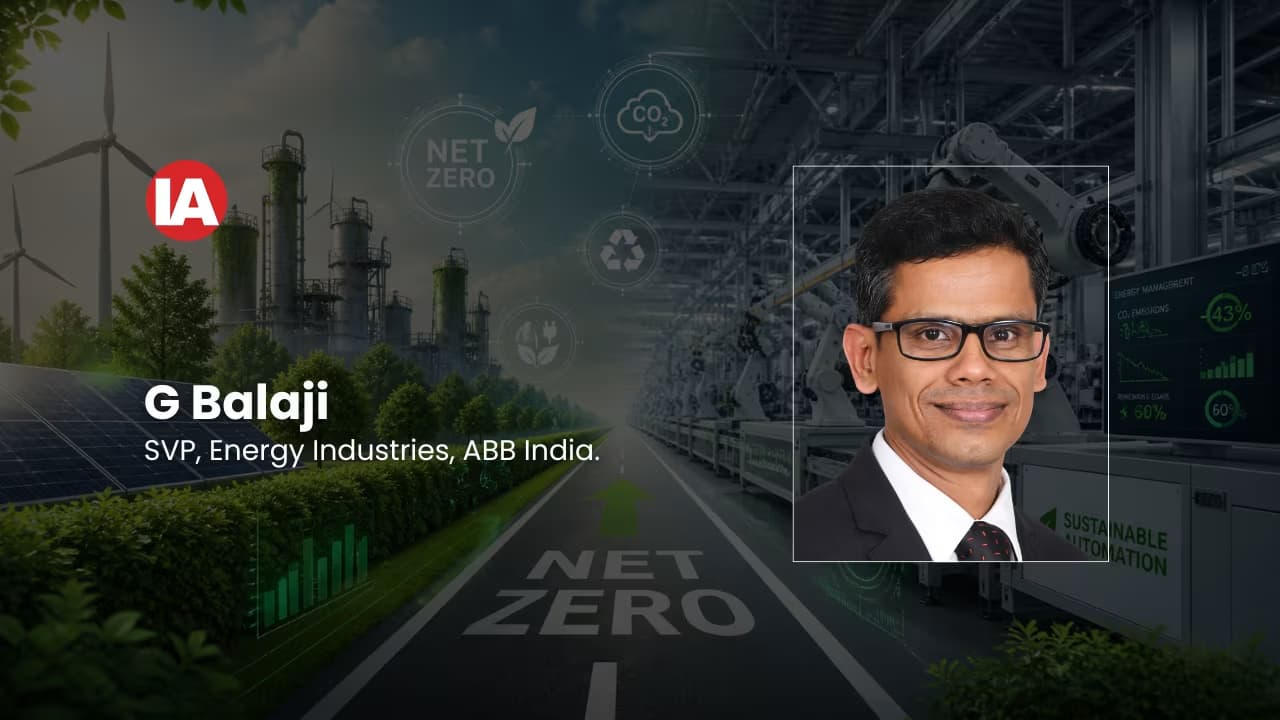
G Balaji, SVP, Energy Industries, ABB India.
Why is modernising automation systems now critical for industries looking to scale green technologies and remain competitive in a low carbon world?
Many industries are trying to scale renewables, electrify processes, integrate new technologies or reduce emissions, all while running on automation systems designed decades ago. As operational demands grow, modernising automation systems helps industries operate more efficiently, tap into real time insights, optimise energy use, and respond faster to changing conditions.
From ABB’s perspective, modernisation isn’t about replacing everything overnight; it’s about giving industries the digital backbone they need to stay competitive while progressing toward net-zero goals. A good example is ENGIE’s 900 MW Maxima gas fired power plant in the Netherlands, where ABB is modernising automation systems for future proof operations. Upgrading to the ABB Ability™ System 800xA® control platform will help ENGIE build a more cyber secure and resilient plant, while laying the groundwork for future co firing with green hydrogen and ensuring reliable operations across the facility’s lifecycle. This underscores why modernisation is so critical today: it enables existing plants to become more efficient, more flexible and ready for low carbon technologies, while continuing to deliver reliable energy at scale.
How is the evolution of automation systems toward more software driven, AI enabled architectures helping industries accelerate the energy transition?
Automation today is undergoing a fundamental shift from fixed, hardware heavy systems to flexible, software led platforms that continuously learn and improve. This evolution is changing how industrial operations run. Instead of responding after inefficiencies appear, AI-enabled automation enables companies to anticipate demand, fine tune processes in real time and surface performance gaps that were previously hidden.This intelligence layer allows organisations to move beyond traditional automation toward more autonomous operations – systems that can adapt to changing energy mixes, regulatory pressures and market expectations. Intelligent energy management solutions enable industrial operators to optimise energy use, reduce costs and enhance plant performance.
For instance, OPTIMAX® helps to increase efficiencies and maximise the total value of energy created and used by strategically directing energy flows and assets. An industrial park faced challenges in ensuring a stable and cost-effective energy supply for its numerous companies. To address this, the operating company invested in its own power plant (300 GWh of electricity and 600 GWh of heat/steam) and an intelligent energy management solution. The plant includes a mix of gas turbines with waste heat boilers, steam turbines and a biomass boiler. These assets are optimised for efficiency and cost-effectiveness, considering daily market prices for electricity and gas. Depending on cost-efficiency, the plant generates energy internally or purchases it at lower prices. With OPTIMAX®, the industrial park reduced its energy costs by 1.5% in the first six months, allowing the investment to pay for itself within a year.
In existing plants, how can automation modernisation unlock both sustainability gains and performance improvements without disruptive, large scale replacements?
One of the biggest misconceptions in the industry is that modernisation requires shutdowns, rip‑and‑replace projects, or massive capital spend. In reality, it can be very targeted and incremental. By modernising layers such as control software, digital twins, or analytics, while keeping core assets intact, plants can improve energy efficiency, reliability and uptime. We call this approach ‘Automation Extended’ – enabling existing plants to evolve step by step, so sustainability and performance improve together, not at the expense of each other.
The ‘Automation Extended’ program is built on a modern, open and modular architecture that separates the core control environment from the digital environment. The control layer remains software defined, robust and deterministic, ensuring safe and reliable operation of critical processes. At the same time, a securely connected digital layer enables advanced applications, edge intelligence and real time analytics.
This separation allows plants to introduce AI, machine learning and decision support tools without disturbing proven control structures. The result is a step by step modernisation path that improves energy efficiency, asset performance and sustainability outcomes, all without large scale shutdowns or disruptive replacements.
How should organisations evaluate the long‑term sustainability impact of automation investments, particularly when balancing upfront costs with energy savings and emissions reduction?
Automation investments need to be evaluated beyond upfront cost and viewed through the lens of lifetime value. That includes total cost of ownership, long term energy savings, reduced downtime, lower emissions and improved operational resilience. Upfront spending on reliable infrastructure prevents ‘catastrophic failures’. The cost of NOT running in critical power and energy industries can far exceed the initial savings gained from investing in cost-effective systems. It can mean tens, or even hundreds of thousands of dollars for every hour lost production.
Investing in reliable, high quality infrastructure is a sustainability choice. Durable systems generate less waste, require fewer replacements and last longer, reducing the overall carbon footprint associated with manufacturing, maintenance and disposal. Fewer failures mean less material consumption, lower energy losses and more stable operations. When infrastructure is built to last and supported by modern automation and digital tools, it enables industries to improve environmental performance while protecting long term value, making sustainability a function of smart engineering, not just emissions targets.
(The views expressed in interviews are personal, not necessarily of the organisations represented.)