Flexible Manufacturing Systems will be key to India’s manufacturing transformation
SW Machines MD Rakesh Patel shares how Flexible Manufacturing Systems and automated turnkey cells are driving India's high-precision manufacturing growth.
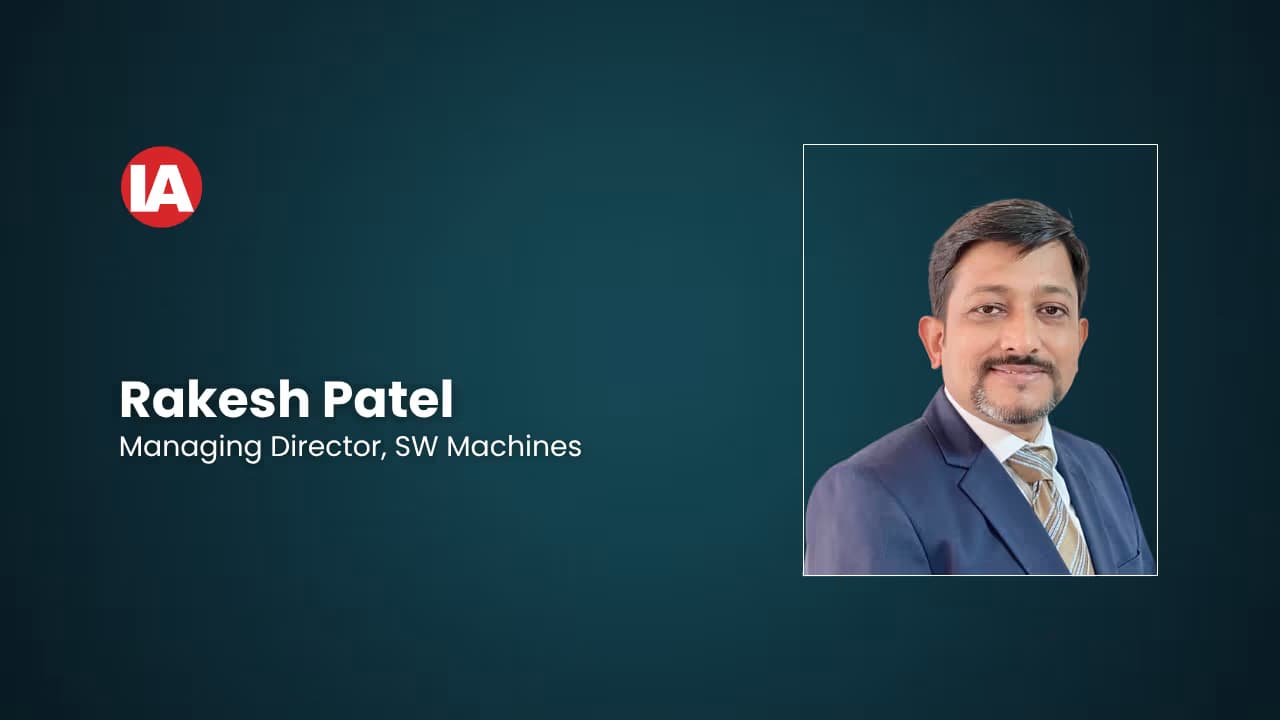
Rakesh Patel, Managing Director, SW Machines.
SW Machines has built its reputation around high-productivity machining solutions. How is the company’s portfolio of machining systems, automation modules and complete manufacturing cells evolving to meet the changing requirements of Indian manufacturers seeking greater productivity, flexibility and shorter production cycles?
At SW Machines, we focus on maximum productivity per square metre. Indian manufacturers need shorter cycles, better quality, and flexibility to meet changing demand.
We are therefore moving beyond standalone machining centres with multi-spindle systems, automation modules, pallet handling, and manufacturing cells that increase output and reduce cost. SW’s modular approach lets customers start with one machining centre and scale toward full automation.
As EV, aerospace, medical, and precision engineering grow, our flexible systems help customers manage variants, shorten cycles, and stay future-ready.
Automation is increasingly moving from individual machines to integrated manufacturing systems. What role do SW’s automation modules, robotic cells and turnkey solutions play in helping customers move towards lights-out or highly autonomous production?
Automation is now about integrated production systems that operate with minimal human intervention while maintaining consistent quality.
SW offers robotic handling, pallet automation, tool management, part tracking, process monitoring, and turnkey cells to improve utilisation, reduce labour dependency, and deliver predictable output.
Many customers aim for lights-out production. SW supports this through intelligent automation and process integration, especially in automotive, EV, and high-volume precision machining, where higher utilisation directly improves profitability.
Flexible Manufacturing Systems (FMS) are becoming particularly relevant as manufacturers seek to handle greater product variety without sacrificing efficiency. How do you see the adoption of FMS developing in India, and which industries or applications offer the greatest potential for SW Machines?
Flexible Manufacturing Systems will be key to India’s manufacturing transformation over the next decade.
While Indian manufacturers traditionally used dedicated lines for high-volume production, today’s market demands customisation, shorter runs, and faster model changes. FMS enables multiple components to be produced on one system with high utilisation and consistent quality.
The strongest potential is in automotive, EV, aerospace, commercial vehicles, industrial machinery, watch industry, hydraulic industry, and precision engineering, especially among Tier-1 suppliers managing multiple variants to global quality standards.
As labour costs and product complexity rise, FMS gives manufacturers the flexibility to stay competitive and protect long-term investments.

Digital services are becoming an important extension of machine-tool capabilities. What digital solutions does SW Machines offer around machine monitoring, production analytics, predictive maintenance, remote services and process optimisation – and how are Indian customers responding to these capabilities?
Digitalisation is now central to modern manufacturing, as customers need clear visibility into machine performance, utilisation, productivity, and maintenance.
SW’s digital solutions support machine monitoring, production analytics, condition monitoring, predictive maintenance, remote diagnostics, and process optimisation. They give customers real-time insights and help identify bottlenecks before production is affected.
Remote service is especially valuable for faster issue resolution and reduced downtime. Indian manufacturers are increasingly adopting these tools to improve OEE, machine availability, and production planning.
Customer response has been very positive, especially among companies pursuing Industry 4.0 and global manufacturing standards.
India is increasingly positioning itself as a global manufacturing hub, particularly in automotive, EVs, aerospace and industrial equipment. How well is SW Machines positioned to support this transition, and are you seeing a shift in customer requirements from conventional machining equipment towards complete automated production solutions?
India’s rise as a global manufacturing hub creates a strong opportunity for manufacturers and technology providers.
SW Machines is well positioned, as our strengths align with India’s growth sectors: automotive, EV, aerospace, industrial equipment, and precision engineering. These industries demand productivity, reliability, and advanced manufacturing technology.
Customer expectations are also shifting from machine specifications and cycle times to complete solutions integrating machining, automation, quality control, digital monitoring, and logistics.
The focus is moving from buying machines to investing in manufacturing systems, which fits strongly with SW’s capabilities and long-term strategy.
Despite growing awareness of advanced manufacturing technologies, automation penetration among Indian manufacturers remains uneven. What are the biggest barriers – investment cost, skills, integration complexity or lack of awareness – and how is SW Machines addressing them?
Automation adoption in India is accelerating, but it varies by industry and company size.
Key barriers include upfront investment, skill availability, integration complexity, and RoI uncertainty. Many customers see the benefits but need confidence in the business case.
SW addresses this through a consultative approach: defining productivity targets, assessing process needs, and creating phased automation roadmaps, supported by training, technical support, application engineering, and turnkey project management.
We also emphasize total cost of ownership. When labour savings, higher utilisation, improved quality, and reduced downtime are considered, automation becomes a compelling investment.

Where does SW Machines currently stand in terms of market penetration in India? Which sectors and manufacturing clusters are driving your growth, and how important is India becoming within SW’s global strategy?
SW Machines has built a strong presence in India’s advanced manufacturing sector, serving leading OEMs and Tier-1 suppliers in automotive, EV, industrial engineering, and precision manufacturing.
Growth is driven by clusters such as Pune, Chennai, Bengaluru, Ahmedabad, Sanand, Hosur, and NCR, where investment in automotive, aerospace, and industrial production remains strong.
India is increasingly important to SW’s global strategy, supported by manufacturing expansion, export growth, and government-led industrial development.
We expect India to play a larger role in SW Group’s future growth.
Looking ahead over the next three to five years, what is your vision for SW Machines India? Do you expect the company’s growth to be driven primarily by machine-tool sales, or will automation cells, FMS, digital services and integrated manufacturing solutions increasingly become the focus?
Our vision is to become a strategic manufacturing technology partner, not just a machine-tool supplier.
Machining centres remain core, but growth will come from integrated machining, automation, FMS, digital services, and smart manufacturing solutions.
Customers want higher productivity, flexibility, lower costs, and faster RoI, which need integrated systems over standalone equipment.
In the next three to five years, turnkey systems, automation cells, digital solutions, and flexible platforms will drive growth and help Indian manufacturers compete globally.
SW Machines or Schwaebische Werkzeugmaschinen India Private Limited is the subsidiary of the SW Group in India. It is headed by Rakesh Patel, who is responsible for sales and service for the Swabian company’s state-of-the-art CNC machining centres and automation solutions. SW has already been operating successfully in India for 18 years through local representatives. The decisive factor in establishing the subsidiary was the desire for greater customer proximity through local experts. With the opening of its own branch in India in early 2025, SW is strengthening its local market presence and ensuring that customers can benefit from the company’s smart manufacturing solutions even faster in the future.