The most significant impact of AI occurs where predictive data directly controls physical automation
Hikrobot uses AI, robotics and predictive analytics to enable smarter, faster and more resilient supply chain operations.
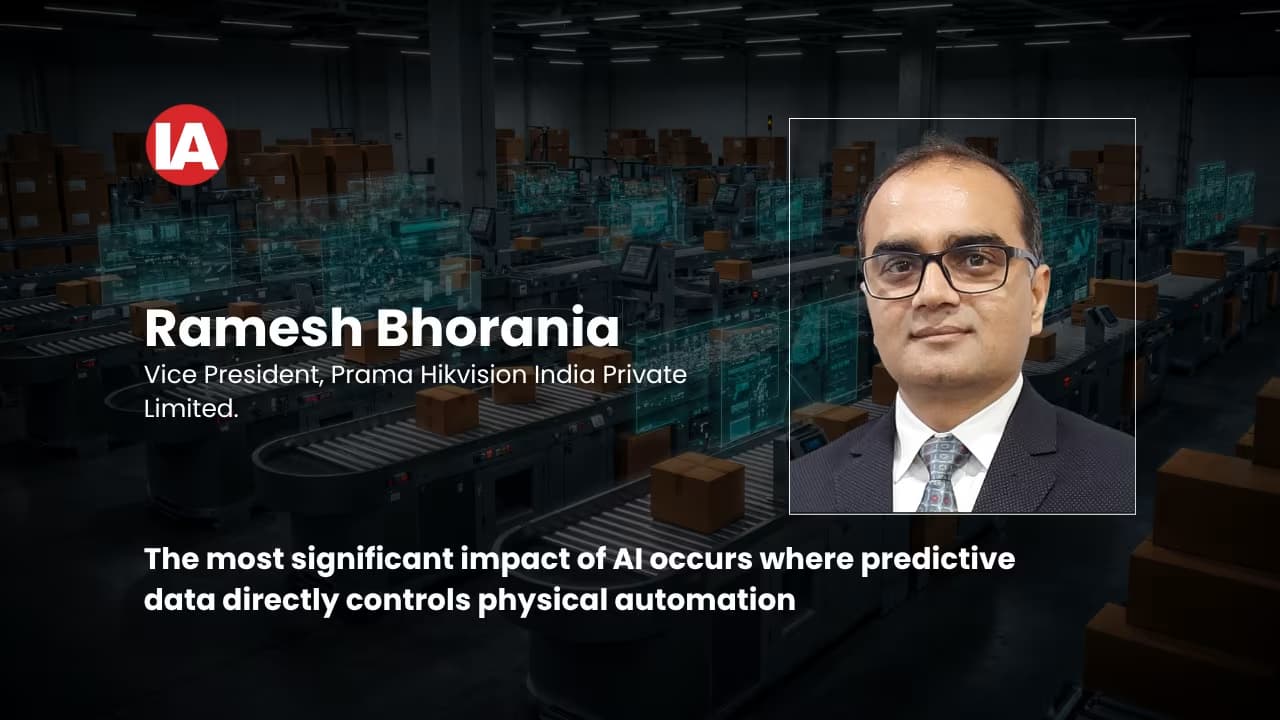
Ramesh Bhorania, Vice President, Prama Hikvision India Private Limited
Artificial Intelligence is rapidly reshaping supply chain operations. Which areas, from demand forecasting and inventory optimisation to procurement and logistics planning, are witnessing the most significant impact, and why?
Artificial Intelligence (AI) is transforming traditional supply chain structures from rigid, linear frameworks into highly responsive, self-correcting networks. While AI plays an important role across all supply chain disciplines, the fields of inventory optimisation and logistics planning are seeing the most significant, immediate changes.
In industrial automation and smart intralogistics, specialised technology. Hikrobot uses AI to blur the boundaries between data predictions and physical hardware execution.
The four primary functional areas undergoing this AI-driven evolution, along with the underlying reasons for their high impact, include:
Inventory Optimisation & In-Warehouse Intralogistics: This segment sees the most immediate transformation due to the integration of Embodied AI, where software intelligence directly coordinates physical machines. Traditional static storage models struggle with variable, fast-changing stock-keeping units (SKUs). AI addresses this by running dynamic warehouse management systems (iWMS) that analyse item velocity and size profiles in real time. AI-driven algorithms calculate optimal location mapping, batching orders, and balancing work layouts automatically. This data directly directs mixed fleets of up to 2,000 Autonomous Mobile Robots (AMRs), Latent Mobile Robots (LMRs), and Forklift Mobile Robots (FMRs). Physical processes switch to a fast, reliable Goods-to-Person (G2P) fulfilment ecosystem, drastically cutting manual picking errors and boosting storage density.
Logistics, Inspection & Sorting Planning: This area benefits from Deep Learning and Computer Vision at crucial transport nodes. Conventional Dimensioning, Weighing, and Scanning (DWS) pipelines depend on manual item handling and aligned barcode layouts. Modern logistics setups deploy AI-powered smart cameras and fixed industrial code readers that read heavily damaged, wrinkled, or poorly printed barcodes at conveyor speeds reaching 3 meters per second.
By utilising 3D structured light technology, AI can identify cargo data, weigh parcels, and capture exact physical dimensions within 0.5 seconds. This rapid automated scanning allows systems to choose ideal packaging sizes on the spot, lowering freight calculations, cutting down material waste, and driving parcel sorting error rates down below 0.01%.
Demand Forecasting: This area relies on moving past simple historical data blocks to embrace Predictive Analytics and Multi-source Machine Learning. Traditional systems struggle to match modern market shifts. AI algorithms process large data streams simultaneously, combining sales logs, macroeconomic conditions, and promotional timelines via advanced gradient boosting frameworks. This multi-layered forecasting creates clear predictive visibility across multiple locations. Companies can accurately align their raw material ordering, keep safety stock levels lean, and avoid both costly stockouts and profit-draining overstocking.
Procurement & Supplier Coordination: This area shifts from reactive buying toward Automated Compliance and Risk Mitigation Models. AI uses robotic process automation (RPA) and natural language processing (NLP) to handle repetitive procurement paperwork, invoice matching, and compliance validation. Beyond administrative automation, AI reviews supplier performance data alongside global threat signals (such as severe weather patterns or trade friction). This allows teams to quickly flag vulnerable suppliers, recommend alternative order volumes, and shift sourcing targets proactively to minimise operational disruption.
AI-powered machine learning models can analyse vast volumes of historical and real-time data. How are these capabilities improving inventory accuracy, reducing stock outs, and enabling more responsive warehouse operations?
Hikrobot addresses the challenges of traditional warehousing by combining Predictive AI software with Embodied AI hardware (Autonomous Mobile Robots). By processing massive streams of historical order logs and real-time sensor data, machine learning models convert warehouses from static, reactive storage spaces into predictive fulfillment centers.
These AI capabilities optimise modern logistics operations across three core areas:
Achieving Near-Perfect Inventory Accuracy
Traditional warehouse inventory relies on manual cycle counts, which are labour-intensive and prone to human error. Hikrobot uses AI to digitise and automate inventory tracking:
- Real-Time Data Fusion: Machine learning models constantly sync data from barcode scanners, vision sensors on AMRs, and the Warehouse Management System (iWMS). Every stock movement is logged instantly, reducing tracking discrepancies.
- Computer Vision Auditing: Moving robots equipped with AI smart cameras scan shelf slots during normal operations. The system automatically detects misplaced items or incorrect quantities, flagging discrepancies without pausing operations.
- Predictive Shelf Life & Aging Analysis: For perishable or time-sensitive goods, machine learning tracking monitors batch dates and historical rotation speeds. It automatically prioritises stock using First-Expired, First-Out (FEFO) rules to minimise product waste.
Eliminating Stock outs and Overstocking
Machine learning models analyse historical sales patterns alongside external variables to align inventory with actual market demand:
- Dynamic Safety Stock Calculations: Instead of using fixed, static safety stock levels, AI recalculates inventory thresholds dynamically. It adjusts stock margins based on real-time supplier lead times, seasonal demand spikes, and regional order velocities.
- Proactive Replenishment Alerts: The system evaluates how fast a stock-keeping unit (SKU) is selling against incoming shipments. It automatically triggers reorder alerts before a stockout happens, protecting retail and e-commerce supply chains.
- Multi-Warehouse Balancing: For large networks, Hikrobot's analytical backend identifies regional demand patterns. It recommends transferring inventory between fulfilment hubs to place high-demand products closer to end consumers.
Enabling Responsive Warehouse Operations
The most significant impact of AI occurs where predictive data directly controls physical automation through Hikrobot's Robot Control System (RCS):
Dynamic Slotting and Heat Mapping: AI constantly analyses order frequencies. High-velocity items (fast movers) are automatically assigned to lower, easily accessible shelves near packing stations, while slow-moving stock is moved to the back.
Intelligent Fleet Scheduling: When a wave of orders enters the system, AI models calculate the optimal picking paths and batching strategies. The RCS coordinates a mixed fleet of hundreds of Latent Mobile Robots (LMRs) and Forklift Mobile Robots (FMRs), preventing traffic jams in warehouse aisles.
Goods-to-Person (G2P) Agility: Instead of workers walking miles to find items, Hikrobot's AMRs lift and deliver entire inventory racks directly to ergonomic workstations. If an urgent order comes in, the AI reshuffles the queue instantly, re-routing the nearest robot to fulfill the request.
Modern warehouses are increasingly deploying AI alongside robotics, autonomous mobile robots (AMRs), computer vision, and automated storage and retrieval systems (AS/RS). How do these technologies work together to accelerate order fulfilment while maintaining accuracy and flexibility?
Hikrobot addresses the challenges of high-volume fulfillment by acting as the unifying AI software brain that connects physical robotics, computer vision, and automated storage networks into a single, cohesive ecosystem. In modern warehousing, technologies like AMRs and AS/RS can become isolated silos if not managed properly.
By integrating Predictive AI with Embodied AI hardware, Hikrobot coordinates these systems to accelerate fulfillment speeds while maintaining precision and operational flexibility.
The Collaborative Workflow: From Storage to Shipping
Instead of working independently, these technologies operate in a continuous, synchronised data loop:
- High-Density Storage (AS/RS): Large-scale Automated Storage and Retrieval Systems (AS/RS) handle bulk inventory, maximising vertical warehouse space.
- The Intermediary Fleet (AMRs): When an order is placed, Hikrobot's Robot Control System (RCS) coordinates Autonomous Mobile Robots (such as Latent Mobile Robots or Forklift Mobile Robots) to bridge the gap between storage and processing. AMRs pick up bins or pallets delivered by the AS/RS and transport them across the warehouse floor.
- The Visual Gatekeeper (Computer Vision): As AMRs transport goods toward packing stations, integrated machine-vision systems and smart industrial cameras automatically scan barcodes, verify physical dimensions, and check product integrity on the move.
Accelerating Fulfillment Speeds
The combination of AI and robotics eliminates the manual walk-and-search times that slow down traditional warehouse operations:
- Goods-to-Person (G2P) Efficiency: AMRs lift and bring entire inventory pods directly to stationary pickers. This keeps workers at ergonomic workstations, increasing picking speeds by up to three times compared to manual methods.
- AI Route Optimisation: The RCS software runs real-time traffic-modeling algorithms. If hundreds of robots are moving simultaneously, the AI calculates optimal paths for each AMR, preventing congestion in warehouse aisles and keeping fulfillment lines moving smoothly.
Maintaining Near-Perfect Accuracy
Speed means nothing if the wrong item is shipped. Hikrobot embeds AI-driven vision checks throughout the automated workflow to eliminate human error:
- Dynamic Vision Inspection: High-speed industrial code readers scan labels at conveyor speeds of up to 3 meters per second. The system reads damaged, wrinkled, or poorly printed barcodes, instantly cross-referencing them with the Intelligent Warehouse Management System (iWMS).
- Automated Error Flagging: If a robot selects an incorrect bin or an item is misplaced, 3D vision sensors detect the discrepancy instantly. The system flags the error for correction before the package is sealed and routed to the shipping dock.
Maximising Operational Flexibility
Traditional fixed automation (like permanent conveyor belts) is rigid and expensive to alter. The combination of AI, AMRs, and modular software provides unparalleled flexibility.
Supply chains today face frequent disruptions caused by geopolitical events, extreme weather, and fluctuating customer demand. How can AI-driven predictive analytics help organisations anticipate risks, improve resilience, and make faster operational decisions?
Hikrobot addresses supply chain disruptions by combining Predictive AI analytics with Embodied AI infrastructure (automated mobile robots and software platforms). In an era of geopolitical shifts, climate-induced weather anomalies, and volatile consumer demand, traditional reactive supply chains fail. Hikrobot uses AI to help organisations pivot from crisis management to predictive mitigation, building resilience across the warehouse floor and global logistics nodes.
Hikrobot's robotic arm utilises predictive analytics and smart automation to anticipate risks and accelerate decisions across three critical layers:
Anticipating Warehouse and Inventory Risks
Global disruptions often cause sudden delays or rapid spikes in material availability. Hikrobot uses predictive analytics to protect internal warehouse operations from these external pressures:
- Dynamic Lead-Time Adaptation: Machine learning models analyse historical and real-time shipping data to predict potential vendor delays. If a port closure or geopolitical event stalls a shipment, the system automatically adjusts safety stock levels and triggers early reorder points.
- Predictive Stock Placement: The platform flags shifts in customer purchasing behaviour caused by changing market trends or regional disruptions. It uses these insights to dynamically reorganise inventory layouts via intelligent slotting, ensuring high-demand items remain easily accessible to prevent order processing bottlenecks.
- Proactive Maintenance Scheduling: Machine learning tracks real-time usage metrics across thousands of Autonomous Mobile Robots (AMRs) to predict component wear. Scheduling repairs before hardware failures occur prevents operational downtime, keeping supply chain nodes functional during peak demand surges.
Accelerating Operational Decisions via Smart Software
When a disruption strikes, manual decision-making creates costly bottlenecks. Hikrobot solves this by embedding predictive algorithms directly into its core orchestration software:
- AI-Powered Fleet Re-Routing: In mega-warehouses handling thousands of orders, an obstacle or localised system glitch can halt workflows. Hikrobot's Robot Control System (RCS) uses real-time predictive traffic modelling to instantly calculate alternative routes for Latent Mobile Robots (LMRs) and Forklift Mobile Robots (FMRs), preventing congestion in aisles.
- Automated Wave Management: If inbound supply lines face disruption, Hikrobot's Intelligent Warehouse Management System (iWMS) automatically reshuffles order priorities. The software dynamically clusters orders based on current stock availability and carrier collection times, maximising picking efficiency without requiring human management intervention.
- Intelligent Fulfilment Balancing: For businesses managing multiple fulfilment nodes, the analytics engine tracks inventory depletion rates against incoming disruption flags. The software advises logistics teams on where to divert raw materials or finished goods to maintain continuous regional supply.
Improving Resilience through Vision-Intelligence Integration
Resilience requires high visibility at critical intake and distribution points. Hikrobot integrates machine learning with deep-learning vision sensors to secure operational flow:
- High-Speed Inbound Verification: External disruptions often force companies to change suppliers quickly, leading to unexpected variations in packaging styles. Hikrobot's machine learning-driven code readers and 3D Dimensioning, Weighing, and Scanning (DWS) systems instantly identify and process mixed cargo types without needing reprogrammed instructions.
- Rapid Defect Recognition: Supply chain strain can sometimes lead to lower vendor manufacturing quality. Integrated AI vision systems inspect incoming packages on fast-moving conveyors, flagging damaged goods or labelling errors instantly. This keeps faulty inventory off the shelves and ensures data accuracy across the ecosystem.
Despite the growing adoption of AI, many organisations still struggle with fragmented data, legacy systems, and workforce readiness. What are the biggest challenges in implementing AI-enabled supply chain and warehouse solutions, and how can companies overcome them?
Hikrobot addresses the challenges of digital transformation by designing systems that bridge the gap between advanced AI software and physical warehouse operations. While AI offers significant performance benefits, organisations frequently run into real-world hurdles when deploying these technologies.
The biggest challenges to implementing AI-enabled supply chains and warehouse systems include fragmented data, rigid legacy infrastructure, and workforce resistance, along with the specific strategies companies can use to overcome them.
The Challenge: Fragmented Data and Information Silos
Many organisations store data across disconnected legacy systems, such as isolated Enterprise Resource Planning (ERP) software, separate Warehouse Management Systems (WMS), and manual spreadsheets. AI algorithms require clean, unified data streams to forecast demand or schedule robots effectively; fragmented data leads to inaccurate predictions and operational bottlenecks.
The Solution:
- Deploy Unified Orchestration Software: Companies should adopt middle-tier software platforms, like Hikrobot's Intelligent Warehouse Management System (iWMS), which act as a centralised data layer. These platforms use open APIs to pull disparate data from existing ERPs (like SAP or Oracle) and instantly translate it into clear operational instructions.
- Standardised Data Protocols: Businesses need to establish clear data governance policies, ensuring that product dimensions, stock-keeping unit (SKU) weights, and barcode formats are uniform across all facilities. This data normalisation allows AI vision systems to accurately recognise and verify inventory on fast-moving conveyors.
The Challenge: Rigid Legacy Systems and Infrastructure
Replacing entire warehouse management frameworks or altering fixed physical infrastructure (such as permanent conveyor networks and racking) is expensive and causes severe operational downtime. Many businesses hesitate to adopt AI because they believe it requires a complete, costly overhaul of their existing facilities.
The Solution:
- Adopt Modular and Flexible Automation: Instead of installing rigid, permanent machinery, companies can invest in flexible Autonomous Mobile Robots (AMRs) and Latent Mobile Robots (LMRs). These robots do not require structural changes to the floor plan; they navigate using QR codes or laser SLAM technology, meaning layouts can be updated via software in hours.
- Leverage Cross-Platform Standards (VDA 5050): Organisations should prioritise AI software architectures that comply with international interoperability standards like VDA 5050. This compliance ensures that Hikrobot's Robot Control System (RCS) can manage and coordinate mixed robotic fleets from different manufacturers on the same floor, preventing vendor lock-in.
The Challenge: Workforce Readiness and Cultural Resistance
Employees often push back against AI and robotics deployments due to job security concerns or a lack of technical training. If warehouse operators do not understand how to interact with the new technology, they may bypass automated workflows, which limits the RoI of the deployment.
The Solution:
Transition to User-Friendly Goods-to-Person (G2P) Workflows: Companies should position robotics as collaborative tools rather than human replacements. By implementing Goods-to-Person setups, AMRs automatically deliver heavy inventory racks directly to stationary workers. This minimises physical fatigue and simplifies tasks into intuitive screen-guided actions, making the technology highly approachable.
Invest in Low-Code/No-Code AI Interfaces: Deploying tools with intuitive visual interfaces allows warehouse floor managers to adjust picking priorities, re-route robot fleets, or run performance reports without needing a degree in data science. Continuous upskilling programs help transform traditional warehouse staff into skilled automation managers.
Looking ahead, how do you envision AI transforming supply chains over the next five years? Which emerging technologies, such as generative AI, digital twins, agentic AI, or autonomous decision-making, will have the greatest impact on warehouse automation and end-to-end supply chain performance?
Looking ahead, Hikrobot envisions the next five years of supply chain evolution as a transition from hyper-automation (executing automated tasks faster) to complete systemic intelligence. Warehouses will evolve from spaces where humans command robots into unified, self-orchestrating, and self-correcting ecosystems driven by Embodied AI.
Four emerging technologies will reshape warehouse automation and end-to-end supply chain performance:
Agentic AI: The Shift from Execution to Autonomy
Traditional automation requires engineers to write precise rules for every scenario. Agentic AI shifts this dynamic by embedding large-model reasoning directly into warehouse orchestration.
Immersive Digital Twins: Accelerated Path Planning & Testing
Digital twins are evolving from simple visual 3D dashboards into real-time operational sandboxes powered by deep simulation physics.
Generative AI: Democratising Analytics & Intuitive Operations
Generative AI will break down complex software barriers by introducing multi-modal, natural-language capabilities to the warehouse floor.
Autonomous Decision-Making: Dynamic Fleet Optimisation
The end goal of combining these technologies is full end-to-end autonomous decision-making, transforming how massive hardware fleets behave at scale.
Hikvision India is a leading provider of video security solutions. In addition to the security industry, the company extends its reach to smart home products and solutions, industrial automation, and robotics to achieve its expansion plan. The endeavour is to provide superior pre-sales and post-sales service through collaboration with local distributors and its allied partners.
Driven by the 'Make in India' vision, the company manufactures a wide range of video security products at its state-of-the-art manufacturing facility near Mumbai. Building on innovation, research, and development initiatives, Hikvision India is committed to providing high-quality products with agile technical support through its pan-India branches and employees.
(The views expressed in interviews are personal, not necessarily of the organisations represented.