India’s broader industrial transformation is accelerating the adoption of connected power ecosystems
Schneider Electric highlights how connected power ecosystems are driving India's industrial digital transformation.
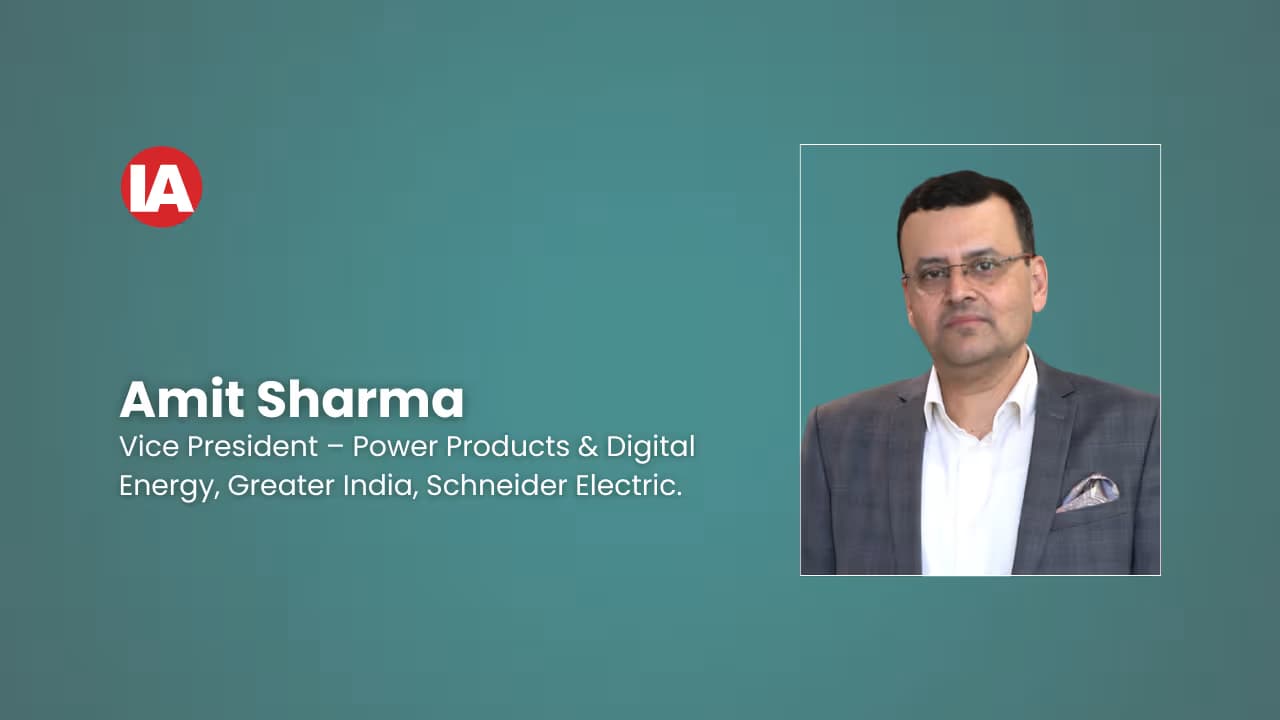
Amit Sharma, Vice President – Power Products & Digital Energy, Greater India, Schneider Electric.
As India accelerates its electrification and industrial infrastructure expansion, how do you see connected systems reshaping the future of manufacturing, utilities, and critical infrastructure in the country?
India is entering a defining phase of industrial and infrastructure transformation, where electrification, digitalisation and sustainability are increasingly converging. As sectors such as manufacturing, infrastructure, transportation, utilities and digital ecosystems continue to expand, the demand is no longer only for additional power capacity, as they now require advanced power systems that enable both operational stability and continuous efficiency.
What we are witnessing today is a structural shift in how energy is consumed and managed. Industrial customers are moving beyond conventional electrical systems towards digitally enabled infrastructure that provides real-time visibility, predictive intelligence, and lifecycle optimisation. The transition has become urgent because India needs more electricity to support its growing industrial base, urban development and digital infrastructure expansion.
At Schneider Electric, we believe connected power systems will be central to India’s next phase of industrial growth. Intelligent switchgear, connected distribution networks, IoT-based monitoring, software-led energy management, and predictive maintenance help industries improve reliability, cut downtime, and optimise energy use. Manufacturing, in particular, is driving demand for future-ready electrical infrastructure. As industrial clusters, automotive plants, electronics manufacturing, and semiconductor facilities scale up, the need for resilient, digitally monitored power systems becomes even more critical. At the same time, data centres and other critical infrastructure are increasing the need for highly efficient, and continuous power availability.
The future of India’s industrial growth will increasingly depend on how intelligently organisations manage energy across the entire lifecycle, from design and deployment to monitoring, optimisation and service management. That is where connected power infrastructure will play a transformative role.
What are the biggest advantages industries gain by moving from conventional electrical systems to digitally connected and data-driven power infrastructure?
The primary benefit businesses obtain from implementing fully integrated digital systems and advanced data analytics for their power systems lies in achieving operational transparency. The electrical systems of the past functioned as basic infrastructure components which lacked any built-in capacity for operational monitoring. Today, connected systems enable electrical infrastructure to function as dynamic intelligent systems which provide immediate operational status updates. Once organisations have access to continuous data from electrical assets, they can move from reactive operations to predictive and proactive management. This significantly improves reliability, reduces unplanned downtime, and enables better decision-making across operations.
Connected electrical infrastructure also enables predictive maintenance capabilities. Through embedded sensing, digital monitoring and analytics, organisations can identify anomalies, monitor asset health, and anticipate failures before they occur. This becomes especially critical in sectors where operational continuity is non-negotiable, such as manufacturing, utilities, healthcare, transportation, and data centres.
Another major advantage is energy optimisation. With real-time monitoring and analytics, industries can catch inefficiencies faster, improve power quality, sort out consumption patterns, and ultimately reduce energy waste. And it does more than just make operations smoother; it also backs up wider sustainability and decarbonisation targets.
Importantly, customers today are increasingly evaluating systems based on lifecycle value rather than only upfront CapEx. They are looking for integrated ecosystems that combine hardware, software, services, and long-term operational intelligence. This is changing how electrical infrastructure is designed, deployed, and managed across industries.
At Schneider Electric, we enable energy transition by acting as a trusted energy technology partner, delivering end-to-end solutions that connect electrification and digitalisation.
Our holistic approach combines connected power distribution, EcoStruxure™ architectures, advanced digital energy management, and lifecycle-driven services to help customers design, build, operate, and maintain their energy systems more efficiently. By integrating hardware, software, and services across the full lifecycle, we empower organisations to achieve greater efficiency, enhanced resilience, and accelerated sustainability outcomes—driving measurable impact in an increasingly electric, digital, and decarbonised world.
Across sectors such as buildings, manufacturing, data centres, infrastructure, and energy, how is the digitisation of electrical infrastructure changing the way companies approach operational efficiency, uptime, and energy management?
Digitisation of electrical infrastructure is fundamentally shifting how industries think about uptime, operational efficiency, and energy management. Before, electrical infrastructure was seen mostly as a backend utility layer. Today, it has moved into something more strategic, an operational asset that really touches productivity, resilience, and long-term sustainability.
Across manufacturing, utilities, transportation, commercial infrastructure and data centres, organisations are increasingly adopting connected electrical systems that provide real-time visibility into energy usage, asset performance and operational risks. In practice, this enables enterprises to strengthen reliability, cut downtime, and optimise energy efficiency more effectively than before. In manufacturing, digital power infrastructure supports predictive maintenance and improves plant reliability, while in data centres and critical infrastructure, intelligent power management is turning into a necessity, so uptime and operational continuity can stay solid even as energy demands keep increasing.
At Schneider Electric, we are seeing strong momentum around software-enabled electrical architectures where connected products, monitoring systems, automation and lifecycle services work together as an integrated ecosystem. This is helping customers build operations that are more efficient, resilient and future-ready for India’s evolving industrial landscape.
In the context of India’s industrial growth ambitions, how important is it to build resilient and energy-efficient power ecosystems, and what role can predictive analytics and real-time monitoring play in achieving this?
As India’s electricity demand rises and industrial infrastructure keeps expanding, organisations will more and more look for power systems that can back higher dependability, smoother operational continuity, and sustainability simultaneously. The challenge today is no longer only about ensuring access to power. It’s also about keeping power quality stable, boosting system reliability, gaining operational intelligence, and improving energy efficiency across environments that are more intricate, and also more distributed than before.
That’s where predictive analytics and real-time monitoring start to really matter. Organisations can only optimise and improve what they are able to measure effectively. Connected setups, with embedded sensing and digital monitoring, give steady operational visibility into electrical assets as well as energy performance metrics, without much delay.
By leveraging real-time analytics, organisations can spot inefficiencies, monitor asset health, foresee potential failures, and also fine tune energy usage more proactively. In practice, this tends to reduce operational risks a lot, cuts down on unplanned downtime. It also helps improve the lifecycle performance of electrical infrastructure. The predictive side will get even more important as industries push further into automation, AI-driven operations, and digitally connected infrastructure. In areas like manufacturing, utilities, transportation and data centres, even small disruptions can cause outsized operational and financial impact, especially when processes are tightly linked.
At Schneider Electric, we believe resilience, efficiency and sustainability are no longer separate priorities. They are increasingly interconnected business imperatives. Intelligent energy management systems, predictive maintenance capabilities and software-driven operational intelligence will therefore play a central role in supporting India’s next phase of industrial and infrastructure growth.
Schneider Electric has been advocating a shift from standalone electrical products to integrated energy ecosystems. How is this transition influencing customer expectations and project execution in India?
The market today is clearly moving from standalone electrical products towards integrated energy ecosystems that combine connected hardware, software, automation and lifecycle services, and honestly it feels like everyone is expecting more. This transition is reshaping customer expectations and the way projects get executed across various industries. Customers do not really want only individual electrical components anymore. They increasingly expect end-to-end solutions that give them visibility, operational intelligence, scalability and long term lifecycle value. There is more focus on interoperability, centralised monitoring, predictive servicing, and software enabled optimisation across the whole electrical infrastructure, not just one part of it.
This is also changing buying behavior. Organisations are moving beyond purely CapEx driven decisions, and they are starting to look at overall lifecycle economics, day to day operational efficiency and sustainability outcomes that last, even after the initial rollout.
As a result, project execution today requires much closer integration between power distribution, digital monitoring, automation, analytics, and services. Customers want solutions that are intelligent by design and capable of adapting to evolving operational requirements over time. At Schneider Electric, our approach has been focused on enabling integrated and connected energy architectures through platforms such as EcoStruxure, intelligent power distribution systems, and lifecycle-led service models. We are also working closely with our partner ecosystem, including system integrators, panel builders and EcoXpert partners, to help customers deploy future-ready and digitally enabled energy infrastructure.
This ecosystem-led approach becomes increasingly important because modern energy systems aren’t isolated infrastructure layers anymore. They are turning into integrated operational platforms, supporting efficiency, resilience, sustainability, and business continuity all together.
The convergence of electrification, digitalisation, and sustainability is redefining industrial strategy globally. How can Indian industries leverage this convergence to simultaneously improve competitiveness, reduce emissions, and strengthen energy security?

energy technology partner.
The convergence of electrification, digitalisation and sustainability is redefining industrial strategy globally, and India is well positioned to benefit from this transition given its rapid industrial and infrastructure growth.
Electrification is expanding across industries, transportation and infrastructure, while digitalisation is enabling organisations to steer energy systems more intelligently using connected devices, analytics, automation, and real time visibility. Also, sustainability is turning into a core business priority, as companies lean into energy efficiency, decarbonisation, and longer-term resilience.
When these trends come together, organisations can improve competitiveness, strengthen energy security, and reduce emissions simultaneously. Intelligent and connected energy systems help optimise energy consumption, improve asset utilisation, minimise downtime, and enhance operational efficiency.
India’s broader industrial transformation, including smart manufacturing, digital infrastructure expansion and renewable energy integration, is accelerating the adoption of connected power ecosystems. Technologies such as smart grids, AI-enabled analytics, and software-driven energy management will play a major role in this shift.
At Schneider Electric, we believe organisations that successfully combine electrification with digital intelligence will be better positioned to build more efficient, resilient and sustainable operations for the future.
India is increasingly emerging as a strategic hub for advanced electrical manufacturing and innovation. How is Schneider Electric contributing to this evolution, particularly in terms of local manufacturing, R&D, and technology development?
India is increasingly emerging as a strategic hub for advanced electrical manufacturing, digital innovation and energy technology development, driven by rapid industrialisation, infrastructure expansion and the growing focus on resilient supply chains.
At Schneider Electric, India is one of our most strategic markets globally, with a strong manufacturing, R&D and engineering footprint supporting both domestic and global demand. Our main focus is to strengthen local manufacturing capabilities while expanding investments in intelligent power distribution, automation, connected energy systems, and software- led energy management solutions. In other words, India today is not only a manufacturing base for Schneider Electric, but also an important innovation and engineering hub, where ideas get turned into real things.
We are also collaborating closely with customers and ecosystem partners. The aim is to enable the shift towards digitally enabled, energy-efficient, and resilient operations across sectors like manufacturing, infrastructure, utilities, and data centres. Our broader objective aligns with India’s vision of building globally competitive, digitally connected and sustainable industrial ecosystems under the larger “Make in India” initiative.
Looking ahead, what do you believe will define the next phase of intelligent power infrastructure in India, and which technologies or trends are likely to have the greatest impact on the country’s industrial transformation over the next decade?
The next phase of intelligent power infrastructure in India will be driven by the convergence of software, automation, connectivity and sustainability. Electrical systems are evolving from passive infrastructure into intelligent, adaptive, and increasingly autonomous energy ecosystems. Over the next decade, technologies like AI-powered analytics, predictive maintenance, IoT-enabled monitoring, smart grids, and software-defined energy management will reshape industrial operations and infrastructure management across different sectors in a big way.
Over the next decade, technologies such as AI-driven analytics, predictive maintenance, IoT-enabled monitoring, smart grids and software-defined energy management will significantly reshape industrial operations and infrastructure management across sectors.
We are already seeing strong momentum towards connected and data-driven operations where organisations expect real-time visibility, predictive intelligence and greater operational resilience. As industrial systems become more complex, intelligent energy management will play a critical role in improving reliability, efficiency and sustainability.
The rapid growth of AI infrastructure, smart manufacturing, renewable integration, electric mobility, and digital infrastructure will keep pushing up the need for power systems that are resilient and energy efficient, especially across data centres, industrial ecosystems and critical infrastructure. At Schneider Electric, we believe the future of power infrastructure will be more connected, software-enabled and lifecycle-driven. Organisations that successfully combine electrification with digital intelligence will be better positioned to improve competitiveness, operational resilience and long-term sustainability.