AI is not the future of manufacturing – it is the present reality, says Amit Saluja.
Manufacturers today are under relentless pressure – rising costs, supply chain disruptions, customer demands for speed and customisation, and workforce challenges. Traditional year-on-year incremental improvements are no longer enough. To stay competitive, manufacturers must think differently and embrace AI-led transformation at scale.
Why AI matters now
Digital technologies are reshaping every industry, and manufacturing is no exception. Among them, Artificial Intelligence (AI) stands out as a game-changer. It empowers manufacturers to:
- Make faster, more informed decisions.
- Build resilience against disruptions.
- Unlock new levels of productivity and quality.
What was once considered innovation driven by a few brilliant ideas is now powered by data, algorithms, and high processing capability. AI is not about replacing human intelligence – it’s about augmenting it with data-driven insights to make faster, better, and more resilient decisions.
The real barrier: Data, not technology
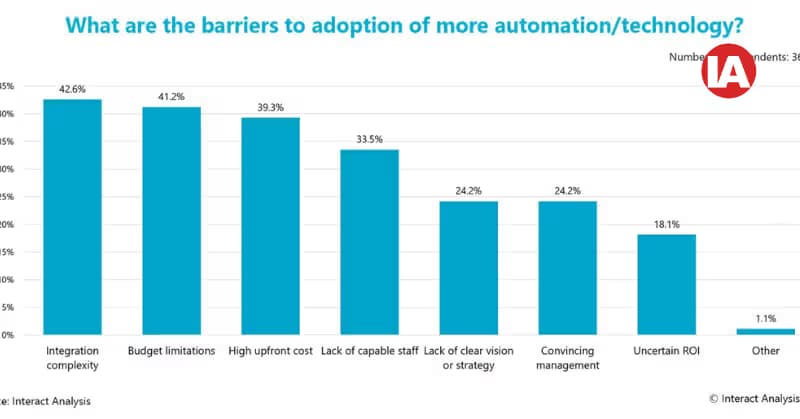
Despite producing more data than almost any other sector, manufacturing struggles to put it to use. Information remains scattered across functions – procurement, inventory, production, maintenance, quality, workforce – and often sits in silos, inaccurate or underutilised.
AI success depends on breaking these silos and ensuring data quality. Without integration and governance, the most advanced AI models cannot deliver value. Leaders must therefore start their AI journey by asking: Is my organisation data ready?
Where AI creates impact in manufacturing
AI is not a futuristic vision – It is already proving its value in real-world manufacturing scenarios.
Some of the most impactful use cases include:
1. Production planning & optimisation
Unplanned disruptions – machine breakdowns, material shortages, sudden order changes – make production planning a constant struggle. Traditional rescheduling is reactive and often based on gut feel.
- AI-based scheduling solutions optimise resource allocation in real time, continuously adjusting for changes on the shop floor.
- The result: reduced delays, higher resource utilisation, and improved on-time delivery.
2. Demand forecasting & prediction
Many manufacturers still plan production around capacity rather than market needs, leading to over- or under-production.
- AI-driven forecasting combines market trends, customer preferences, material availability, machine condition, and workforce capacity.
- This integrated view helps achieve greater forecast accuracy and align production with actual demand.
3. Predictive maintenance
Breakdowns of critical assets can halt production, causing losses and even shutdowns.
- AI-based predictive maintenance monitors equipment data in real time, detecting anomalies early.
- Maintenance teams can act proactively, reducing unplanned downtime and protecting throughput.
4. AI-powered quality inspection
Manual visual inspection is labour-intensive and prone to fatigue-driven errors.
- Computer vision systems detect even the smallest defects with precision.
- Manufacturers can shift from sampling to 100% digital inspection, improving quality, traceability, and customer trust.
5. Video analytics for operations & safety
With cameras now everywhere on the shop floor, AI can analyse footage for:
- Worker productivity and ergonomics
- SOP compliance monitoring
- Theft prevention
- Product counting and movement tracking
These use cases demonstrate how AI enhances efficiency, productivity, and safety – delivering measurable RoI.
Beyond efficiency: Strategic benefits of AI
While cost reduction and efficiency are critical, AI also delivers broader strategic impact:
- Sustainability: Optimising energy usage and reducing waste supports green manufacturing goals.
- Workforce Empowerment: AI augments human decision-making, enabling employees to focus on higher-value tasks.
- Resilience: AI helps organisations respond swiftly to market volatility and supply chain disruptions.
- Competitiveness: Faster innovation cycles and customer-centric responsiveness create lasting differentiation.
Getting AI right: Start with data readiness
While AI solutions are proven, success depends on one critical factor: data quality. Before investing in AI initiatives, organisations must:
- Ensure accurate, complete, and connected data collection.
- Digitise processes to reduce reliance on manual or paper-based data.
- Build a long-term view of data governance and integration.
Without this foundation, AI projects risk poor adoption and limited impact.
The way forward
AI is not the future of manufacturing – it is the present reality. The question is not whether to adopt AI, but how quickly and effectively you can leverage it to transform your operations.
Organisations that act now will build resilient, efficient, and competitive factories, while laggards risk falling behind. The journey begins with data readiness and a clear roadmap for AI adoption.
Mr Amit Saluja is Founder and Managing Partner, digiXLT Consulting LLP. The company helps manufacturing enterprises – especially SMEs – plan and implement their digital transformation journey with clarity, structure, and measurable outcomes.
With over 30 years of leadership experience across industry and technology giants like NASSCOM, IBM, GE, and RPG Transmission, Amit has been at the forefront of aligning digital technologies with business strategy to deliver tangible impact on productivity, efficiency, and growth.
Email: [email protected]
Author