Digital twins in process industries involve complex modeling and integration aspects
Dassault Systèmes’ Praveen Mysore explains how digital twins in process industries drive complex modeling, OEE gains and enterprise integration.
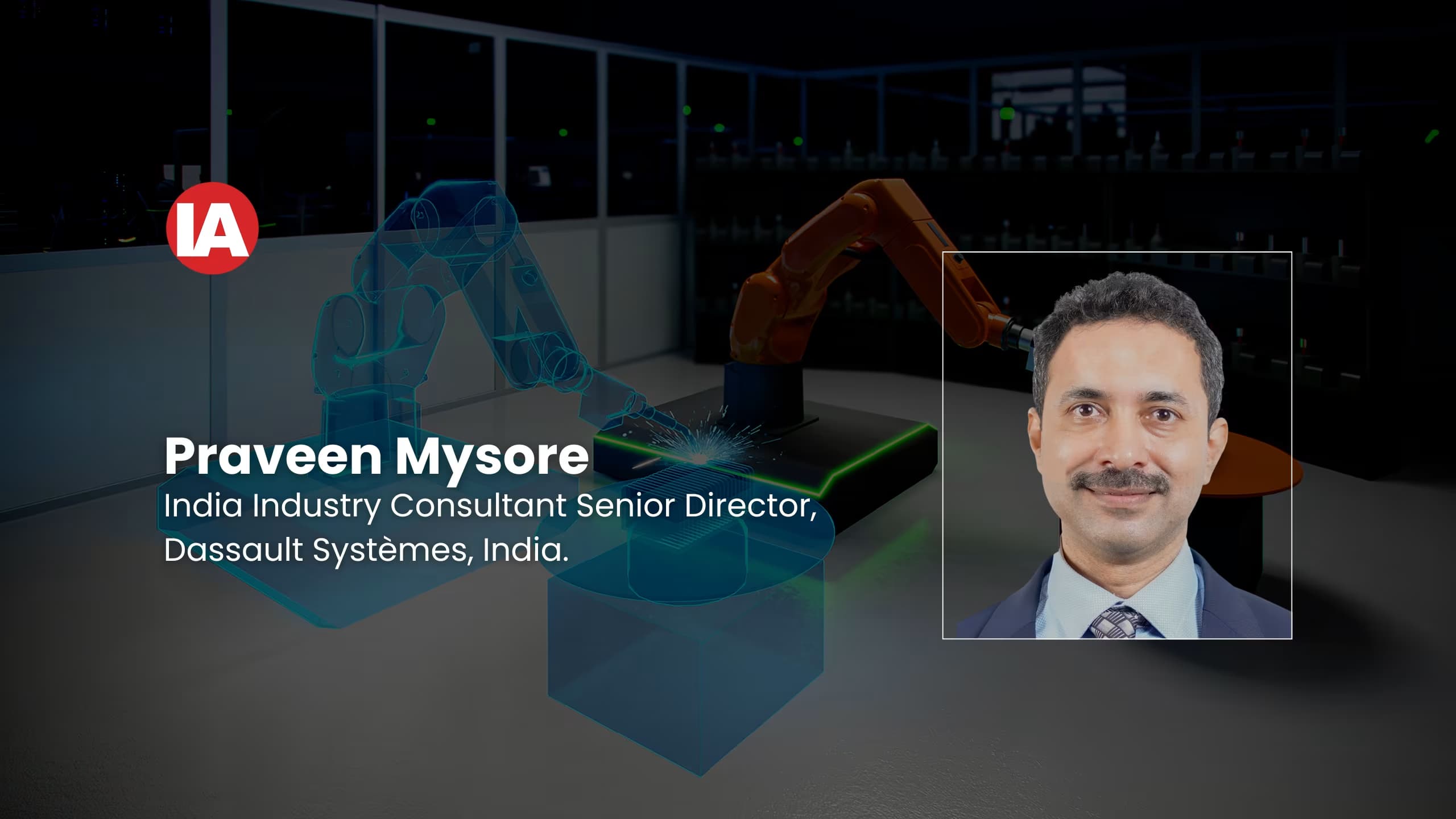
Praveen Mysore, India Industry Consultant Senior Director, Dassault Systèmes, India.
How has the digital twin evolved from a design-stage simulation tool into a living model that continuously influences product design and manufacturing decisions?
Initially, digital twins were used mainly for virtual prototyping: engineers ran physics-based simulations on 3D models to validate concepts, reduce physical tests, and optimise designs before production.
As connectivity, cloud, and IoT matured, these models began ingesting real-time operational data, creating a continuously updated representation of the asset or system that spans design, manufacturing, and in-service use.
Today’s Virtual Twins can detect anomalies, predict failures, and suggest design or process changes, enabling faster iterations, higher OEE, and better sustainability outcomes on the shop floor and in the field.
This closed loop from ‘as-designed’ to ‘as-manufactured’ to ‘as-operated’, means every operational insight can flow back into engineering, driving ongoing improvement rather than one-off optimisation.
Gen7 from Dassault Systèmes is the next generation of its 3DEXPERIENCE platform, combining virtual twin, generative experience, knowledge and know-how to create intelligent, software-defined products and manufacturing systems.
By unifying legacy environments with Gen7’s Virtual Twin Experiences, manufacturers can orchestrate end-to-end operations, continuously tune KPIs, and industrialise new products and processes with higher speed and lower risk.
Can digital twins realistically reduce physical prototyping and time-to-market without compromising reliability – and where do physical trials still remain indispensable?
Digital twins can realistically cut a large share of physical prototypes and shorten time-to-market by letting teams validate performance, manufacturability, and integration virtually often with richer insight than a traditional test program.
Dassault Systèmes’ Virtual Twins enable high‑fidelity, multi-physics and system-level validation, so physical tests become fewer, earlier, and more targeted rather than eliminated. Physical trials, however, remain indispensable for safety‑critical certification, human factors, and extreme or highly uncertain conditions, where regulators and engineers must still see proof in the real world.
What are the biggest technical or organisational barriers to creating high-fidelity digital twins – data quality, model accuracy, IT/OT integration, or skills?
From Dassault Systèmes’ perspective, the biggest barrier is not a single factor but the ability to align data, models, integration, and skills around a clear value agenda. In India, this challenge is amplified by uneven digital maturity and fragmented investments.
Indian industries are making strong, strategic use of virtual twin technology, but the adoption curve is more gradual than in mature markets, with wide awareness yet slower, pilot-heavy deployment and limited dedicated budgets. Indian companies are using virtual twins to sharpen product-market fit, boost manufacturing efficiency, and advance sustainability, and CXO‑led initiatives signal growing top‑down commitment.